
If you've landed on this article, you're probably asking yourself a painful question: Was my relationship with a narcissist? And if so, does no contact work the same way?
Here's what you need to understand upfront: no contact with a narcissist isn't about getting them back. It's about getting yourself back. This isn't a strategy—it's survival.
The traditional no contact rule is often framed as a way to create space, gain perspective, and potentially reconcile. When dealing with a narcissist, we need to reframe entirely. This is about protection, healing, and breaking free from a cycle of abuse.
Ready to Start Your No Contact Journey?
Track your progress, get AI coaching when the urge to text hits, and become the strongest version of yourself.
Free to start • No credit card required
No Contact Is Different With a Narcissist
With a healthy ex, no contact creates space for both people to process and potentially grow. With a narcissist, no contact serves a fundamentally different purpose.
Why the rules change:
| Regular Breakup | Narcissistic Breakup |
|---|---|
| Space to heal and reflect | Space to escape the abuse cycle |
| Potential for healthy reconciliation | Reconciliation means returning to abuse |
| Both parties can grow | Narcissists rarely change fundamentally |
| Missing each other is natural | Their "missing you" is about control |
| Contact can be healthy eventually | Contact keeps trauma bonds active |
The core difference: In a normal relationship, both people have the capacity for genuine empathy, growth, and change. Narcissistic Personality Disorder is characterized by a fundamental inability to truly empathize with others or take responsibility for harm caused. The person you fell in love with—the charming, attentive, seemingly perfect partner—was a constructed persona, not their authentic self.
This isn't about demonizing your ex. It's about understanding that the dynamics at play require a different approach to protect yourself.
How Narcissists React to No Contact
Understanding what to expect helps you prepare and stay strong. Here are the typical patterns:
Stage 1: Initial Confusion or Rage
Narcissists expect to control the narrative. When you go no contact, you've taken that control away. Expect:
- Anger and accusations: "How dare you ignore me" or "You're so childish"
- Blame-shifting: "This is exactly why we had problems—you never communicate"
- Testing boundaries: Multiple attempts to reach you through different channels
Stage 2: The Hoovering Begins
"Hoovering" is named after the vacuum cleaner—because narcissists try to suck you back in. Common tactics include:
Love bombing redux:
- "I've changed. I've been in therapy."
- "I finally understand what I did wrong."
- "You're the only one who ever truly knew me."
Manufactured emergencies:
- "I'm in crisis, you're the only one who can help."
- "Something terrible happened and I need you."
- Implied or explicit self-harm threats
Indirect contact:
- Reaching out through mutual friends
- "Accidentally" showing up where you'll be
- Social media activity designed to get your attention
Playing victim:
- "I can't believe you'd abandon me like this."
- "After everything we shared, you can just walk away?"
- Making you feel guilty for protecting yourself
Stage 3: The Smear Campaign
When hoovering fails, some narcissists shift to devaluation—this time publicly:
- Telling mutual friends their version of events
- Painting you as the "crazy" or "unstable" one
- Positioning themselves as the victim of your "cruelty"
Stage 4: The Long Game
Here's something crucial to understand: narcissists may hoover months or even years later. They keep former partners in "rotation," returning whenever their current supply runs low. You might receive a message two years from now that seems to come out of nowhere. It's not because they genuinely miss you—it's because they need supply.
Why No Contact Is ESSENTIAL, Not Optional
This isn't an exaggeration: no contact with a narcissist can be the difference between healing and remaining trapped in a cycle of abuse.
The Trauma Bond
Relationships with narcissists create what psychologists call "trauma bonds"—attachment formed through intermittent reinforcement of abuse and affection. This cycle creates a biochemical addiction similar to substance dependency.
Research shows:
- Your brain became wired to seek their approval
- The cycle of abuse and intermittent kindness triggers dopamine responses
- Breaking this bond requires complete separation
Any contact—even negative contact—feeds the trauma bond. When you respond to a hoover, even to say "leave me alone," the narcissist's needs are met. They know they're still on your mind. That's supply.
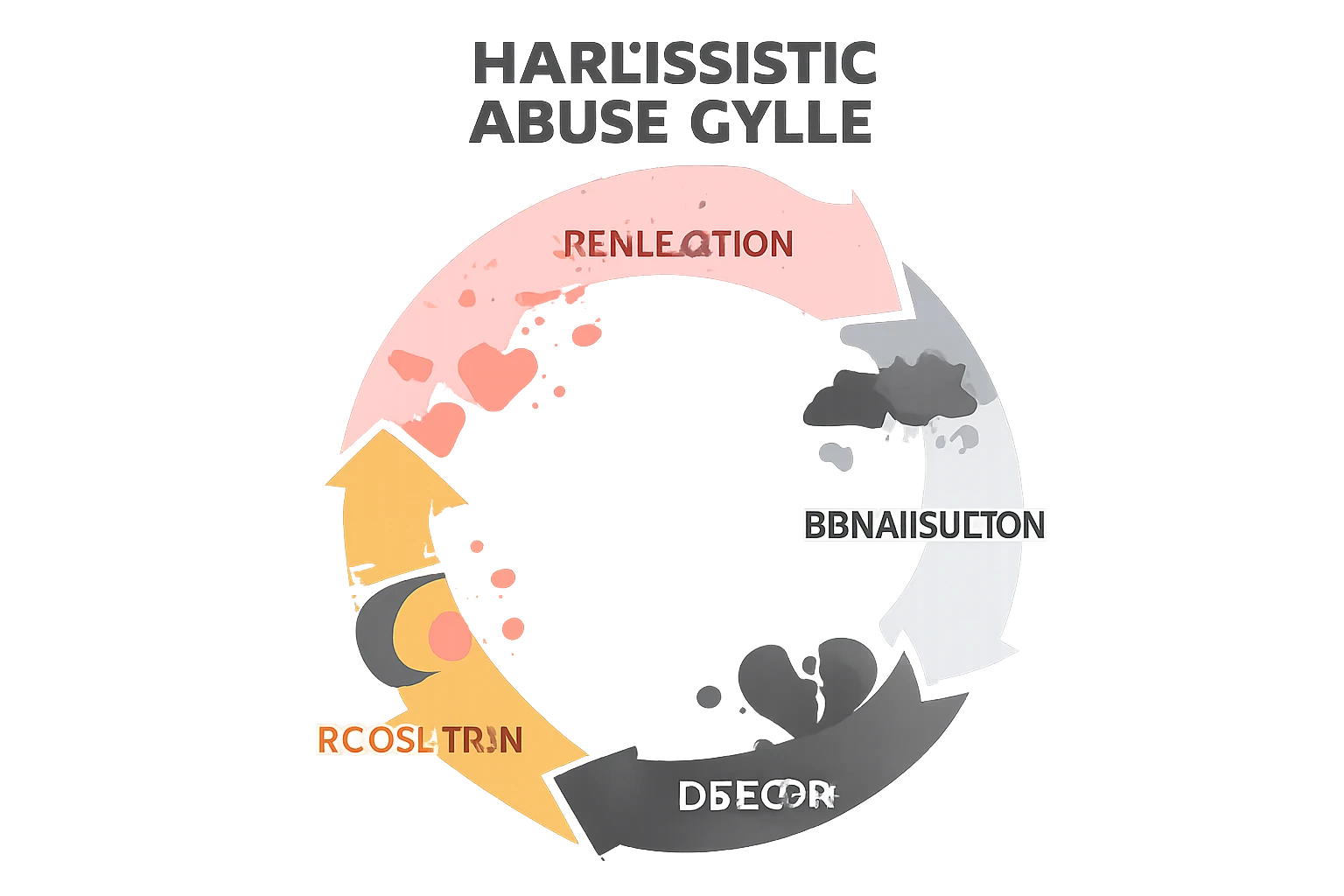
The Abuse Cycle Continues
If you respond to hoovering and reconcile, research on abuse patterns is clear: the cycle continues. There may be a brief "honeymoon" period, but:
- The abuse typically intensifies over time
- The cycle becomes tighter and more frequent
- Each reconciliation makes it harder to leave
Studies show survivors who maintained no contact showed significantly faster improvement in trauma symptoms compared to those who stayed in contact.
Your Healing Depends on It
You cannot heal in the same environment that made you sick. Every interaction—every text you read, every social media profile you check—reopens wounds and reinforces the trauma bond.
The Narcissist's Hoovering Attempts
Let's get specific about what hoovering looks like so you can recognize it:
The "Changed Person" Approach:
"I've been doing a lot of self-reflection. I finally understand how I hurt you. I'm different now. Can we talk?"
Reality: Genuine change in narcissistic patterns takes years of intensive therapy and is rare. A few weeks or months of "self-reflection" doesn't rewire a personality disorder.
The Nostalgia Trap:
"I was just thinking about that trip we took to [place]. Those were the happiest times of my life. I miss us."
Reality: They're invoking positive memories to override your protective boundaries. Notice they're not acknowledging harm—only good times.
The Concerned Friend:
"I heard you've been going through a hard time. I'm worried about you. I'm here if you need anything."
Reality: They're positioning themselves as a support figure when they were the source of your difficulty.
The Proxy Contact:
A mutual friend mentions your ex has been asking about you, seems really broken up, wishes you'd reach out.
Reality: They're using others to bypass your boundaries and make you feel guilty.
The Grand Gesture:
Unexpected gifts, letters, showing up with flowers, dramatic declarations of love.
Reality: Love bombing worked before to hook you. They're trying the same playbook.
How Long Should You Go No Contact?
With a narcissist, the honest answer is often: forever.
This is different from standard no contact advice. Here's why:
- Narcissistic patterns are deeply ingrained and rarely change
- Any future contact carries risk of retraumatization
- Your healing requires permanent freedom from their influence
- They will likely hoover repeatedly over the years
Exceptions that require modified contact:
- Co-parenting: Structured contact through written channels only, focused exclusively on logistics
- Workplace: Minimal, professional interaction with documentation
- Shared social circles: Polite but distant when encounters happen
In these cases, implement "gray rock"—be as boring and unresponsive as possible while handling necessary interactions.
Protecting Yourself During No Contact
Going no contact with a narcissist requires more protection than a typical breakup.

Digital Protection
Block comprehensively:
- Phone number (calls and texts)
- All social media platforms
- Email (or filter to a folder you don't check)
- Any apps you used to communicate
Don't just unfollow—block. Unfollowing still allows them to see your activity and reach out. Blocking creates a real barrier.
Social Protection
Inform trusted friends:
- Let close friends know you're no contact and why
- Ask them not to share information about you
- Be prepared that some mutual friends may not understand
Anticipate flying monkeys:
- Narcissists often recruit others to reach you
- Be cautious of people who suddenly want to "help" you two reconcile
Documentation
Keep records if:
- There's any chance of stalking or harassment escalation
- You share children or legal matters
- You may need evidence for a restraining order
Save screenshots, record dates and times, document everything—but don't engage.
Mental Protection
Recognize and resist:
- The urge to check their social media
- The desire to know if they're hurting or dating someone new
- The hope that they've changed
- The temptation to respond to "prove" something
Ready to Start Your No Contact Journey?
Track your progress, get AI coaching when the urge to text hits, and become the strongest version of yourself.
Healing From Narcissistic Abuse
Leaving and maintaining no contact is just the beginning. Real healing takes work.

Understand What Happened
Narcissistic abuse involves specific patterns worth naming:
- Gaslighting: Making you question your own reality
- Love bombing: Intense affection to hook you
- Devaluation: Systematic criticism and withdrawal
- Triangulation: Using others to create jealousy or insecurity
- Word salad: Confusing conversations that go in circles
Naming these tactics helps you see clearly what you experienced.
Seek Professional Support
Healing from narcissistic abuse often requires specialized help:
- Trauma-informed therapy: EMDR, CBT, and other evidence-based approaches
- Support groups: Connecting with others who understand
- Educational resources: Books, podcasts, and courses on narcissistic abuse
This isn't something you should navigate alone.
Rebuild Your Identity
Narcissistic relationships systematically dismantle your sense of self. Recovery means:
- Reconnecting with who you were before them
- Discovering who you want to become
- Rebuilding boundaries and self-trust
- Learning what healthy relationships actually look like
Practice Self-Compassion
You may feel shame about staying, about being "fooled," about how long it took to leave. Know this:
- Trauma bonds are real and powerful
- Narcissists are skilled manipulators
- Leaving is incredibly hard—and you did it
- Recovery is not linear
Look for Post-Traumatic Growth
Research shows many trauma survivors eventually experience what's called post-traumatic growth:
- Deeper, more authentic relationships
- Clearer values and priorities
- Greater personal strength
- Better boundaries
You can document your healing journey and track your progress as you rebuild.
You Deserve Better
Here's the truth you may not be ready to hear yet: the relationship you thought you had wasn't real. The person you fell in love with was a performance designed to hook you. The "good times" were part of a cycle designed to keep you attached through hope.
This doesn't mean your feelings weren't real. It doesn't mean you were stupid. Narcissists target empathetic, loyal, forgiving people—your best qualities were used against you.
No contact isn't punishment. It's not about being "strong enough" to ignore them. It's about recognizing that your wellbeing requires freedom from someone who cannot love you the way you deserve to be loved.
If you're healing from this kind of breakup, be patient with yourself. This recovery takes time—often longer than a typical breakup. But on the other side is something invaluable: yourself, whole and free.
Ready to Start Your No Contact Journey?
Track your progress, get AI coaching when the urge to text hits, and become the strongest version of yourself.
Free to start • No credit card required
Related topics