

You want them back. That ache in your chest every time you see their name, the way your mind keeps replaying your last conversation, the empty space where they used to be—it all points to one undeniable truth: you are not ready to let go.
And here is the thing most people will not tell you: wanting your ex back is not weakness. It is human. What matters is how you go about it.
Research suggests that approximately 32% of exes do get back together. Of those who try, around 15% stay together long-term. Those odds might seem daunting, but they also prove something important: reconciliation is possible. The question is whether you will be strategic or emotional about it.
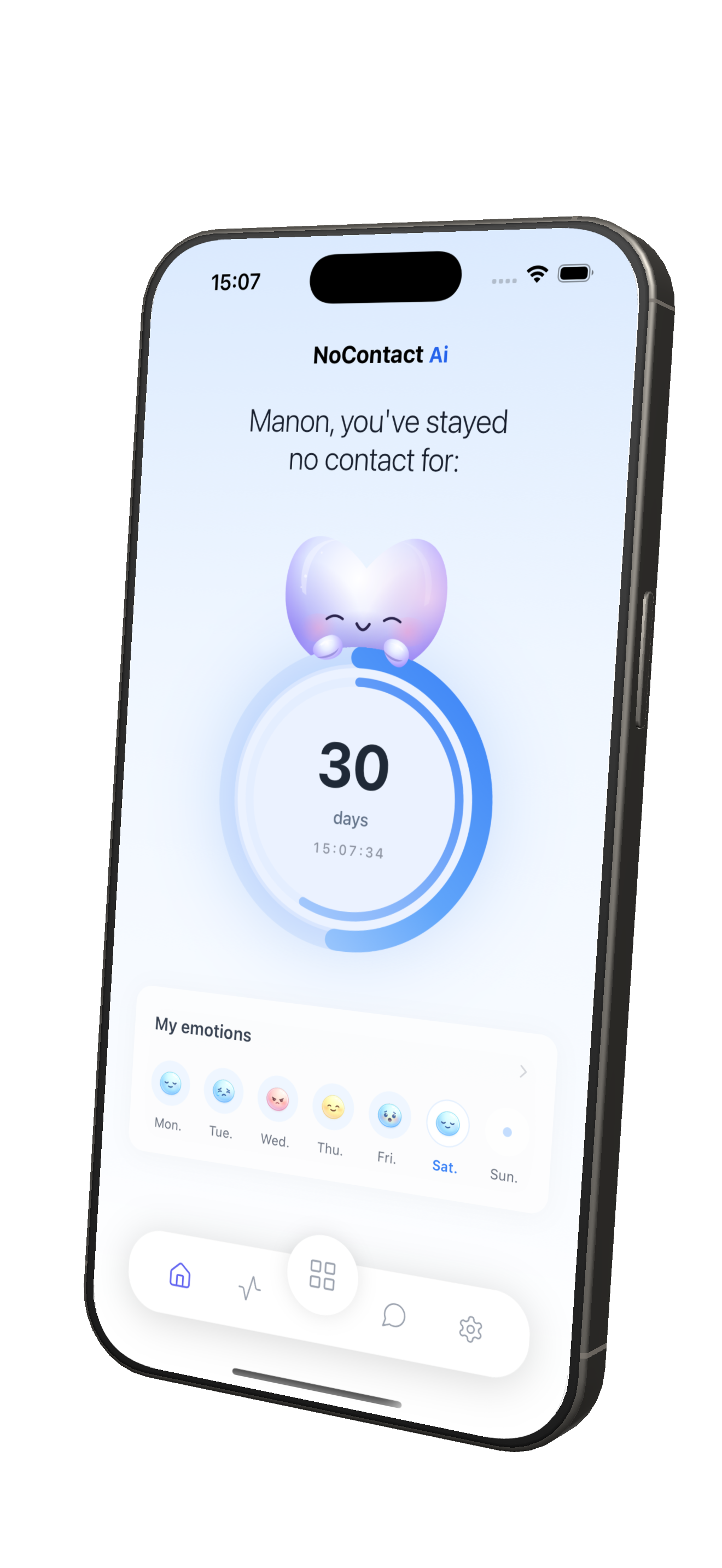
This guide will walk you through the exact 5-step framework using our no contact tracker app—a method built on relationship psychology, not desperation tactics. Whether you ultimately win them back or gain the clarity to move forward, you will come out stronger.
Download No Contact AI
No contact day counter, private journal, and chat support to get through a breakup.
Download the app
Scan with your phone
Automatic redirect to iOS or Android
Should You Try to Get Your Ex Back?
Before diving into strategy, you need an honest self-assessment. Not every relationship deserves a second chance, and pursuing reconciliation with the wrong ex can waste months of your life.
Ask yourself these questions:
Was the relationship fundamentally healthy? Arguments and rough patches are normal. Abuse, manipulation, or constant disrespect are not.
Can the core issue be fixed? If you broke up over something changeable (communication problems, timing, external stress), reconciliation makes sense. If it was fundamental incompatibility (different life goals, values, or desires), getting back together will only delay another breakup.
Do you want THEM or do you want to not be alone? Loneliness can trick you into idealizing a relationship that was not working. Be brutally honest about what you actually miss.
Are you willing to do the work? Getting your ex back requires genuine change—not temporary performances to win them over.
If you are still unsure, take the time to reflect on whether you should get back with your ex before committing to a strategy. If you can honestly say the relationship was good, the problems are solvable, and you want this specific person (not just anyone), then keep reading. You have a real shot.
Step 1: Implement No Contact
This is non-negotiable. Before anything else, you need to implement the no contact rule—a period of complete silence lasting 21-45 days minimum.
Why it works:
Breaks the negative pattern. Your ex currently associates you with breakup emotions: sadness, conflict, pressure. Every text you send reinforces this. Silence creates space for those associations to fade.
Creates psychological curiosity. Your ex expects you to chase, beg, or try to convince them. When you do not, it disrupts their mental model of you. They start wondering what you are doing, whether you have moved on, if they made the right choice.
Gives you time to stabilize. You cannot re-attract someone while you are an emotional wreck. No contact is as much about your healing as their psychology.
The rules are simple:
- No texts, calls, or "accidental" run-ins
- No social media stalking (mute or unfollow if needed)
- No asking mutual friends about them
- No responding if they reach out (with rare exceptions)
The hardest part? The first two weeks. Your brain will generate a thousand "reasons" to break no contact. Ignore them all. The longer you stay quiet, the more powerful this strategy becomes.

Step 2: Work on Yourself
No contact is not about sitting around waiting. It is your transformation window.
Here is the uncomfortable truth: something about the dynamic was not working. Maybe it was your behavior, maybe theirs, maybe both. But if you get back together as the same person, you will get the same result.
Focus on these areas:
Physical Health
Exercise is not about getting revenge-hot (though that does not hurt). It is about managing the cortisol and adrenaline flooding your system post-breakup. Studies show regular exercise reduces breakup-related anxiety by up to 40%.
Emotional Processing
Instead of suppressing your feelings, work through them. Journal about what went wrong—your part specifically. Consider therapy if you can access it. The goal is to understand your attachment patterns and relationship behaviors.
Social Reconnection
Breakups often mean losing shared social circles. Rebuild yours. See friends you neglected. Try new activities. Your ex should not be your only source of connection and fulfillment.
Genuine Growth
Pick something you have always wanted to learn or improve. A language, an instrument, a skill. Not to impress your ex—to become someone with a richer, fuller life whether they return or not.
Download No Contact AI
No contact day counter, private journal, and chat support to get through a breakup.
Download the app
Scan with your phone
Automatic redirect to iOS or Android
Step 3: Re-establish Contact
After 30+ days of genuine no contact and real self-improvement, you are ready to reach out. But this is not the moment to pour your heart out.
The first message should be:
- Light and low-pressure — No relationship talk
- Genuine and specific — Reference something that reminded you of them naturally
- Easy to respond to — An open question or observation, not a demand
Example:
"Just saw [band you both liked] is touring again this summer. Remember when we tried to learn that song on guitar? Hope you are doing well."
That is it. You are reopening the door, not walking through it.
What NOT to send:
- "I miss you"
- "Can we talk?"
- Long paragraphs explaining your feelings
- Anything that puts pressure on them to respond a certain way
If they respond positively, great. Keep the conversation casual for several exchanges. If they do not respond or seem cold, give it another 2-3 weeks before trying once more. Two cold responses means it is time to accept their answer.

Step 4: Rebuild Attraction
You have re-established contact. Conversations are flowing. Now comes the delicate work of rebuilding attraction without sliding back into old patterns.
Key principles:
Be the "New" Version
You spent no contact growing. Show it—do not tell it. Talk about new experiences, demonstrate changed perspectives, let them discover you have evolved. Avoid the temptation to announce "I've changed!" That sounds desperate. Instead, let your changed behavior speak.
Create Positive New Memories
Suggest low-stakes hangouts (coffee, not dinner). Keep early meetings short—leave them wanting more. Focus on having fun, not "relationship talks."
Let Them Come to You
Research shows the partner who feels more "in control" of the reconciliation is more likely to commit. This means letting them initiate sometimes. Letting them suggest plans. Matching their energy rather than always exceeding it.
Address Issues Without Rehashing
At some point, you need to acknowledge what went wrong. But frame it forward: "I've been thinking about how I handled [issue] and I want to do better" rather than "Remember when we fought about X?"
Step 5: Have the Conversation
When attraction has rebuilt and you have been seeing each other consistently for a few weeks, it is time for the real conversation.
Timing matters:
- After a particularly good hangout
- When you are both relaxed and have time
- In person, not over text
What to say:
Be direct but not demanding. Something like:
"I've really enjoyed reconnecting with you. I know we had our issues, but I feel like we've both grown. I'd like to try again—for real this time—if that's something you want too."
Then stop talking. Let them respond. Do not fill the silence with more convincing.
If they say yes: Discuss what will be different this time. Set new relationship "agreements" about communication, conflict, and needs. Consider couples therapy to prevent falling into old patterns.
If they say no or need time: Accept their answer gracefully. You have done everything right. Their decision reflects their own process, not your worth.

Signs It Is Working
How do you know if your strategy is gaining traction? Watch for these signs they want to reconcile:
Early indicators (during no contact):
- They reach out first
- They ask mutual friends about you
- They view your social media stories consistently
- They do not remove/block you
Mid-stage indicators (after contact):
- They respond quickly and enthusiastically
- They initiate conversations sometimes
- They suggest meeting up
- They reference shared memories positively
- They ask about your life (not just surface questions)
Strong indicators (before the conversation):
- Physical touch increases naturally
- They express missing specific things about you
- They mention the future in ways that include you
- Jealousy appears when you mention others
- They bring up the relationship themselves
Common Mistakes That Push Them Away
Even solid strategies fail when sabotaged by emotional impulses. Avoid these at all costs:
Begging or Pleading
Nothing destroys attraction faster than desperation. The moment you beg, you confirm their decision to leave was correct.
Over-Explaining or Over-Apologizing
One sincere apology is powerful. Repeated apologies become noise—and signal that you are more concerned with your guilt than their feelings.
Moving Too Fast
You reconnected! Amazing! But slow down. Trying to lock things down immediately feels like pressure, and pressure causes people to pull away.
Playing Games
Some "get your ex back" advice relies on manipulation: making them jealous, pretending you do not care, dating others to provoke a reaction. These tactics occasionally work short-term but destroy trust long-term. Build a real foundation instead.
Ignoring What Broke You Up
Getting back together without addressing the actual problems is just scheduling your next breakup.
Badmouthing Them to Others
Your mutual friends will tell them. Even venting to your own friends can change how they see your ex, making reconciliation awkward if it happens.
When to Let Go
The hardest part of this process is recognizing when it is not working. Here are clear signs:
- They explicitly say they do not want to get back together (believe them)
- They are in a new relationship and seem genuinely happy
- Every interaction feels like you are pulling teeth
- You have been trying for 6+ months with no progress
- Getting them back would require you to tolerate disrespect
Letting go is not failure. It means you respected yourself enough to try, and you respect them enough to accept their choice.
The work you did during no contact—the therapy, the growth, the rebuilding—that belongs to you regardless of the outcome. You are a better version of yourself now. That person will attract someone right for them, whether it is your ex or someone new.

FAQ
How long does it take to get your ex back?
There is no universal timeline, but realistic expectations matter. No contact typically lasts 30-45 days. Rebuilding attraction takes another 4-8 weeks. The full process from breakup to reconciliation averages 3-6 months for successful reconciliation stories. Rushing this timeline usually backfires.
What if my ex is already seeing someone else?
A rebound relationship does not automatically end your chances. Studies suggest most rebounds end within 3-6 months. Maintain no contact, focus entirely on yourself, and let the situation evolve naturally. Trying to interfere or wait around obsessively helps no one.
Should I tell my ex I still have feelings during no contact?
No. The entire point of no contact is letting emotions settle—for both of you. Confessing feelings mid-no-contact resets the clock and often pushes them further away.
What if I broke up with them and want them back?
The dynamics shift if you were the dumper. Your ex likely felt rejected and may be guarded. A genuine, humble apology for ending things goes further here. Acknowledge their pain before asking for another chance.
Do I need to change who I am to get them back?
No—you need to grow into your best self. There is a difference between changing your core identity to please someone and addressing behaviors that damaged the relationship. Healthy reconciliation involves both people evolving, not one person contorting themselves.
What if we have been broken up for months or years?
Long gaps actually increase success rates in some cases. Both people have had time to process, grow, and gain perspective. The approach remains the same, though you may need a stronger "reason" for initial contact than recent exes.
Getting your ex back is not about tricks, manipulation, or pretending to be someone you are not. It is about genuinely becoming someone worth returning to—and giving them the space to realize it.
Whether reconciliation happens or not, this process transforms you. You learn what you actually need in relationships, what patterns to avoid, and how to regulate your emotions during crisis. Those lessons serve you for life.
If you are ready to start this journey with support, the right tools can help you stay accountable during no contact, process your emotions constructively, and approach reconciliation with clarity instead of desperation.
Download No Contact AI
No contact day counter, private journal, and chat support to get through a breakup.
Download the app
Scan with your phone
Automatic redirect to iOS or Android