


You've decided to start the no contact rule. Smart move. But now you're staring at your calendar wondering: how long should this actually last? Is 30 days enough? Should you go for 60? What if you mess up the timing and ruin everything?
Take a breath. I'm going to give you a clear framework for choosing the right duration—because the truth is, there's no universal magic number. The "perfect" length depends on your specific situation, and by the end of this guide, you'll know exactly how long yours should be.
Ready to Start Your No Contact Journey?
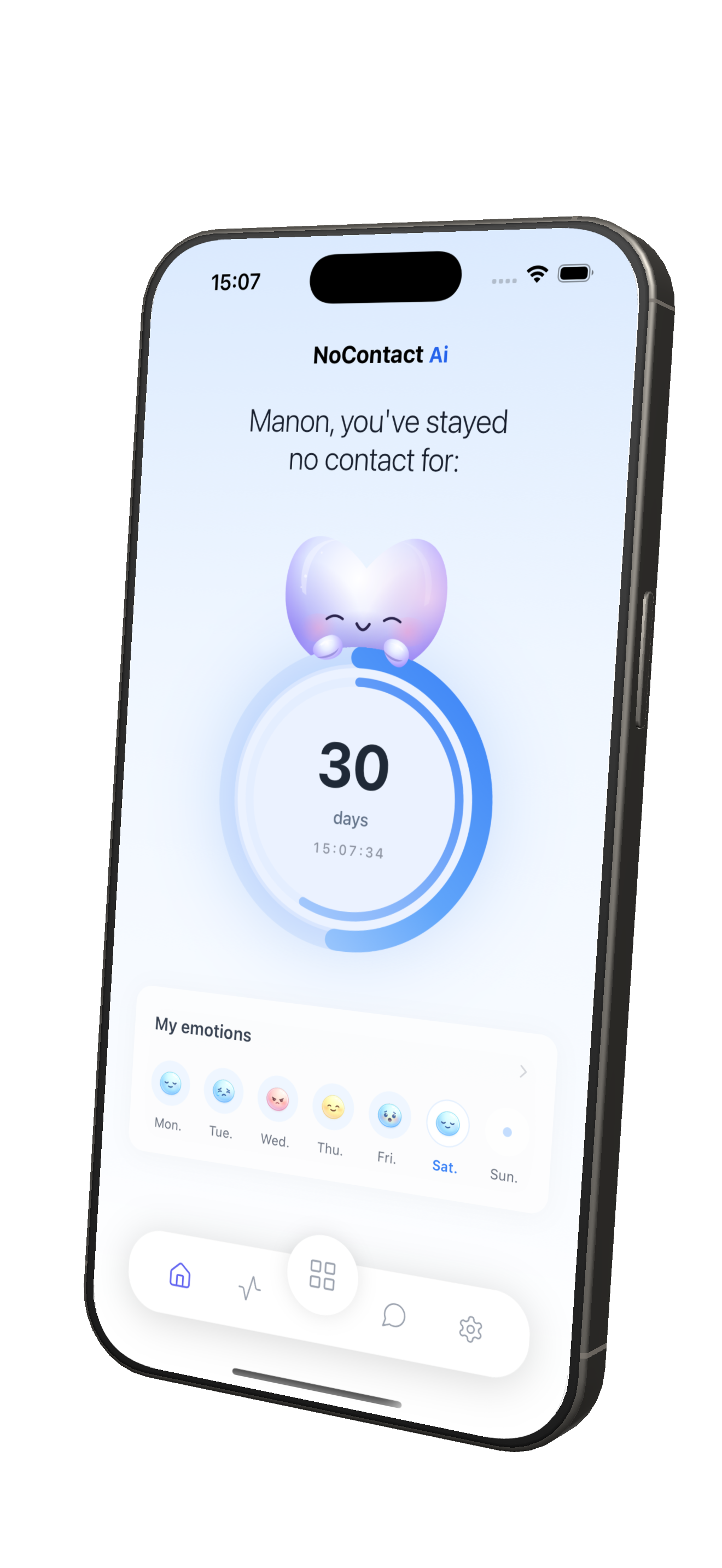
Track your progress, get AI coaching when the urge to text hits, and become the strongest version of yourself.
If you haven't already, make sure to read our complete no contact rule guide for the foundational principles. This article focuses specifically on timing.
The Standard No Contact Periods Explained
Let's break down the four most commonly recommended timeframes and what each one is designed to achieve.
| Duration | Best For | Key Benefit |
|---|---|---|
| 21 days | Short relationships, minor conflicts | Breaks initial emotional patterns |
| 30 days | Standard breakups, medium relationships | Creates psychological reset |
| 45 days | Ex moved on quickly, needs more space | Maximizes separation anxiety effect |
| 60+ days | Long relationships, toxic dynamics | Deep healing and complete detachment |
The 21-Day Minimum
Research in behavioral psychology suggests it takes approximately 21-28 days to break emotional habits and patterns. This is the absolute minimum if you want any real psychological shift to occur—for both you and your ex.
Use 21 days if:
- Your relationship was under 6 months
- The breakup was mutual and relatively peaceful
- You mainly need space to gain clarity
Warning: 21 days is often not enough for deeper healing. Most experts consider it a bare minimum, not an optimal duration.
The 30-Day Standard
The 30-day no contact rule has become the default recommendation, and there's good reason for it. One month provides enough time for the initial emotional storm to pass, for both parties to start missing what they had, and for you to begin rebuilding your sense of self.
But here's what most articles won't tell you: 30 days is often just the starting point, not the finish line. Coaches who work with thousands of clients report that 30 days is rarely enough time for significant psychological change—especially after serious relationships.
The 45-Day Sweet Spot
Around the 45-day mark, something interesting happens neurologically. The chemicals associated with separation anxiety reach their peak. Your ex's brain has fully processed that you're gone, and the reality of the loss becomes undeniable.
The 45-day rule is particularly effective when your ex has jumped into a new relationship. Why? Because 45 days is typically enough time for the "honeymoon phase" of a rebound to start fading, reality to set in, and comparisons to begin.
The 60-90 Day Deep Reset
For relationships that lasted two years or more, or breakups involving toxic dynamics, betrayal, or deep emotional wounds—extended no contact is essential.
Therapists often recommend a minimum of 90 days to form new habits and interrupt ingrained behavioral patterns. This isn't just about your ex missing you; it's about fundamentally rewiring your own emotional responses.
Factors That Affect Your No Contact Duration
Your optimal duration isn't random—it's determined by specific variables in your situation. Let's examine each one.
Relationship Length
Under 6 months: 21-30 days is usually sufficient. The emotional bonds, while real, haven't had time to become deeply embedded.
6 months to 2 years: 30-45 days. This is the range where most standard advice applies. You've built significant attachment but not complete life entanglement.
2+ years: 45-60 days minimum. Long-term relationships create deep neural pathways. Both your brains need substantial time to adjust to the new reality.
5+ years or cohabitation: 60-90 days. When your lives were deeply intertwined, shorter timeframes simply don't allow for adequate psychological separation.
How the Breakup Happened
Mutual and peaceful: 30 days is often sufficient. There's less emotional damage to repair.
You were blindsided: 45+ days. You need extra time to process the shock and rebuild your sense of reality.
It was ugly (fighting, harsh words, betrayal): 60+ days. Toxic endings require extended healing time to prevent falling back into destructive patterns.
Ongoing on-again, off-again: 60-90 days minimum. You need to break the cycle completely, and shorter periods just reinforce the pattern.
Attachment Styles
Understanding attachment styles changes everything about timing:
If your ex is anxiously attached: They'll likely feel the effects of no contact faster (2-3 weeks). However, ending too soon might not give them enough time to truly appreciate what they lost.
If your ex is avoidantly attached: They may initially feel relieved by the space. It can take 45-60+ days before the distance triggers their longing. Patience is crucial here.
If YOU are anxiously attached: Consider extending your no contact period. You need extra time to develop secure self-soothing and break your dependency patterns.

The 30-Day No Contact Rule: A Closer Look
Since 30 days is the most commonly recommended duration, let's examine when it works and when it doesn't.
When 30 Days Is Appropriate
The standard 30-day period works well when:
- Your relationship was 6 months to 2 years
- The breakup was relatively clean (no cheating, abuse, or extreme conflict)
- Your ex doesn't have a dismissive-avoidant attachment style
- You genuinely want to use the time for self-improvement, not just waiting
- There are no children, shared property, or other complications
For a detailed 30-day protocol with day-by-day guidance, check out our dedicated guide.
The Limitations of 30 Days
Here's the uncomfortable truth: 30 days is not a magic cure-all.
The dopamine deficit from losing a relationship doesn't peak at exactly 30 days for everyone. For some people, the full emotional impact hits at 6 weeks. For others, 4 months. Human brains don't follow convenient schedules.
Additionally, 30 days is rarely enough time to:
- Fully heal from a serious breakup
- Make lasting personal changes your ex will notice
- Let an avoidant ex process their feelings
- Break deeply ingrained relationship patterns
The better approach: Think of 30 days as the minimum, not the goal. Continue until you feel genuinely ready—not just until the calendar says you can stop.
When to Extend to 45 or 60 Days
Certain situations call for a longer no contact period. Here's when you should consider extending:
Extend to 45 Days If:
Your ex is already seeing someone new. Rebounds typically start showing cracks around 4-6 weeks. Ending no contact while they're still in the honeymoon phase is counterproductive.
Your ex has avoidant attachment tendencies. Avoidants often feel initial relief when a relationship ends. It takes longer for them to process loss and experience longing.
You had a pattern of always being available. If you've historically been the one reaching out, chasing, or accommodating—45 days sends a stronger signal that something has fundamentally changed.
You don't yet feel emotionally stable. If 30 days passes and you're still tempted to send that 3 AM text, you're not ready. Extend.
Extend to 60+ Days If:
The relationship was 3+ years. Deep bonds require deep healing.
There was infidelity or betrayal. Trust wounds don't heal in a month.
You were in a toxic or emotionally abusive dynamic. You need extended time to deprogram harmful patterns and rebuild your sense of self.
You've done no contact before and it didn't work. If a previous 30-day attempt failed, try 60-90 days. Something in the shorter timeframe isn't working for your specific situation.
Your ex is a narcissist or has NPD traits. The standard rules don't apply to narcissistic relationships. Extended no contact—often indefinite—is typically recommended by mental health professionals.
Can No Contact Be Too Long?
Yes, there is such a thing as too long—but it's not what you might think.
The Real Risk
The danger of extended no contact isn't that your ex will "forget about you" or "move on completely." If they were going to do that, it would happen regardless of your timeline.
The real risk is that YOU use extended no contact as an avoidance mechanism. Some people hide behind no contact to avoid:
- The vulnerability of reaching out
- The potential rejection of trying again
- The finality of accepting it's truly over
- The scary work of actually moving forward
Here's the test: Are you extending no contact because you genuinely need more healing time? Or because you're afraid of what comes next?
When Extended No Contact Backfires
Going past 90 days becomes counterproductive when:
- You're using it to avoid closure. At some point, you need to either attempt contact or fully accept the end.
- You're stuck in limbo. Not moving forward, not reaching out—just waiting indefinitely.
- Your life is on hold. If you're refusing to date, declining opportunities, or keeping everything "in case they come back"—that's not healing.
- The original issues remain unaddressed. No amount of time apart fixes communication problems, incompatibility, or unhealthy patterns you haven't worked on.
The guideline: After 90 days, if you still want to reconnect, you should either reach out or make a conscious decision to move on. Endless waiting isn't a strategy.
How to Choose Your Duration: A Decision Framework
Let's put this all together into an actionable framework.
Step 1: Establish Your Baseline
Start with the standard 30 days as your baseline.
Step 2: Adjust Based on Relationship Length
- Under 6 months: Stay at 30 (or reduce to 21)
- 6 months - 2 years: Stay at 30
- 2-4 years: Add 15 days → 45 total
- 4+ years: Add 30 days → 60 total
Step 3: Adjust Based on Circumstances
Add 15 days for each that applies:
- The breakup was particularly painful or ugly
- Your ex immediately started dating someone else
- You have anxious attachment tendencies
- Your ex has avoidant attachment tendencies
- You've broken no contact before
Step 4: Set It and Forget It
Once you've calculated your duration, commit to it. Put the end date in your calendar and stop counting days. The point of having a timeframe is so you can stop obsessing about timing and focus on healing.
If you want a no contact timer to help you decide, our app can analyze your specific situation and provide personalized guidance throughout your journey.
What to Do When Your Period Ends
Your no contact period ending doesn't mean you MUST reach out. It means the mandatory waiting period is over, and you can now make an informed choice.

Three Options When No Contact Ends
Option 1: Reach Out If you've genuinely healed, you're reaching out from a place of strength (not desperation), you have a clear purpose for the contact, and you've prepared for any response including silence—then reaching out may be appropriate.
Option 2: Extend Further If you're still emotionally reactive, you haven't made significant personal progress, or you're only reaching out because the "time is up"—extend another 2-4 weeks.
Option 3: Move On If during no contact you've realized the relationship wasn't right, you've found peace without them, or you've genuinely moved on—honor that. Moving forward is also a valid outcome.
The Mindset Shift
Here's the most important insight about timing: the "right" duration is the one where you can reconnect (or move on) from a place of wholeness rather than need.
If you're counting down the days like a prisoner awaiting release, you're not ready. When you're truly healed, the end date becomes less significant. You're not desperate for it to arrive—you're focused on your own growth.
For guidance on signs it's time to break silence, read our dedicated article on evaluating readiness.
The Bottom Line
How long should no contact last? Long enough for you to feel like yourself again—with a minimum floor of 21 days and adjustments based on your unique circumstances.
Use this article's framework to calculate your starting point:
- 30 days baseline
- Adjusted for relationship length
- Adjusted for specific circumstances
But remember: the calendar is a guide, not a prison. The real metric is your emotional state. When you can think about your ex without anxiety, when you're genuinely building a life you're excited about, when reaching out feels like a choice rather than a compulsion—that's when you're ready.
Whether that takes 30 days or 90, trust the process. Your timeline is yours.
Ready to Start Your No Contact Journey?
Track your progress, get AI coaching when the urge to text hits, and become the strongest version of yourself.
Related topics