

You never thought it would hurt this much. The relationship that once felt like home is over, and now you are left wondering how to get over a breakup when every song, every place, every thought seems to lead back to them.
If you are reading this, you are probably in pain. And I want you to know something important: what you are feeling is completely normal. The emptiness, the confusion, the moments where you feel fine followed by waves of grief that knock you sideways—all of it is part of the process.
But here is the good news: you will get through this. And not just survive it—you can actually emerge stronger, clearer about what you want, and more connected to yourself than ever before. Whether you are looking for a no contact app to support your healing journey or simply need a roadmap to follow, this guide will walk you through exactly how to heal after heartbreak.
Download No Contact AI
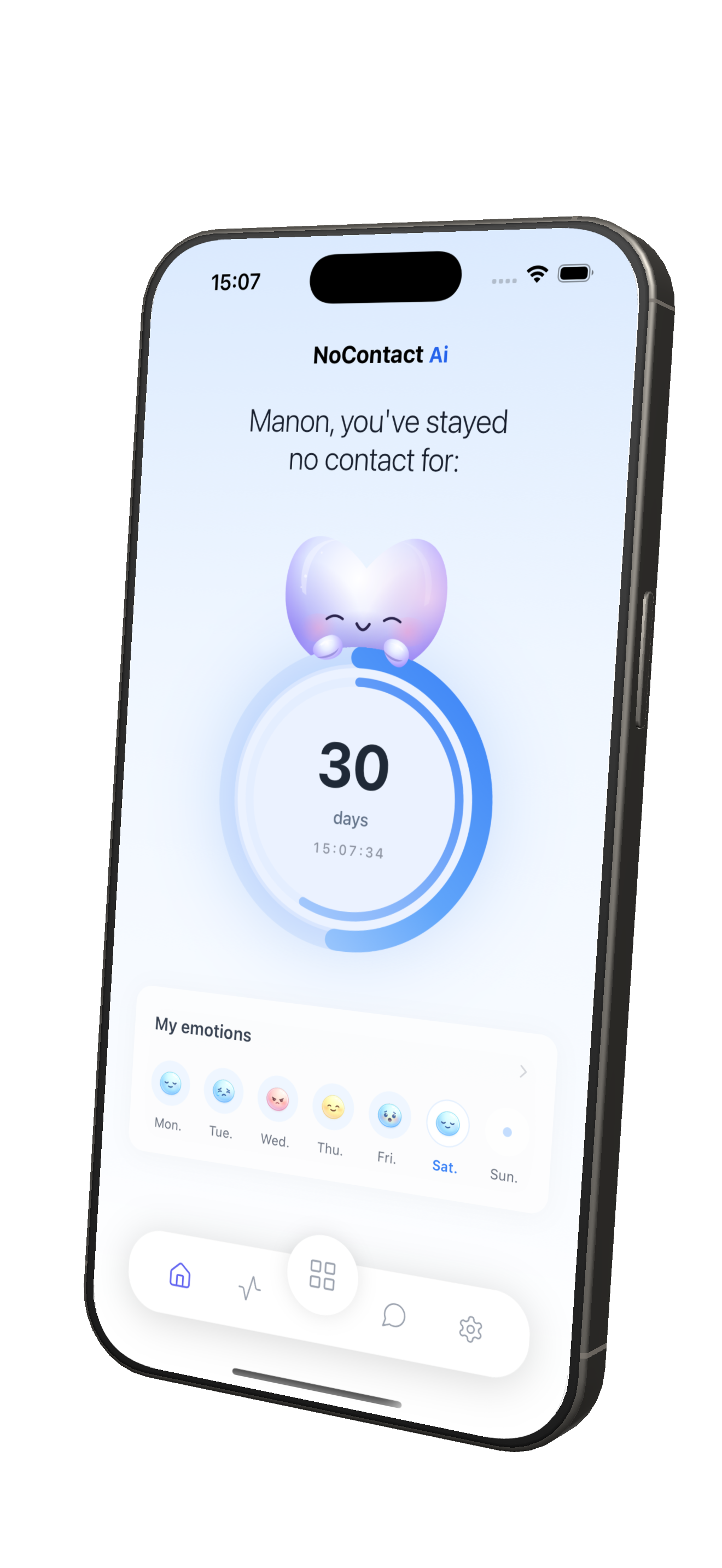
No contact day counter, private journal, and chat support to get through a breakup.
Download the app
Scan with your phone
Automatic redirect to iOS or Android
Why Breakups Hurt So Much
Before we dive into how to get over a breakup, let us understand why it hurts so intensely in the first place. This is not weakness—it is biology.
Neuroimaging research has found that romantic rejection activates the same pain pathways in the brain as physical injury. When you feel like your heart is literally breaking, your brain is processing genuine pain signals. Studies have also shown that thinking about an ex activates the reward circuits in your brain—the same systems involved in addiction cravings and withdrawals.
You are essentially going through withdrawal from a person.
This explains why you might:
- Feel physical symptoms like chest tightness or nausea
- Obsessively check their social media
- Experience intense urges to reach out
- Have trouble sleeping or eating — you may even find yourself wondering why you keep dreaming about your ex
- Feel like you have lost part of your identity
Understanding this helps because it removes shame from the equation. You are not "too emotional" or "not handling this well enough." Your brain is doing exactly what brains do after losing something significant.

The 5 Stages of Getting Over a Breakup
While everyone heals differently, most people move through recognizable stages when recovering from heartbreak. Understanding these can help you identify where you are and trust that movement is happening, even when it does not feel like it.
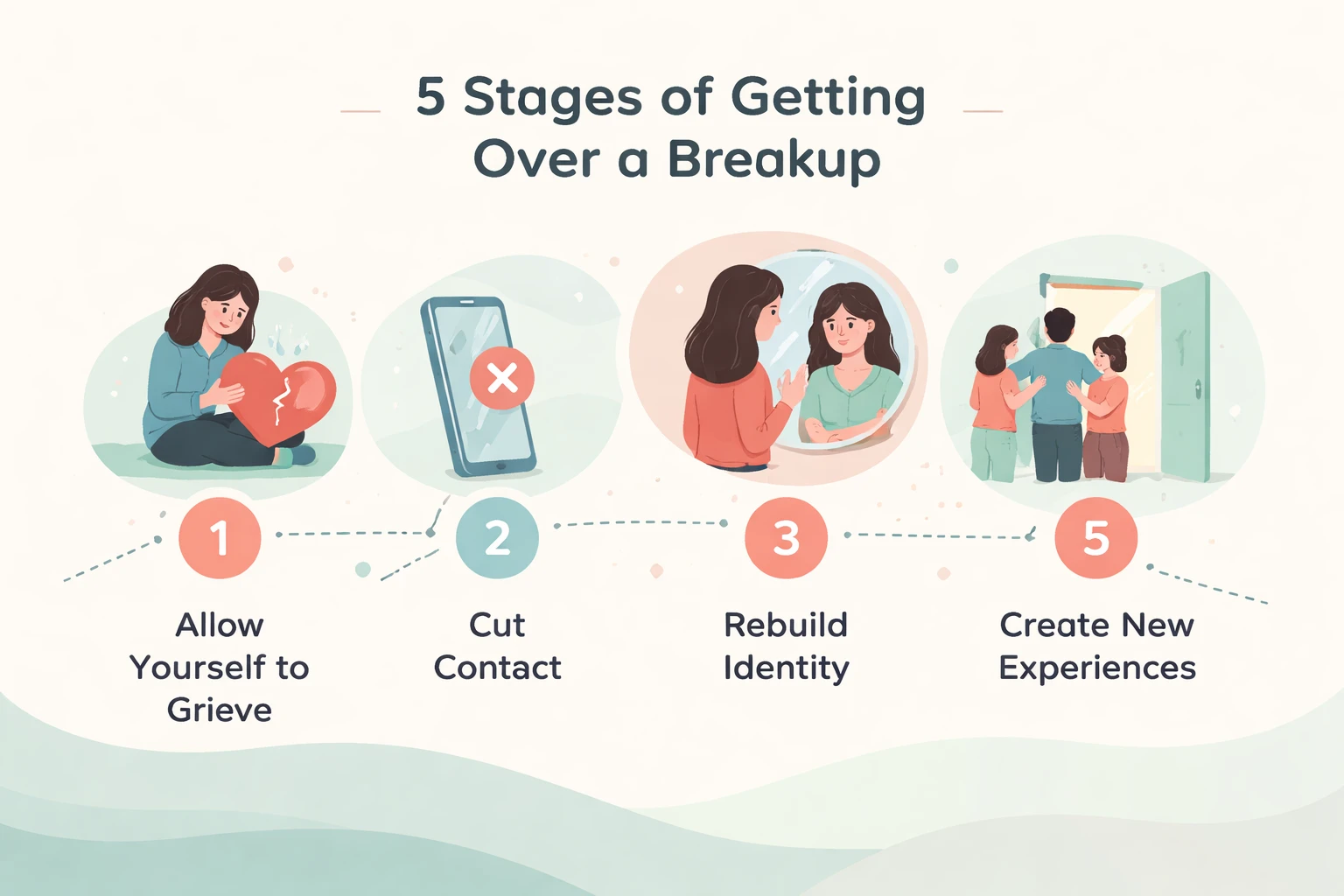
Here is a brief overview of the 5 stages of breakup grief:
- Denial and Shock — This is not really happening. Maybe we will get back together.
- Anger and Bargaining — How could they do this? What if I had done things differently?
- Depression and Sadness — The full weight of the loss hits. Everything feels empty.
- Acceptance — The pain softens. You start seeing the relationship more clearly.
- Growth and Moving On — You are ready for new experiences and possibly new love.
These stages are not linear. You might cycle back and forth between them, feel several at once, or skip one entirely. There is no "right" way to grieve.

Step 1: Allow Yourself to Grieve
The first and most important step in learning how to get over a breakup is counterintuitive: stop trying to rush past the pain.
Our culture often pushes us to "stay strong" or "keep busy" after heartbreak. But suppressing emotions does not make them go away—it just delays processing and can lead to the pain surfacing in unhealthy ways later.
What Healthy Grieving Looks Like
Feel your feelings fully. When sadness comes, let yourself cry. When anger surfaces, acknowledge it (in healthy ways). When you can't stop missing your ex, admit it to yourself rather than pushing it away.
Journal your thoughts. Writing helps externalize the emotional tornado inside you. You do not need to make sense of it—just get it out.
Set aside "grief time." If constant sadness feels overwhelming, try scheduling 20-30 minutes daily specifically for processing emotions. This gives your feelings space while preventing them from consuming your whole day.
Avoid numbing behaviors. Alcohol, endless scrolling, rebound relationships, or overworking might provide temporary relief but extend the grieving process.
The Timeline Myth
There is no formula for how long grief should last. Research suggests recovery peaks around 11 weeks for many people, but your timeline depends on relationship length, how it ended, your attachment style, and numerous other factors.
What matters is not how fast you move—it is that you are moving.
Step 2: Cut Contact (At Least Temporarily)
This might be the hardest step, but it is also one of the most powerful: implementing the no contact rule.
When you are used to talking to someone every day, the urge to reach out feels overwhelming. Every notification makes your heart jump. You might rationalize texting them—just to check in, just to return something, just because you saw something that reminded you of them.
These impulses are normal, but acting on them extends your pain.
Why No Contact Works
Breaks the addiction cycle. Remember those brain reward circuits? Constant contact keeps feeding them. Distance allows your brain to recalibrate.
Prevents false hope. Every interaction can restart the grieving process or create confusion about whether you might reconcile.
Protects your dignity. In vulnerable moments, you might say things you regret or appear desperate. Space prevents this.
Creates room for healing. You cannot move forward while constantly looking back.
What No Contact Includes
- No texting or calling
- No social media stalking (unfollow, mute, or block if necessary)
- No reaching out through mutual friends
- No "accidental" run-ins at places you know they will be
The minimum recommended period is 30 days, but many people benefit from longer. The goal is not to punish anyone—it is to give yourself space to heal.
Download No Contact AI
No contact day counter, private journal, and chat support to get through a breakup.
Download the app
Scan with your phone
Automatic redirect to iOS or Android
Step 3: Rebuild Your Identity
One of the most disorienting parts of a breakup is realizing how much of your identity was wrapped up in the relationship. Who are you without them? What do you like? What do you want?
This is actually one of the hidden gifts of heartbreak: the opportunity to rediscover—or discover for the first time—who you really are.
Practical Ways to Rebuild
Reconnect with Pre-Relationship You
- What hobbies did you abandon during the relationship?
- Which friendships did you neglect?
- What dreams did you put aside?
Explore New Interests
- Take a class in something you have always wanted to try
- Travel somewhere you always wanted to go (solo trips can be especially powerful)
- Read books outside your usual genres
- Try a new form of exercise or creative expression
Create New Routines
- Rearrange your living space
- Establish morning and evening rituals that are just yours
- Find new coffee shops, restaurants, and walking routes
Ask Yourself Important Questions
- What did I learn about myself in this relationship?
- What do I want in my next relationship?
- What patterns do I want to break?
- What values are non-negotiable for me?
This is not about becoming a completely different person. It is about reconnecting with your core self and intentionally choosing who you want to be moving forward.
Step 4: Lean on Your Support System
You do not have to do this alone—and trying to can actually slow your healing.
Research consistently shows that social support is one of the strongest predictors of healthy recovery after breakups. Having people who listen, validate your feelings, and remind you of your worth makes an enormous difference.

Building Your Support Team
Inner Circle (2-3 people)
- These are your ride-or-die friends or family members
- They are available for middle-of-the-night calls
- They can handle hearing about your ex without judgment
Wider Circle
- Friends who can distract you with activities
- Colleagues who provide normalcy
- Community members (gym buddies, book club, etc.)
Professional Support
- Consider finding a breakup therapist if grief feels unmanageable
- A therapist provides objective perspective
- They can help identify unhealthy patterns
- No judgment, no advice fatigue from friends
How to Ask for Help
Many people struggle to reach out when hurting. Here are some scripts:
- "I am going through a really hard time with my breakup. Could we talk/hang out this week?"
- "I know I have been MIA. The breakup hit me harder than I expected. Can I lean on you a bit?"
- "I do not need advice right now—just someone to listen. Are you available?"
Most people want to help. Let them.
Step 5: Create New Experiences
At some point in your healing journey, it is time to actively create a new chapter. This does not mean forcing happiness or pretending you are over it before you are. It means intentionally building a life that excites you.
The Science of New Experiences
Novel experiences literally rewire your brain. They:
- Create new neural pathways (not associated with your ex)
- Release dopamine (the feel-good neurotransmitter)
- Build confidence and self-efficacy
- Generate new memories that start to outnumber the old ones
Ideas to Get Started
Weekly New Experience Challenge Try one new restaurant, coffee shop, or activity each week. Invite a friend or go alone—both have value.
Say Yes More Often That party you normally would skip? Go. The invitation to try something new? Accept it. The uncomfortable networking event? Show up.
Travel (Even Small Trips) A weekend trip to a nearby town creates distance from your regular life and generates new memories fast.
Invest in Growth
- Career development (courses, certifications, networking)
- Physical health (new fitness routine, better nutrition)
- Mental health (therapy, meditation, journaling practice)
- Creative pursuits (art, music, writing)
Meet New People Not necessarily for dating—just expanding your social world. Join clubs, attend events, take group classes.
How Long Will This Take?
This is probably the question you most want answered: "When will I feel normal again?"
The honest answer: it varies enormously.
What Research Says
Studies suggest that most people feel significantly better around the 11-week mark. However, prolonged distress lasting longer than three months may indicate that your healing could benefit from additional support.
Factors That Affect Timeline
Tends to Speed Healing:
- You initiated the breakup
- You have strong social support
- You use healthy coping strategies
- You maintain no contact
- The relationship had clear problems
Tends to Slow Healing:
- You were blindsided by the breakup
- You ruminate excessively about the relationship
- You maintain contact with your ex
- You had an insecure attachment style before the relationship
- You have limited social support
A Note on "Moving On Too Fast"
There is no such thing as healing too quickly if it is genuine. Some people process grief rapidly and completely. Others need much more time. Neither is wrong.
What matters is that you are actually processing—not just suppressing or avoiding. If you are dating again quickly but still thinking about your ex constantly, that is different from genuinely feeling ready for someone new.
Signs You are Finally Over Your Ex
How do you know when you have truly healed? Here are some indicators:
Emotional Signs
- You can think about them without intense pain
- You no longer check their social media
- You feel genuinely happy (not just relieved) when you hear they are doing well
- Memories bring nostalgia without devastation
Behavioral Signs
- You have stopped hoping they will reach out
- You do not compare everyone new to them
- You have removed or are okay seeing their belongings
- You can talk about the relationship without getting upset
Identity Signs
- You have a clear sense of who you are independent of them
- Your life feels full and meaningful on its own
- You know what you want in your next relationship
- You have learned from the experience without being defined by it
The Ultimate Test You bump into them unexpectedly and your stomach does not drop. You can have a pleasant, genuine interaction without it derailing your day.
FAQ: Getting Over a Breakup
How do you get over someone you still love?
This is perhaps the hardest scenario. You can still love someone and recognize the relationship needed to end. Focus on accepting that love does not always mean compatibility. You can care about someone and know you cannot be together. With time and distance, the intense romantic love transforms into something more peaceful.
What is the fastest way to get over a breakup?
There are no shortcuts, but you can avoid things that slow you down: maintaining contact, stalking social media, rushing into rebound relationships, or suppressing emotions. The "fastest" path is actually allowing yourself to fully feel and process, which paradoxically moves you through it quicker than trying to bypass the pain.
Is it normal to feel relief after a breakup?
Yes. Relief often coexists with sadness, especially if the relationship was stressful, conflicted, or you knew deep down it was not right. Feeling relieved does not mean you did not care—it means some part of you recognizes this needed to happen.
Should I stay friends with my ex?
Not immediately. Most relationship experts recommend a minimum period of no contact before attempting friendship. If you try to be friends while still processing romantic feelings, you will likely extend your pain and create confusion. Revisit the friendship question once you are fully healed—months or even a year later.
When should I start dating again?
When the thought of meeting someone new fills you with genuine excitement rather than obligation or comparison to your ex. When you are looking for connection rather than distraction. When you can offer someone your full attention rather than healing at their expense. There is no universal timeline, but rushing it usually backfires.
What if I cannot stop thinking about my ex?
Some rumination is normal, but if obsessive thoughts persist for months, consider professional help. Techniques like cognitive behavioral therapy can help break rumination cycles. In the meantime, try thought replacement: when you catch yourself dwelling, redirect to something engaging that requires focus.
Getting over a breakup is one of life's most painful experiences. But it is also one of its greatest teachers. You will learn what you need, what you will not accept, and how resilient you truly are.
Right now, the pain feels endless. But one day—maybe sooner than you think—you will look back and realize this breakup was not the end of your story. It was the beginning of a better chapter.
You have got this.
Download No Contact AI
No contact day counter, private journal, and chat support to get through a breakup.
Download the app
Scan with your phone
Automatic redirect to iOS or Android