


You have tried everything—talking to friends, staying busy, reading self-help articles. But the pain is not lifting. You are starting to wonder: should I try therapy for breakup recovery?
The short answer: maybe. Therapy is not always necessary after a breakup, but for many people, it can dramatically accelerate healing and prevent long-term emotional damage.
This guide will help you determine if therapy is right for you, understand your options, and find the right support—even if you are on a tight budget. For the complete picture of breakup recovery, see our complete breakup recovery guide.
Download No Contact AI
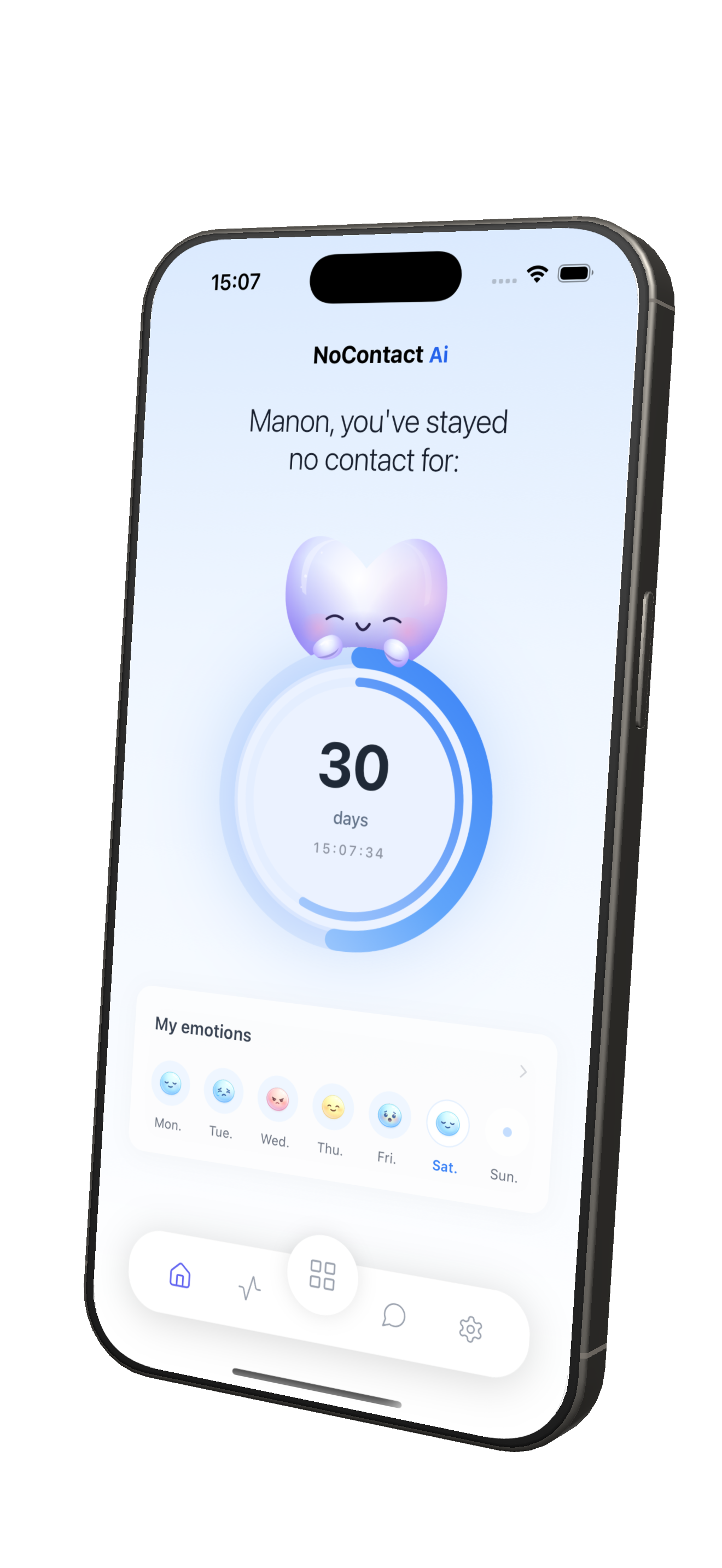
No contact day counter, private journal, and chat support to get through a breakup.
Download the app
Scan with your phone
Redirects to iOS or Android.
Signs You Might Benefit From Breakup Therapy
Not everyone needs professional help after a breakup. Many people heal with time, support from friends, and self-care. But certain signs suggest therapy could make a significant difference.
You Should Consider Therapy If:
1. It has been months and you are not improving Some pain after a breakup is normal. But if you are still struggling intensely after 3-4 months with no sign of relief, professional support could help you get unstuck.
2. You cannot function normally Missing work, neglecting basic hygiene, unable to care for dependents, or struggling to complete simple tasks—these are signs your grief has become overwhelming.
3. You are experiencing severe anxiety If you are having panic attacks, obsessive thoughts, or crippling fear about the future, you may be dealing with breakup-related anxiety that requires professional intervention.
4. You have thoughts of self-harm This is non-negotiable. If you are having any thoughts of hurting yourself, please seek help immediately. This is not weakness—it is wisdom.
5. You are using substances to cope If you find yourself drinking more, using drugs, or engaging in other numbing behaviors more than occasionally, a therapist can help you develop healthier coping strategies.
6. The breakup triggered deeper issues Sometimes a breakup opens old wounds—childhood trauma, abandonment issues, patterns from past relationships. A therapist can help you process these layers.
7. You keep repeating unhealthy relationship patterns If this breakup feels familiar—same dynamic, different person—therapy can help you understand and break the cycle.
8. Your support system is limited Not everyone has close friends or family to lean on. A therapist provides consistent, professional support when other resources are thin.
When Therapy Might NOT Be Necessary
- You are sad but functional
- You have strong support from friends and family
- You are seeing gradual improvement week over week
- The relationship was relatively short and uncomplicated
- You have healthy coping mechanisms in place
Trust yourself. If something feels off, it probably is worth exploring with a professional.
Types of Therapy for Breakup Recovery
Different therapeutic approaches work for different people. Here are the most effective options for breakup-related struggles:
Cognitive Behavioral Therapy (CBT)
Best for: Rumination, obsessive thoughts, anxiety
CBT focuses on identifying and changing unhelpful thought patterns. If you are stuck in loops of "what if" thinking or catastrophizing about the future, CBT provides practical tools to redirect your mind.
What it looks like: Your therapist helps you identify distorted thoughts ("I will never find love again"), challenge them with evidence, and replace them with more balanced perspectives.
Psychodynamic Therapy
Best for: Understanding patterns, processing deeper wounds
This approach explores how your past—including childhood and previous relationships—shapes your current emotional experience. It helps you understand WHY you feel the way you do.
What it looks like: You might explore your attachment style, family dynamics, or how this breakup connects to earlier experiences of loss or rejection.
Acceptance and Commitment Therapy (ACT)
Best for: Struggling to accept reality, feeling stuck
ACT helps you accept difficult emotions rather than fighting them, while committing to actions aligned with your values. It is particularly helpful if you are resisting the reality of the breakup.
What it looks like: You learn mindfulness techniques to observe thoughts without being controlled by them, and clarify what matters to you moving forward.
EMDR (Eye Movement Desensitization and Reprocessing)
Best for: Trauma, betrayal, highly distressing memories
Originally developed for PTSD, EMDR helps process traumatic memories. If your breakup involved betrayal, abuse, or particularly painful events, EMDR can help reduce their emotional charge.
What it looks like: While focusing on a distressing memory, you follow the therapist's finger movements or other bilateral stimulation. This helps the brain reprocess the memory.
Supportive Counseling
Best for: General support, processing emotions, being heard
Sometimes you just need someone to talk to who is objective and trained to help. Supportive counseling provides a safe space to express and explore your feelings.
What it looks like: Weekly sessions where you talk through your experience with a compassionate professional who offers guidance and perspective.
What Happens in Breakup Therapy?
If you have never been to therapy, the unknown can feel intimidating. Here is what to actually expect:
First Session (Intake)
Your therapist will ask about:
- The breakup: what happened, when, how you are coping
- Your relationship history
- Your mental health history
- Your current symptoms and struggles
- What you hope to achieve
This is also your chance to assess if this therapist feels like a good fit. Trust your gut.
Ongoing Sessions
Typical breakup therapy sessions might include:
- Processing emotions from the week
- Identifying unhelpful thought patterns
- Learning coping strategies
- Exploring underlying issues
- Setting goals for healing
- Practicing new skills
What Therapy Is NOT
- Your therapist telling you what to do
- Getting advice on whether to contact your ex
- Someone agreeing with everything you say
- A quick fix (it takes time)
- Judgment for your choices
A good therapist helps you find your own answers, not gives you theirs.
Online Therapy vs. In-Person
Both formats can be effective. Here is how to choose:

Online Therapy
Pros:
- More accessible (no commute, available anywhere)
- Often more affordable
- Easier to fit into busy schedules
- Can feel less intimidating
- More therapist options to choose from
Cons:
- Less personal connection for some people
- Technology issues can disrupt sessions
- Not ideal for severe mental health crises
- May not accept insurance
Best platforms for breakup recovery:
- BetterHelp
- Talkspace
- Cerebral
- Online-Therapy.com
In-Person Therapy
Pros:
- Stronger therapeutic relationship for many people
- No technology barriers
- Better for severe symptoms
- More likely to accept insurance
Cons:
- Requires commute
- Scheduling can be harder
- Geographic limitations on therapist choice
- Generally more expensive
Bottom line: Both work. Choose based on your preferences, budget, and severity of symptoms.
Download No Contact AI
No contact day counter, private journal, and chat support to get through a breakup.
Download the app
Scan with your phone
Redirects to iOS or Android.
How to Find the Right Therapist
Not all therapists are equally skilled at helping with breakup recovery. Here is how to find a good match:
Step 1: Know What You Need
Consider:
- Do you prefer a specific gender?
- Is cultural background important?
- Do you want someone directive or more exploratory?
- In-person or online?
- What is your budget?
Step 2: Search Strategically
Good places to find therapists:
- Psychology Today directory (filter by specialty)
- Your insurance provider's directory
- Referrals from friends or doctors
- Online platforms like BetterHelp or Talkspace
Look for these specialties:
- Relationship issues
- Grief and loss
- Anxiety and depression
- Attachment issues
Step 3: Screen Potential Therapists
Most therapists offer a free 15-minute consultation. Use it to ask:
- Have you worked with breakup recovery before?
- What is your approach?
- What can I expect from working with you?
- What are your fees and do you offer sliding scale?
Step 4: Trust the First Sessions
Give it 2-3 sessions before deciding. But if something feels really off—you do not feel heard, safe, or respected—try someone else. The fit matters enormously.
Red Flags
- They push their own agenda
- They seem judgmental
- They encourage you to contact your ex repeatedly
- They share too much about themselves
- You feel worse after sessions consistently
How Long Does Breakup Therapy Take?
This varies significantly based on your situation:
Short-Term (8-12 sessions)
Appropriate if:
- The breakup was relatively uncomplicated
- You have good baseline mental health
- You mainly need support and coping strategies
- You are already seeing improvement
Medium-Term (3-6 months)
Common when:
- The breakup involved betrayal or trauma
- You are working through deeper patterns
- Anxiety or depression is significant
- Multiple life areas are affected
Longer-Term (6+ months)
Sometimes needed if:
- Deep attachment wounds are involved
- You are addressing long-standing patterns
- Complex trauma is being processed
- You find ongoing support valuable
Many people see significant improvement within 2-3 months of weekly therapy, even if they continue longer for maintenance.
What If You Cannot Afford Therapy?
Therapy can be expensive, but there are options at every budget level:
Lower-Cost Options
Sliding scale therapists Many therapists adjust fees based on income. Ask directly—it is normal.
Training clinics University psychology programs offer low-cost therapy from supervised graduate students.
Community mental health centers Federally funded centers offer services on a sliding scale.
Employee assistance programs (EAP) Many employers offer 3-6 free therapy sessions through EAP benefits.
Online platforms BetterHelp, Talkspace, and others often cost less than traditional therapy (150-200/session).
Free Alternatives
Support groups Groups like DivorceCare or online breakup support communities provide peer support at no cost.
Crisis lines If you are in acute distress, crisis hotlines provide immediate support:
- 988 Suicide and Crisis Lifeline (US)
- Crisis Text Line: Text HOME to 741741
Self-help resources Books, podcasts, and articles can provide valuable guidance. See our guide on self-healing strategies.
The Cost of NOT Getting Help
Consider this: how much is your suffering costing you? Lost productivity at work, strained relationships, poor health choices—these have real costs too. Sometimes investing in therapy saves money in the long run.
Therapy + Self-Help: The Best Combination
Research shows that combining professional therapy with active self-help produces better outcomes than either alone.
How to Maximize Your Healing
Use therapy for:
- Processing complex emotions
- Gaining professional perspective
- Learning new coping skills
- Working through deeper patterns
- Having accountable support
Use self-help for:
- Daily emotional maintenance
- Practicing skills between sessions
- Tracking your progress
- Immediate support when needed
- Building long-term habits
Tools That Complement Therapy
- Journaling — Process between sessions
- Meditation apps — Build mindfulness skills
- Exercise — Regulate your nervous system
- Support communities — Connect with others who understand
- AI support tools — Use a no contact app for daily guidance
The best results come from a multi-pronged approach. Therapy once a week is powerful, but what you do the other six days matters just as much.
Deciding to try therapy for breakup recovery is not a sign of weakness—it is a sign of self-awareness and commitment to your wellbeing. Not everyone needs it, but for those who do, it can be transformative.
You deserve support. Whether that comes from a professional, a support group, self-help tools, or some combination, do not try to white-knuckle through this alone.
Healing is possible. And sometimes, asking for help is the bravest first step.
Download No Contact AI
No contact day counter, private journal, and chat support to get through a breakup.
Download the app
Scan with your phone
Redirects to iOS or Android.
Related topics