
You cannot stop checking your phone. You replay conversations endlessly, analyzing every word for hidden meaning. The urge to reach out is overwhelming, even though you know it will not help. Sleep is impossible. Eating feels pointless. Your entire nervous system seems stuck in emergency mode.
If this sounds familiar, you are likely experiencing an anxious attachment breakup—one of the most intense emotional experiences a person can endure.
Ready to Start Your No Contact Journey?
Track your progress, get AI coaching when the urge to text hits, and become the strongest version of yourself.
Free to start • No credit card required
For those with anxious attachment, breakups do not just hurt. They feel like survival threats. Understanding why this happens and how to heal can transform one of your most painful experiences into an opportunity for genuine growth.
Why Breakups Hit Anxiously Attached People Harder
You are not being dramatic. Research confirms that anxious attachment creates more intense breakup distress. Here is why.
Your Attachment System Is Hyperactivated
Anxious attachment involves a hyperactivated attachment system—it is always looking for signs of abandonment. When a breakup happens, this system goes into overdrive:
- Constant vigilance for any sign of reconnection
- Overwhelming urge to re-establish contact
- Difficulty accepting that the relationship is actually over
- Preoccupation with the lost partner to the exclusion of other thoughts
Your Self-Worth Is Tied to the Relationship
People with anxious attachment often derive significant self-worth from their relationships. When the relationship ends, it can feel like:
- You have lost part of your identity
- You are fundamentally unlovable
- Something is wrong with you specifically
- Your worth as a person has decreased
You Are Experiencing Neurochemical Withdrawal
During relationships, you were receiving regular doses of dopamine, oxytocin, serotonin, and other neurochemicals. Breakup creates actual withdrawal from these chemicals—similar to drug withdrawal. This is not metaphorical; your brain is genuinely going through withdrawal, and that makes everything harder.
You Fear What This Means About the Future
Anxious attachment comes with a deep fear of abandonment. A breakup confirms that fear: you WERE abandoned. This can trigger:
- Fear that you will always be left
- Belief that something is fundamentally wrong with you
- Hopelessness about ever finding lasting love
- Generalized anxiety about all future relationships
The Anxious Attachment Breakup Experience
Understanding what you are going through helps normalize it and identify what needs healing.
The Protest Phase
Initially, your attachment system protests the loss:
- Desperate urges to reach out
- Bargaining thoughts ("If I just explain myself...")
- Difficulty accepting reality
- Searching for any reason the breakup might reverse
This protest phase can last weeks or months, fueled by hope that keeps you attached to someone who has left.
The Rumination Spiral
Anxious attachers are prone to rumination—obsessive thinking about the relationship:
- Replaying conversations endlessly
- Analyzing their behavior for what you did wrong
- Checking social media compulsively
- Seeking information about their life through any means
This rumination keeps you emotionally connected to someone who is no longer available.
The Self-Blame Pattern
Anxious attachment often leads to excessive self-blame:
- "If only I had been different..."
- "I drove them away with my needs"
- "I was too much"
- "No one could love someone like me"
This self-blame is rarely accurate but feels completely true.
Physical Symptoms
The intensity of anxious attachment breakups creates real physical experiences:
- Chest tightness or pain
- Difficulty eating or sleeping
- Nausea and stomach upset
- Exhaustion despite poor sleep
- Panic attacks
These are not imagined—your body is responding to perceived threat.
Common Behaviors That Make It Worse
Self-awareness about unhelpful patterns can help you interrupt them.
Reaching Out Repeatedly
Every time you contact your ex, you:
- Reset your emotional healing clock
- Reinforce your attachment rather than processing grief
- Likely push them further away
- Give your brain another dopamine hit followed by another crash
Social Media Monitoring
Checking their profiles:
- Keeps them present in your mind
- Provides incomplete information that triggers anxiety
- Prevents the necessary process of releasing them
- Can create obsessive patterns
Research shows that social media monitoring increases breakup distress for anxious attachers specifically.
Seeking Excessive Reassurance
Constantly asking friends to analyze texts, confirm your worth, or predict your ex's behavior:
- Keeps you focused on them rather than yourself
- Never actually resolves the underlying anxiety
- Can exhaust your support system
- Prevents developing internal resources
Pursuing at All Costs
Grand gestures, showing up uninvited, writing long letters:
- Rarely work the way you hope
- Can feel desperate and push them away
- Keep you stuck in protest rather than acceptance
- Delay your own healing
The Anxious-Avoidant Breakup Dynamic
If your ex is avoidant—and there is a high chance they are, since anxious-avoidant pairings are common—understanding this dynamic is crucial.
Why You Attracted Each Other
The anxious-avoidant pairing is magnetic but painful:
- Your pursuit provided the intimacy avoidants crave but fear
- Their distance felt familiar and triggered your attachment system
- You each unconsciously recreated childhood dynamics
- The push-pull created intense chemistry mistaken for deep love
How the Breakup Typically Unfolds
In this pairing:
- You likely felt increasingly anxious as they pulled away
- They felt increasingly suffocated by your need for closeness
- You pursued more; they withdrew more
- Eventually, they left to escape the pressure
Understanding this pattern helps you see: the breakup may reflect dynamic incompatibility rather than your personal inadequacy.
If your ex is avoidant, explore if your ex is avoidant for detailed understanding.
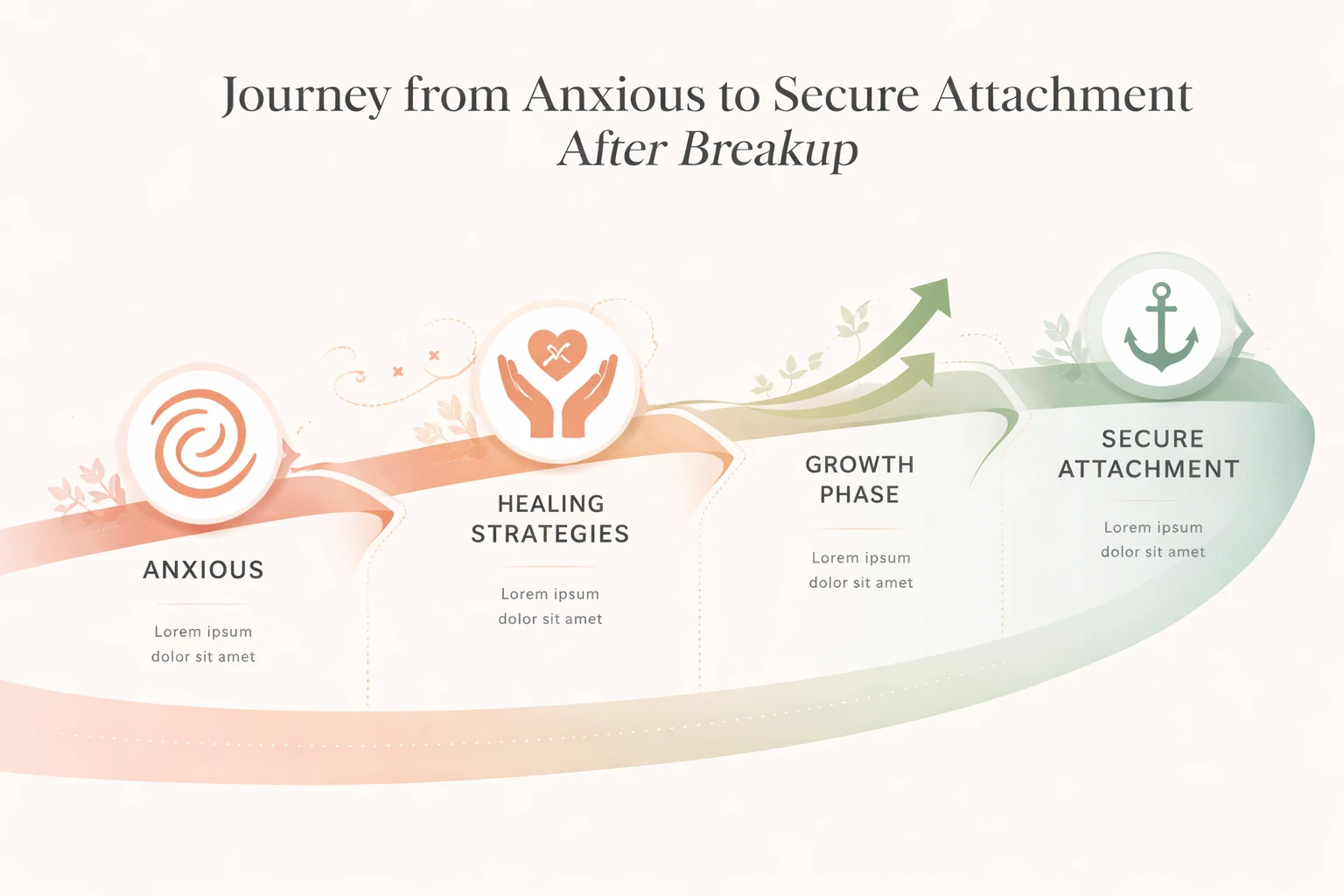
Healing Strategies for Anxious Attachment
Recovery requires intentional strategies designed for your specific attachment style.
Create External Supports for No Contact
If why no contact helps makes logical sense but feels impossible, create external accountability:
- Delete their contact from your phone
- Block on social media (at least temporarily)
- Tell friends not to share information about them
- Use apps that block certain contacts
You are not strong enough to resist checking; no one with anxious attachment is. Remove the option.
Build an Emotional Regulation Toolkit
Develop specific strategies for intense emotional moments:
- Physical activity (walks, exercise, dancing)
- Sensory soothing (weighted blanket, hot bath, calming music)
- Grounding techniques (5-4-3-2-1 sensory exercise)
- Journaling (write to them but do not send)
- Calling a specific friend who understands
Use these INSTEAD of reaching out when urges hit.
Practice Self-Compassion
Replace self-blame with self-compassion:
- Notice critical thoughts without believing them
- Speak to yourself as you would to a hurting friend
- Acknowledge that your pain is real and valid
- Remind yourself that attachment patterns are not character flaws
Research shows self-compassion counters the self-punitive coping that worsens anxious attachment breakup distress.
Address the Core Wounds
Anxious attachment usually stems from inconsistent caregiving in childhood. Consider:
- Therapy focused on attachment patterns
- Exploring how your current experience echoes past abandonment
- Processing childhood wounds that the breakup has triggered
- Understanding that your fear of abandonment predates this relationship
Build Self-Trust Through Small Commitments
Anxious attachment often involves difficulty trusting yourself. Rebuild self-trust:
- Make small promises to yourself and keep them
- Follow through on self-care routines
- Notice when you survive difficult moments
- Celebrate your resilience
Using This Breakup to Become More Secure
This painful experience can be the catalyst for developing more secure attachment.
What Secure Attachment Looks Like
Secure attachment means:
- Feeling worthy of love independent of relationship status
- Trusting that you can handle whatever happens
- Not needing constant reassurance
- Being comfortable with reasonable uncertainty
- Maintaining your identity within relationships
How to Move Toward Security
Develop internal validation:
- Practice affirming your own worth
- Stop seeking external confirmation of your value
- Build identity independent of romantic relationships
Tolerate uncertainty:
- Sit with not knowing rather than seeking constant answers
- Accept that some questions will never be answered
- Practice being okay with ambiguity
Build diverse sources of connection:
- Invest in friendships
- Connect with family
- Join communities around interests
- Do not make romantic love your only attachment
For General Breakup Recovery
While your anxious attachment creates specific challenges, many general recovery strategies also apply. Explore broader guidance alongside attachment-specific work.
When to Reach Out vs. When to Hold Back
This is one of the hardest questions for anxiously attached people.
Signs to Hold Back
- You want to reach out to feel better, not because there is something specific to say
- You have already reached out recently without meaningful response
- Your motivation is fear or desperation
- You are hoping they will reassure you or take you back
- You have not genuinely healed or changed yet
If You Must Reach Out
If you genuinely need to communicate (logistics, shared responsibilities):
- Keep it brief and neutral
- Have a friend review the message first
- Do not use it as an excuse for emotional conversation
- Accept whatever response (or non-response) you receive
When Time Has Passed
If significant time has passed and you want to reconnect:
- Be honest about your motivations
- Ensure you have genuinely grown
- Accept that they may not respond
- Do not return to the same dynamic that did not work
Building a Healthier Next Relationship
Your anxious attachment does not doom you to painful relationships forever.
Choose Differently
Notice your patterns:
- Are you attracted to unavailability?
- Does emotional distance feel like chemistry?
- Do consistent, available partners feel boring?
These patterns can be changed with awareness.
Communicate Your Needs
In future relationships:
- Express needs clearly rather than hinting
- Ask for reassurance directly rather than testing
- Discuss attachment styles early
- Be honest about your patterns and triggers
Stay Connected to Yourself
The goal is not losing yourself in the next relationship:
- Maintain your interests and friendships
- Keep individual identity separate from "us"
- Notice when you are abandoning yourself for the relationship
- Practice healing support for anxious attachment throughout your journey
The Path Forward
An anxious attachment breakup is one of the hardest things you will experience. The intensity of your pain is real, valid, and rooted in both psychology and neurobiology.
But this experience also offers an opportunity. The patterns that created such intense pain can be healed. The attachment wounds that this breakup has surfaced can be processed. The anxious attachment that drove your suffering can evolve toward security.
This is not the end of your story. It can be the beginning of a new chapter—one where you love from security rather than fear, connect from wholeness rather than need, and build relationships that do not recreate your childhood wounds.
The work is hard. But you have already survived the hardest part: the breakup itself. Everything from here is recovery.
Ready to Start Your No Contact Journey?
Track your progress, get AI coaching when the urge to text hits, and become the strongest version of yourself.
Free to start • No credit card required
Related topics