The pain is unbearable. You wake up and for a split second everything is normal—then it hits you all over again. You are wondering: how long until this breakup stops hurting?
If you are asking this question, you are likely in the thick of it. The kind of pain that makes it hard to eat, hard to sleep, hard to focus on anything else. The kind that makes you wonder if you will ever feel normal again.
Here is what I want you to know first: you will. The pain you are feeling right now is not permanent, even though it feels like it will never end.
This article will give you an honest timeline of what to expect, signs that healing is happening (even when you cannot see it), and evidence-based strategies that actually help. For the full recovery journey, see our complete guide to breakup recovery.
Ready to Start Your No Contact Journey?
Track your progress, get AI coaching when the urge to text hits, and become the strongest version of yourself.
Free to start • No credit card required
Why Breakup Pain Is So Intense
Before we talk about when the pain will stop, let us understand why it hurts this much in the first place. This is not weakness—it is biology.
Your Brain on Heartbreak
Neuroscience research has shown that romantic rejection activates the same brain regions as physical pain. When researchers put heartbroken people in fMRI machines and showed them photos of their ex, the pain centers of their brains lit up just like they would after a physical injury.
But that is not all. Breakups also affect your brain's reward system—the same circuits involved in addiction. When you were in the relationship, your brain was regularly flooded with dopamine, oxytocin, and other feel-good chemicals. Now those chemicals have been abruptly cut off.
You are essentially going through withdrawal.
This explains why:
- You feel physically ill (chest tightness, nausea, fatigue)
- You have intense urges to contact them
- You cannot stop thinking about them
- Nothing else brings pleasure right now
- The mornings are especially brutal
Attachment Wounds
Beyond brain chemistry, breakups often trigger our deepest attachment wounds. If you have any history of abandonment, rejection, or insecure attachment, a breakup can feel like confirmation of your worst fears about yourself.
This is why breakup pain can feel disproportionate to the relationship length or even to how happy you actually were. It is touching something much deeper.
The Typical Pain Timeline
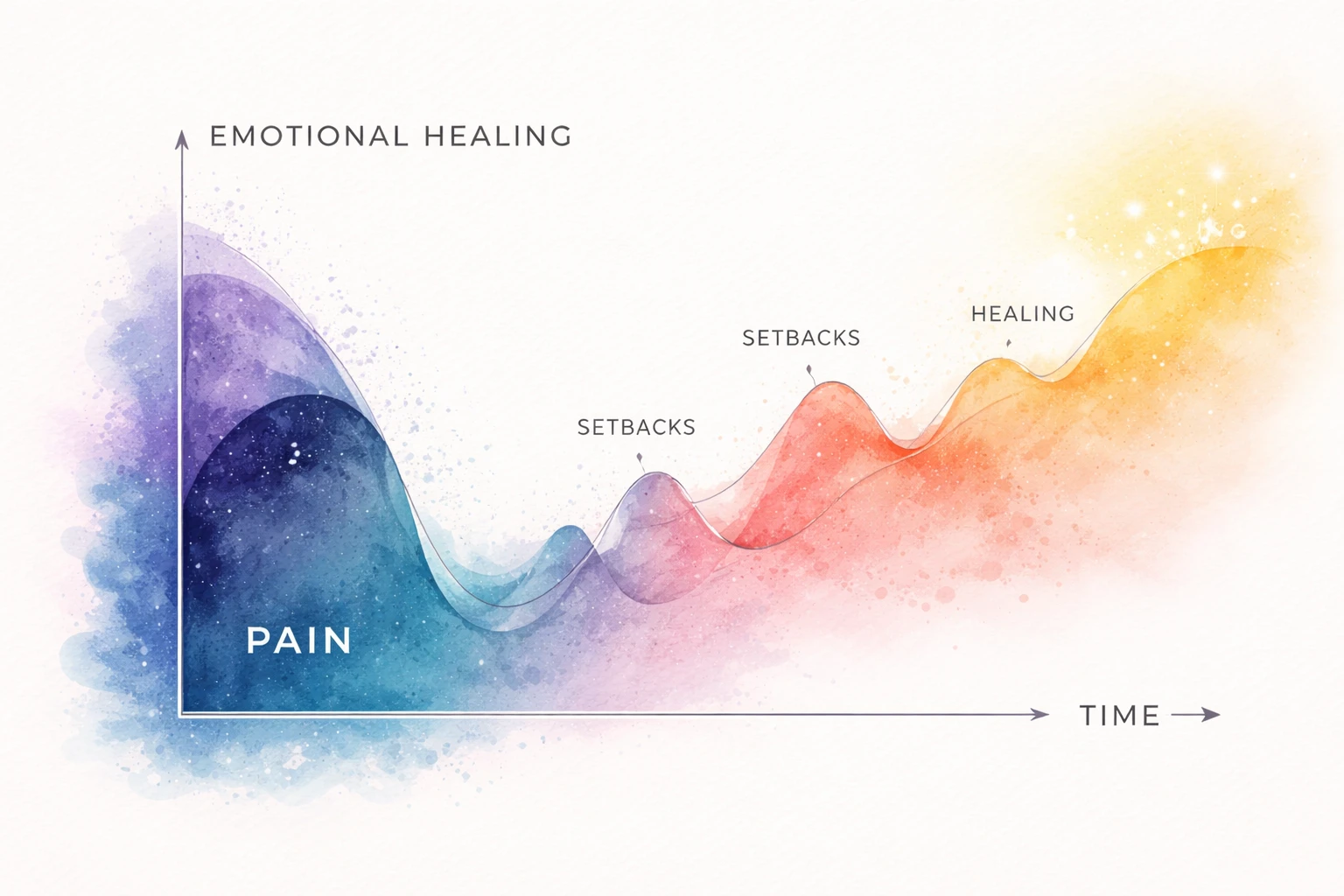
Everyone heals differently, but here is a general map of what many people experience:
Week 1-2: Acute Crisis
This is the worst of it. The pain is constant and overwhelming. You might:
- Struggle to eat or sleep
- Feel physical symptoms (chest pain, nausea)
- Cry frequently and unpredictably
- Be unable to focus on work or daily tasks
- Feel disconnected from reality
What to know: This intensity is temporary. Your nervous system is in shock.
Week 3-4: Waves of Pain
The constant, crushing weight begins to lift slightly. Instead of non-stop agony, you experience waves—moments of relative calm interrupted by sudden crashes of grief.
- You might have a few "good hours" followed by terrible ones
- Triggers (songs, places, memories) hit hard
- Mornings and nights tend to be worst
- You start to function somewhat normally
Month 2: Bad Days and Better Days
The waves become less frequent and less intense. You start having bad days rather than bad hours.
- You can go longer stretches without thinking about them
- The crying decreases
- You have moments of genuine laughter
- Sleep and appetite begin normalizing
Month 3-4: Lingering Sadness
Acute pain transforms into a duller sadness. It is still there, but it no longer dominates every moment.
- You think about them less frequently
- When you do think about them, it hurts less
- You start engaging with life again
- Occasional setbacks still happen
Month 5-6+: Acceptance Phase
For most people, somewhere around the 3-6 month mark, the pain has significantly diminished. You can:
- Think about them without your stomach dropping
- Talk about the relationship somewhat objectively
- Feel curious about your future
- Notice other people
Acute Pain vs. Lingering Sadness
It is important to distinguish between two types of hurt:
Acute Pain
- Intense, overwhelming, constant
- Interferes with daily functioning
- Physical symptoms present
- Typically lasts 4-8 weeks
Lingering Sadness
- Duller, comes and goes
- Does not prevent daily functioning
- Triggered by reminders
- Can last months or longer
The acute pain WILL stop. Usually within 1-2 months, the worst of it passes. What remains is a gentler sadness that gradually fades.
Some lingering sadness is normal even months or years later. You may always feel a twinge when you hear "your song" or visit a place you went together. That does not mean you have not healed—it means the relationship mattered.
Signs the Pain Is Starting to Lift
Healing often happens beneath conscious awareness. Here are signs progress is happening, even if you cannot feel it yet:
Physical Signs
- Sleeping better (or at all)
- Appetite returning
- Fewer physical symptoms (chest tightness, nausea)
- More energy
Emotional Signs
- Longer stretches between crying episodes
- Ability to laugh at something
- Moments where you forget about them
- Anger replacing sadness (this is actually progress)
Behavioral Signs
- Caring about your appearance again
- Reaching out to friends
- Completing work or tasks
- Making small future plans
Cognitive Signs
- Fewer intrusive thoughts about them
- Ability to see relationship flaws clearly
- Thinking about your own needs
- Not checking their social media as often
If you are experiencing any of these, even occasionally, you are healing.
Ready to Start Your No Contact Journey?
Track your progress, get AI coaching when the urge to text hits, and become the strongest version of yourself.
Why You Might Be Hurting Longer
If you feel like your pain is lasting longer than it "should," you are not broken. Several factors can extend the acute pain phase:
Ongoing Contact
Every time you text them, see them, or check their social media, you restart the withdrawal process. Your brain cannot move on from someone you keep engaging with.
Rumination
If you spend hours analyzing what went wrong, replaying conversations, and obsessing over "what if," you keep the pain fresh. Rumination is like picking at a wound—it prevents healing.
Isolation
Processing pain alone, without support, takes much longer. We are social creatures; connection helps regulate our nervous system.
Breakup Anxiety
If the breakup triggered significant anxiety—panic attacks, obsessive worrying, catastrophic thinking—the pain may feel more intense and last longer.
Complicated Circumstances
Betrayal, abuse, shared children, ongoing practical entanglements—all of these add layers of complexity that extend healing.
Pre-existing Mental Health
If you were already struggling with depression, anxiety, or other mental health challenges, a breakup can intensify those symptoms.
The Relationship Was Your Identity
If most of your social life, hobbies, and sense of self were tied to the relationship, you are grieving more than a partner—you are rebuilding yourself.
What Actually Helps the Pain
Not everything that feels like it should help actually does. Here is what research and experience show works:
Evidence-Based Strategies
1. Strict No Contact The single most effective thing you can do. Every contact resets your progress. Block, unfollow, delete—whatever it takes.
2. Physical Movement Exercise releases endorphins and helps metabolize stress hormones. Even a 10-minute walk helps.
3. Social Connection Time with friends and family regulates your nervous system and reminds you that you are not alone.
4. Structured Grief Time Set aside 20-30 minutes daily to feel your feelings fully. Outside that time, redirect your thoughts. This prevents both suppression and endless rumination.
5. Sleep Hygiene Poor sleep extends emotional pain. Prioritize 7-8 hours even if it requires sleep aids temporarily.
6. Journaling Writing externalizes the emotional chaos and helps process it.
7. Daily Support Through the Pain Having consistent support—whether from an app, a friend, or a therapist—makes a measurable difference.
What Does NOT Help
- Excessive alcohol or substances (delays processing)
- Rebound relationships (distracts but does not heal)
- Constant distraction (suppresses rather than processes)
- Venting endlessly (can reinforce negative patterns)
- Social media stalking (keeps them present in your mind)
When Pain Becomes Concerning
While intense pain after a breakup is normal, some signs suggest you might benefit from professional support:
Seek help if you experience:
- Thoughts of self-harm or suicide
- Inability to function at work/school after 6+ weeks
- Complete social withdrawal
- Using substances to cope
- Panic attacks or severe anxiety
- No improvement whatsoever after 2-3 months
These are not signs of weakness—they are signs that your brain needs additional support to heal. Please consider talking to a professional if any of these apply.
Crisis resources:
- National Suicide Prevention Lifeline: 988 (US)
- Crisis Text Line: Text HOME to 741741
- International Association for Suicide Prevention: https://www.iasp.info/resources/Crisis_Centres/
So how long until a breakup stops hurting? The acute, overwhelming pain typically lifts within 4-8 weeks. Significant relief usually comes around the 3-month mark. Full healing varies but often takes 6 months to a year for serious relationships.
But here is what matters more than the timeline: you WILL get through this. The pain you feel right now is not permanent. It will not always hurt this much.
Every day you survive brings you one day closer to the other side. And one day—maybe sooner than you think—you will realize the pain has finally, quietly, lifted.
You have got this.
Ready to Start Your No Contact Journey?
Track your progress, get AI coaching when the urge to text hits, and become the strongest version of yourself.
Free to start • No credit card required
Related topics