


It is 3 a.m. and you just jolted awake, heart pounding, because your ex was there again. In your dream, everything felt real -- their voice, their touch, even the way they looked at you. Now you are lying in the dark wondering: why do I dream of my ex when I am trying so hard to move on?
You are not alone. Research shows that between 35% and 50% of people regularly dream about former partners, whether they are single or in a new relationship. If you are working on getting over a breakup, these dreams can feel like your own mind is sabotaging your progress.
But here is the surprising truth: dreaming about your ex is not a sign of failure. It is actually a sign that your brain is doing exactly what it is designed to do. Let me explain.
Download No Contact AI
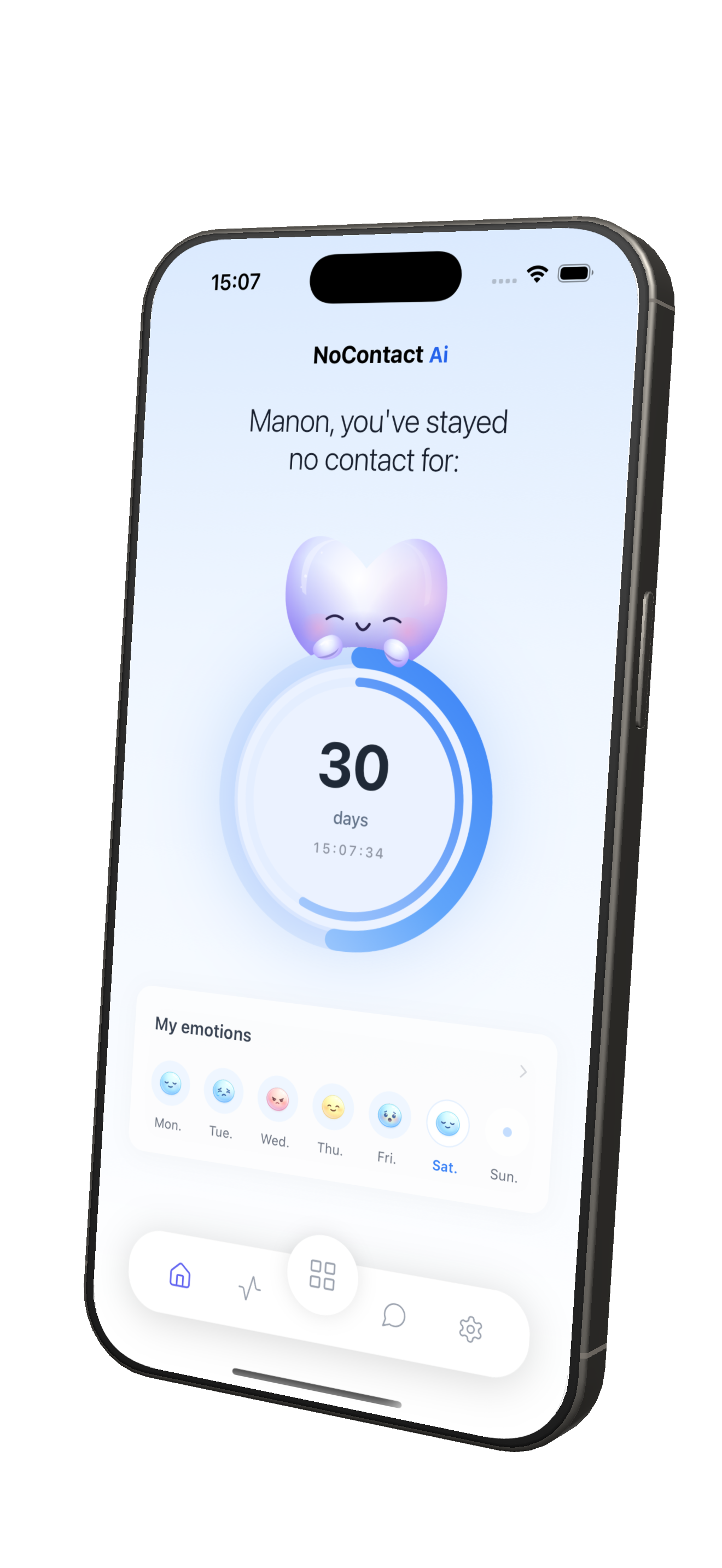
No contact day counter, private journal, and chat support to get through a breakup.
Download the app
Scan with your phone
Automatic redirect to iOS or Android
The Science Behind Dreaming About Your Ex
To understand why your ex keeps appearing in your dreams, you need to understand what happens inside your brain while you sleep -- specifically during REM (Rapid Eye Movement) sleep, the stage where most vivid dreaming occurs.
Your Brain's Nightly Therapy Session
During REM sleep, your brain performs critical emotional housekeeping. It replays the day's experiences, sorts through memories, and -- this is the key part -- processes unresolved emotions. A 2024 study published in Scientific Reports found direct evidence that dreaming plays an active role in emotional memory processing, essentially helping us "forget" the emotional sting of painful experiences while preserving the factual memory.
Think of it this way: your brain is running a nightly defragmentation of your emotional hard drive.
The Noradrenaline Drop
Here is something fascinating. During REM sleep, your brain experiences a sharp decrease in noradrenaline -- the neurotransmitter responsible for anxiety and the fight-or-flight response. This means your brain can safely revisit emotionally charged memories (like your entire relationship) without triggering a full-blown panic response.
Your dreaming brain is essentially saying: "It's safe here. Let's process this."
Emotional Memory Consolidation
Your relationship was one of the most emotionally significant experiences of your life. Every shared moment -- from the first kiss to the final argument -- is stored with intense emotional tagging. During sleep, your brain works to consolidate these memories, gradually separating the raw emotion from the factual record.
This is why early post-breakup dreams feel devastatingly vivid and emotional, while dreams months later tend to be more neutral, sometimes even bizarre. Your brain is making progress, even when it does not feel like it.
7 Common Types of Ex-Dreams and What They Mean
Not all dreams about your ex carry the same message. Here is a breakdown of the most common scenarios and what your subconscious might be processing.
1. Getting Back Together
You reconcile, everything is perfect, and the breakup never happened. Then you wake up to crushing reality.
What it means: This dream typically reflects unresolved longing -- not necessarily for your ex, but for the feeling of being loved and secure. Your brain is revisiting what felt safe. It does not mean you should text them.
2. Fighting or Arguing
The screaming matches, the cold silence, the accusations -- sometimes worse than anything that actually happened.
What it means: Your mind is processing unresolved anger or hurt. These dreams often surface when you have been suppressing frustration rather than acknowledging it. They are your brain's way of giving voice to emotions you have been swallowing.
3. Your Ex With Someone New
Perhaps the most gut-wrenching dream type. Seeing them happy, in love, replacing you.
What it means: This usually reflects your own insecurities about being replaceable or not being enough. It is less about them and more about your self-worth. These dreams tend to decrease as your confidence rebuilds.
4. Intimate or Sexual Dreams
Physically close, passionate, confusing upon waking.
What it means: Sexual dreams about an ex are extremely common and rarely mean you want them back physically. More often, they reflect a desire for intimacy, connection, or the particular quality of closeness you shared. Your brain is processing the loss of physical comfort.
5. Your Ex Ignoring You
You try to talk, reach out, get their attention -- and they look right through you.
What it means: This dream reflects feelings of rejection or abandonment. It often appears when closure was never achieved, especially if the breakup involved ghosting or emotional withdrawal.
6. Being in Danger Together
A crisis, a natural disaster, running from something -- and your ex is right there with you.
What it means: Danger dreams with an ex often signal that you still associate them with safety and protection. Your brain defaults to partnering you with them because, for a long time, they were your person in a crisis.
7. A Calm, Mundane Scene
Grocery shopping together. Watching TV. Making coffee. Nothing dramatic, just... normal.
What it means: These quiet dreams can be the most heartbreaking. They reflect grief for the everyday routine you lost. The ordinary moments were the real fabric of your relationship, and your brain knows it.

Why Your Brain Will Not Let Go at Night
Understanding the dream types is one thing. But why does your brain keep cycling back to this one person? The answer lies in how attachment shapes your neurology.
Attachment Bonds Run Deep
During your relationship, your brain built powerful neural pathways connecting your ex to safety, comfort, pleasure, and identity. These pathways were reinforced every single day through oxytocin (the bonding hormone), dopamine (the reward chemical), and serotonin (the mood regulator).
A breakup severs the relationship, but it does not immediately sever these neural pathways. Your brain is literally wired to seek this person out -- and during sleep, when your conscious defenses are down, those pathways fire freely.
This is closely tied to the grieving process after a breakup. Your brain is mourning at a neurological level.
The Zeigarnik Effect
Psychologists have identified something called the Zeigarnik Effect: your brain obsesses over incomplete tasks far more than completed ones. An unresolved breakup -- one without clear closure, without answered questions, without emotional resolution -- is the ultimate incomplete task for your brain.
Dreams become the arena where your subconscious tries to "complete" the story, which is why many people dream of conversations they never had or scenarios that offer the resolution real life denied them.
Stress and Emotional Overwhelm
Stress amplifies dream frequency and vividness. The post-breakup period is one of the most stressful experiences a person can endure (it activates the same brain regions as physical pain). More stress means more intense REM cycles, which means more vivid ex-dreams.
If you are also dealing with sleep disruption, poor appetite, or difficulty concentrating, your ex-dreams are likely amplified by your overall state of emotional overwhelm.
Download No Contact AI
No contact day counter, private journal, and chat support to get through a breakup.
Download the app
Scan with your phone
Automatic redirect to iOS or Android
How Long Will You Keep Dreaming About Your Ex?
This is the question everyone wants answered: when will this stop?
The honest answer is that there is no universal timeline. But research and clinical observation give us some useful benchmarks.
The Typical Pattern
- Weeks 1-4: Dreams are frequent, vivid, and emotionally intense. You may dream about your ex multiple times per week. These dreams often mirror the acute grief phase.
- Months 2-3: Dream frequency begins to decrease. The emotional charge lessens. You might still dream of them, but you wake up less devastated.
- Months 4-6: Dreams become sporadic. When they occur, they are more likely to be neutral or even strange (your ex at your childhood home, in a context that makes no sense).
- Beyond 6 months: Occasional dreams may surface, especially during stress, anniversaries, or life transitions. This is completely normal and does not mean you have regressed.
Factors That Influence Duration
Several things can extend or shorten the dream cycle:
- Relationship length: Longer relationships create deeper neural grooves
- How it ended: Abrupt endings without closure tend to prolong dreams
- Contact with your ex: Continued contact provides fresh material for dreams
- Your coping style: Suppressing emotions during the day often pushes them into nighttime processing
- New relationships: A new emotional attachment can gradually rewire those neural pathways
For more context on healing timelines, see how long until breakup pain fades.
5 Ways to Reduce Dreams About Your Ex
You cannot fully control your dreams. But you can influence the conditions that make ex-dreams more likely.
1. Process Your Emotions During the Day
The number one reason your brain processes your ex at night is that you are not doing it during the day. Journaling, talking to a friend, or working with a therapist gives your brain the emotional processing time it needs, reducing the burden on your dreaming mind.
Try this: spend 15 to 20 minutes each evening writing about how you feel. Be specific. Name the emotions. This "emotional download" can significantly reduce nighttime processing.
2. Create a Pre-Sleep Ritual
What you think about in the 30 minutes before sleep heavily influences dream content. Replace scrolling through your ex's social media (we know you are doing it) with calming activities:
- Read something unrelated to relationships
- Practice progressive muscle relaxation
- Listen to a guided meditation
- Write three things you are grateful for today
3. Reduce Contact and Digital Triggers
Every photo, text thread, or social media post about your ex provides fresh fuel for your dreaming brain. Reducing digital exposure during the day directly correlates with reduced dream frequency at night.
This does not mean you have to delete everything forever. But during the acute healing phase, minimizing triggers makes a measurable difference. No Contact App can help you maintain boundaries when willpower alone is not enough.
4. Physical Exercise
Regular exercise (particularly in the morning or afternoon, not right before bed) improves sleep architecture, reduces overall stress hormones, and has been shown to decrease the intensity of emotional dreams. Even 30 minutes of moderate exercise can make a noticeable difference.
5. Reframe the Dream Upon Waking
When you wake from an ex-dream, resist the urge to interpret it as a "sign." Instead, try this reframe:
"My brain is processing and healing. This dream is evidence of progress, not regression."
Over time, this cognitive reframe reduces the emotional charge of the dreams themselves, creating a positive feedback loop.
When Ex-Dreams Are Actually a Good Sign
Here is the perspective shift that changes everything: dreams about your ex are evidence that healing is happening.
Your brain does not waste precious REM cycles on things that do not matter. The fact that it keeps returning to your ex means it is actively working to:
- Detach emotional intensity from the memories
- Consolidate the lessons you learned in the relationship
- Rebuild your identity as an individual rather than half of a couple
- Process grief that needs to be felt before it can be released
When you notice your dreams shifting -- from intense emotional scenes to more neutral or absurd scenarios -- that is concrete evidence that your brain's emotional processing is working. The neural pathways are being rewritten.
The dreams will become less frequent. They will carry less charge. One day, you will dream about your ex and wake up feeling... nothing much at all. And that is when you will know the deepest work is done.
You are not broken. You are not stuck. You are healing -- even in your sleep.
Download No Contact AI
No contact day counter, private journal, and chat support to get through a breakup.
Download the app
Scan with your phone
Automatic redirect to iOS or Android
Related topics