


The no contact rule is not just a relationship strategy. It is a neurobiological process that physically rewires your brain. Understanding the psychological effects of no contact can transform your experience from blind suffering into informed healing. And neuroscience has a great deal to say about what actually happens in your brain — and in your ex's — when all communication stops.
Research from Stony Brook University and the University of Michigan reveals that romantic rejection activates the same brain regions as physical pain and drug withdrawal. This is not a metaphor: your brain undergoes a genuine chemical withdrawal process. For a broader understanding of the strategy itself, see our complete no contact guide.
If you are asking why no contact works psychologically, the short answer is this: silence removes the triggers that keep your attachment system activated. Without texts, profile checks, explanations, or emotional negotiations, your brain finally has enough distance to lower stress hormones, reduce reward cravings, and rebuild self-control.
In this article, we explore what peer-reviewed research tells us about the neurochemical, emotional, and psychological consequences of no contact — week by week, for both parties. If you need the practical setup rather than the science, start with how to apply the no contact rule after a breakup.
Download No Contact AI
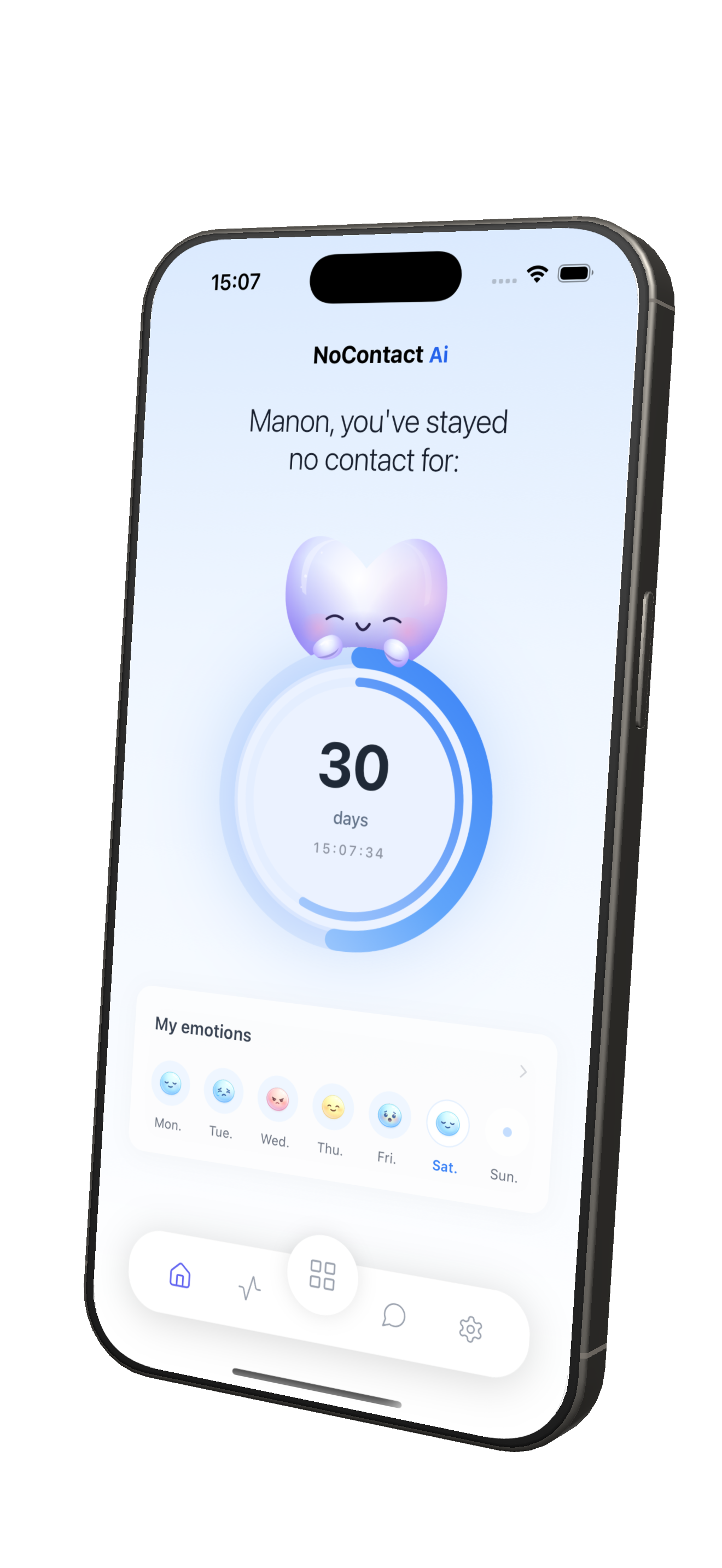
No contact day counter, private journal, and chat support to get through a breakup.
Download the app
Scan with your phone
Automatic redirect to iOS or Android
What Are the Psychological Effects of No Contact?
The psychological effects of no contact encompass the full range of emotional, cognitive, and neurochemical reactions triggered by completely cutting off communication with a former partner. This is not simply "not talking to someone." It is activating a complex brain process that involves reward systems, stress responses, and attachment mechanisms.
Dr. Helen Fisher, biological anthropologist at Rutgers University, conducted a landmark study published in the Journal of Neurophysiology (2010). Her team used functional magnetic resonance imaging (fMRI) to scan the brains of 15 people who had recently been rejected by a romantic partner. The findings were striking: viewing a photo of the ex-partner activated the ventral tegmental area (VTA) and the caudate nucleus — the same regions that light up in cocaine addicts experiencing cravings.
In other words, no contact is essentially weaning your brain off a drug — the drug of love.
The Three Brain Systems Involved
Research identifies three major neurological systems disrupted during no contact:
- The dopaminergic system (reward and motivation): normally stimulated by contact with the partner, it is suddenly deprived of its gratification source.
- The oxytocin system (attachment and social bonding): the bonding hormone, produced abundantly in romantic relationships, drops sharply.
- The hypothalamic-pituitary-adrenal (HPA) axis (stress): cortisol, the stress hormone, increases significantly, triggering real physical symptoms.
It is the interaction between these three systems that explains why no contact is so painful — but also why it is therapeutic in the medium term.
Why No Contact Works After a Breakup
No contact works after a breakup because it interrupts the reinforcement loop that keeps the relationship alive in your nervous system. Every message, reply, photo, voice note, or "just checking" interaction can become a small reward cue. Even painful contact can still deliver dopamine because it gives the brain information, proximity, and the possibility of repair.
The psychological sequence is simple:
trigger removal -> nervous system calm -> dopamine withdrawal decreases -> self-respect returns -> clearer decisions.
This is why no contact is different from simply "being strong." Strength is useful, but the mechanism is environmental: you remove the cues that keep reactivating hope, panic, and bargaining. Over time, your body stops treating the breakup as an immediate emergency.
For a broader answer to the outcome question, read does no contact actually work?. This page focuses on the internal psychological mechanism: why distance helps the brain settle, not whether silence will make an ex come back.
The Neurochemical Cycle of No Contact: Dopamine, Cortisol, Oxytocin
The Dopamine Crash: Withdrawal in the Medical Sense
When you are in a relationship, every text, every call, every interaction with your partner triggers a dopamine release in your brain. This pleasure and reward neurotransmitter creates a reinforcement loop: the more attention you receive, the more your brain demands.
When no contact begins, this dopamine source vanishes abruptly. The brain reacts exactly as it does during substance withdrawal:
- Irresistible urges to contact your ex (craving)
- Obsessive rumination: thinking about them on a loop
- Restlessness and inability to concentrate
- Seeking substitutes: social media stalking, asking mutual friends for updates
Neuroscientist Lucy L. Brown from Albert Einstein College of Medicine, co-author of the Fisher study, explains that the caudate nucleus — the brain region associated with reward learning — remains hyperactive in response to stimuli related to the ex-partner. Your brain does not yet "know" that the reward will no longer come.
The Cortisol Surge: Stress as an Alarm Signal
Simultaneously, the HPA axis goes into overdrive. Cortisol, the stress hormone, floods your system. The consequences are measurable:
- Sleep disruption: difficulty falling asleep, night waking
- Weakened immune system: increased susceptibility to illness
- Real physical pain: cortisol activates somatosensory pain pathways
The study by Ethan Kross at the University of Michigan, published in PNAS (2011), demonstrated that romantic rejection activates the secondary somatosensory cortex and the dorsal posterior insula — regions normally reserved for physical pain processing. When people say heartbreak "hurts," they are being scientifically accurate.
The Oxytocin Collapse: Grieving the Bond
Oxytocin, often called the "bonding hormone," is produced abundantly in stable romantic relationships. It plays a central role in feelings of security, trust, and belonging.
The abrupt cessation of contact causes an oxytocin drop that manifests as:
- Deep sense of abandonment
- Heightened attachment anxiety
- Compulsive need for proximity with anyone (friends, family, new acquaintances)
This is the mechanism that John Bowlby, founder of attachment theory, described in the 1960s: the attachment system, deprived of its attachment figure, triggers a protest response (desperate attempts to re-establish contact), followed by despair (emotional withdrawal), and finally detachment (psychological reorganization).
Why No Contact Feels Worse Before It Feels Better
No contact often feels worse before it feels better because it removes the fastest source of relief: contact with the person you are trying to detach from. A text, reply, social media check, or argument can briefly lower uncertainty. But it also teaches the brain to seek the same cue again the next time anxiety rises.
That is why the first phase can feel irrationally intense. You are not failing; your attachment system is protesting the loss of a familiar regulator. This can show up as chest tightness, nausea, insomnia, compulsive checking, and sudden fear that silence means losing them forever. If anxiety is the dominant symptom, our guide to breakup anxiety explains the body symptoms in more detail.
The turning point usually begins when your brain learns that an urge can rise, peak, and pass without contact. Each completed urge cycle weakens the association between "I feel panic" and "I must reach out." That is the uncomfortable path from withdrawal to regulation.
The Effects of No Contact on the Person Applying It
Weeks 1-2: Acute Withdrawal
The first days are the most difficult. Your brain is in full dopaminergic withdrawal. The symptoms are intense:
- Near-irresistible urge to break the silence
- Compulsive phone checking
- Difficulty eating, sleeping, concentrating
- Crying, anxiety, chest tightness
This is the protest phase described by Bowlby. Your attachment system is in maximum alarm mode. It perceives the absence of contact as a survival threat — because, from an evolutionary perspective, that is exactly what separation represented for our ancestors.
Weeks 3-4: The Transition
Gradually, something shifts. The brain begins adapting to the absence of stimulation. Cortisol spikes diminish. Dopamine starts recalibrating toward other gratification sources.
You enter Bowlby's despair phase: sadness replaces agitation. Paradoxically, this is a sign of progress. Your brain is gradually accepting that the reward will no longer come from this source.
This is the stage where many people are tempted to break. If you are wavering, read does no contact actually work? to understand why holding firm is essential.
Weeks 5-8: Neuroplasticity in Action
This is where the neuroscientific transformation occurs. The brain, deprived of its former dopamine source, begins to reorganize its neural circuits. This process is called neuroplasticity — the brain's ability to rewire itself.
In practical terms, this translates to:
- Progressive decrease in the frequency of obsessive thoughts
- Restored capacity to experience pleasure from other activities
- Reduction in anxiety and stress
- Emergence of a new perspective on the past relationship
Studies on emotional neuroplasticity show that the brain requires 60 to 90 days to create sufficiently robust new reward circuits. This is why most experts recommend a minimum no contact period of 30 days — and ideally longer.
Download No Contact AI
No contact day counter, private journal, and chat support to get through a breakup.
Download the app
Scan with your phone
Automatic redirect to iOS or Android
The Effects of No Contact on the Person Receiving It
The psychological impact of no contact extends beyond the person implementing it. Your ex also undergoes a complex neurochemical process, which you can explore further in our article on what your ex feels during no contact.
The Loss of Narcissistic Reinforcement
Even after a breakup, the person who initiated the split often retains a certain "comfort": knowing the other person is still attached, receiving messages, fielding contact attempts. This stream of attention feeds their reward system.
When silence sets in, this validation source disappears. The ex-partner's brain also reacts to this absence:
- Questioning: "Why aren't they contacting me anymore?"
- Doubt: "Have they already moved on?"
- Revaluation: the absent person gains perceived value (Robert Cialdini's scarcity principle)
Activating Your Ex's Attachment System
No contact, by cutting all stimulation, forces your ex's brain to process the loss. Even if they initiated the breakup, the total absence of contact eventually activates their own attachment system.
Attachment psychology research shows this activation follows a predictable cycle:
- Initial relief (1-2 weeks): the ex enjoys the space and freedom
- Growing curiosity (2-3 weeks): the absence becomes intriguing
- Missing you (3-5 weeks): positive memories surface
- Reassessment (5-8 weeks): the ex begins questioning their decision
This process is not guaranteed — it depends on attachment style, relationship duration, and breakup circumstances. But it is neurochemically logical: your ex's brain also undergoes dopamine and oxytocin withdrawal.
Why No Contact Is Not Manipulation
No contact becomes manipulative when it is used to punish, provoke jealousy, or engineer a reaction. That is not the psychological purpose of no contact. Healthy no contact is a boundary that protects your nervous system from repeated activation while both people adjust to the reality of the breakup.
The difference is intent and behavior:
- Manipulation: "I will disappear so they panic and chase me."
- Boundary: "I will stop contact so I can stabilize, think clearly, and stop acting from withdrawal."
- Avoidance: "I will disappear because I refuse to handle practical responsibilities."
For most breakup situations, the healthier version is clear, quiet, and consistent. You do not need to perform indifference or post cryptic updates. You need fewer emotional triggers, fewer compulsive checks, and more space for your prefrontal cortex to come back online.
The Psychological Phases of No Contact Week by Week
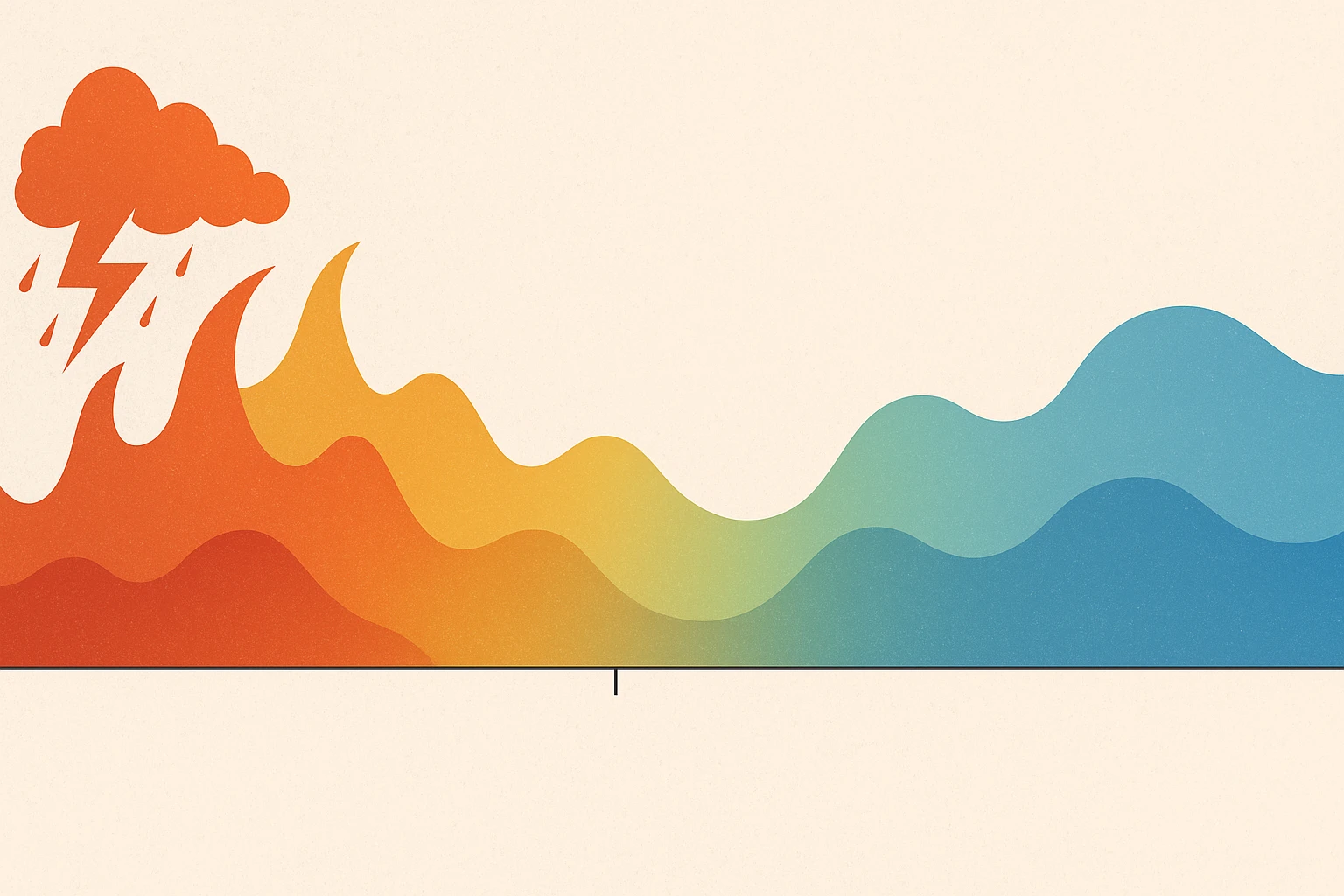
Days 1-7: The Withdrawal Crisis
What you feel: Panic, despair, obsession, physical pain.
What happens in your brain: Sharp dopamine and oxytocin crash. Cortisol spike. The limbic system (emotional center) is hyperactive. The prefrontal cortex (reason, logic) is temporarily "short-circuited" by emotional intensity.
The trap to avoid: Contacting your ex while overwhelmed. At this stage, your prefrontal cortex is unable to make rational decisions. Any message sent now will be driven by panic, not reflection. Research on emotional decision-making shows that the amygdala effectively "hijacks" rational thought during acute stress, a phenomenon neuroscientist Daniel Goleman calls the "amygdala hijack." Decisions made in this state are almost always regretted.
Days 7-14: The Oscillation
What you feel: Alternating between moments of relative calm and intense emotional waves. Possible onset of anger.
What happens in your brain: Cortisol begins to decrease at intervals. The brain attempts self-regulation. The first neuroplastic micro-adaptations appear.
The positive sign: The emergence of anger is a healthy signal. It indicates your brain is shifting from passive protest (sadness, pleading) to active protest (indignation, self-assertion). This is a necessary step in the grieving process. Psychologically, anger serves as a protective emotion — it creates a temporary emotional boundary that shields you from the vulnerability of grief and begins to restore your sense of agency.
Days 14-21: The Pain Plateau
What you feel: Pain is less acute but more persistent. Emotional fatigue. Moments of clarity followed by relapses.
What happens in your brain: Dopamine receptors begin to downregulate. Your brain reduces its sensitivity to the dopamine associated with your ex, meaning you will progressively need less stimulation to achieve a normal state of well-being.
What you can do: This is the ideal time to introduce healthy new dopamine sources: exercise, creativity, social connections, learning. The brain, in its recalibration phase, is particularly receptive to these new habits. Research published in Neuropsychopharmacology has shown that aerobic exercise increases brain-derived neurotrophic factor (BDNF), which promotes the growth of new neural connections — essentially giving your brain the building blocks it needs to construct new reward pathways independent of your ex.
Days 21-30: The Beginning of Reconstruction
What you feel: Spontaneous moments of well-being. Ability to envision a future without your ex. Obsessive thoughts decrease in frequency and intensity.
What happens in your brain: New neural circuits begin to consolidate. The HPA axis normalizes. The prefrontal cortex progressively regains control over the limbic system.
The risk: Feeling "healed" too soon and resuming contact. At 30 days, healing is well underway but not complete. Old neural circuits are weakened but not eliminated. A single contact can reactivate them instantly — neuroscientists call this "spontaneous recovery," where an extinguished conditioned response resurfaces after exposure to the original stimulus. One text message can undo weeks of neural progress.
Why No Contact "Reprograms" the Brain
The Extinction Mechanism
In behavioral neuroscience, extinction refers to the process by which a conditioned response weakens when the reinforcing stimulus is no longer present. Applied to no contact:
- The stimulus: your ex-partner (texts, calls, presence)
- The conditioned response: the associated dopamine spike
- Extinction: without the stimulus, the response progressively weakens
But beware: extinction is not erasure. Neural circuits are not deleted — they are inhibited. This is why premature contact can trigger spontaneous recovery — a sudden reactivation of the old emotional response.
Memory Reconsolidation
Another fascinating mechanism occurs during no contact: memory reconsolidation. Each time you recall your ex without the reinforcement of real contact, your brain slightly "rewrites" that memory. Over time, memories lose their intense emotional charge.
This process explains why, after successful no contact, you can think about your ex with nostalgia but without acute pain. The memory persists, but it has been neurochemically "desensitized." Researcher Karim Nader's groundbreaking work on memory reconsolidation demonstrated that memories are not fixed recordings — they are reconstructed each time they are recalled, and each reconstruction is an opportunity for the emotional intensity to diminish.
The Role of Neurogenesis
Recent research shows that physical exercise and novel experiences stimulate neurogenesis (creation of new neurons) in the hippocampus — a key region for memory and emotional regulation. No contact, combined with an active lifestyle, literally accelerates the creation of new neural pathways.
The Limits and Risks of No Contact
When No Contact Becomes Destructive
No contact is not a universal solution. Science warns against certain situations where it can be counterproductive:
Severe anxious attachment: People with a pronounced anxious attachment style may experience no contact as a trauma that reactivates childhood abandonment wounds. Cortisol can remain chronically elevated, preventing any healing.
Pre-existing depression: The dopaminergic withdrawal of no contact can worsen an existing depressive state. The compounding of breakup-related dopamine depletion with an already compromised serotonergic system can create a dangerous neurochemical environment. If you show signs of clinical depression (persistent dark thoughts, total loss of motivation, suicidal ideation), consult a mental health professional before maintaining strict no contact.
Co-parenting situations: Total no contact is not suitable for co-parents. A "minimal functional contact" approach is preferable for the children's well-being.
The Importance of Support
Studies show that post-breakup healing is significantly accelerated by social support. No contact does not mean isolation. On the contrary, it is the time to strengthen your other attachment bonds: close friends, family, therapist, or No Contact App, which supports you day by day through this process.
This is also where theory needs a concrete system. NoContact can help turn the science into repeatable actions: a visible timer for your streak, SOS support when an urge spikes, journaling to externalize rumination, and guided exercises that redirect your brain toward regulation instead of contact. For a practical breakdown, see our zero contact app guide.
Extended No Contact: The Point of Diminishing Returns
Neuroscience suggests that beyond 90 days, the neuroplastic benefits of no contact reach a plateau. The brain has completed the bulk of its recalibration. A no contact period of 60 to 90 days covers the optimal neural rewiring window for most individuals.
What Science Tells Us About Healing Time
The question "how long does it take to heal?" has a nuanced neuroscientific answer:
- Acute dopamine withdrawal: 2 to 4 weeks
- Cortisol normalization: 4 to 8 weeks
- Reward circuit recalibration: 8 to 12 weeks
- Complete memory reconsolidation: 6 to 24 months
These timelines vary based on relationship intensity, duration, your attachment style, and your psychological resources. But they offer a realistic scientific framework that replaces anxiety with understanding. Knowing that your suffering follows a documented neurobiological pattern — one that has a beginning, a middle, and an end — can itself be therapeutic. Psychologists call this "cognitive reappraisal," and research shows it is one of the most effective emotion regulation strategies available.
Conclusion: No Contact as an Act of Neuroplasticity
The psychological effects of no contact are neither magical nor arbitrary. They represent a documented neurobiological process that follows predictable, measurable stages. The pain you feel is real — as real as physical pain, as Ethan Kross's studies have demonstrated. But it is temporary.
Every day of no contact is a day your brain rewires itself. The neural circuits that bound you to your ex progressively weaken while new pathways form. This is not willpower: it is neuroplasticity.
No contact does not guarantee your ex will come back. But it guarantees your own neuropsychological transformation. And whatever the outcome, it is this transformation that will allow you to move forward — whether toward a healthier relationship with your ex or toward someone new.
The science is clear: time and absence of contact are the two most powerful ingredients of emotional healing. Trust your brain. It knows how to repair itself.
Download No Contact AI
No contact day counter, private journal, and chat support to get through a breakup.
Download the app
Scan with your phone
Automatic redirect to iOS or Android
Related topics