
After a breakup, one question seems to haunt everyone: who hurts more—the one who ended it or the one who got left behind?
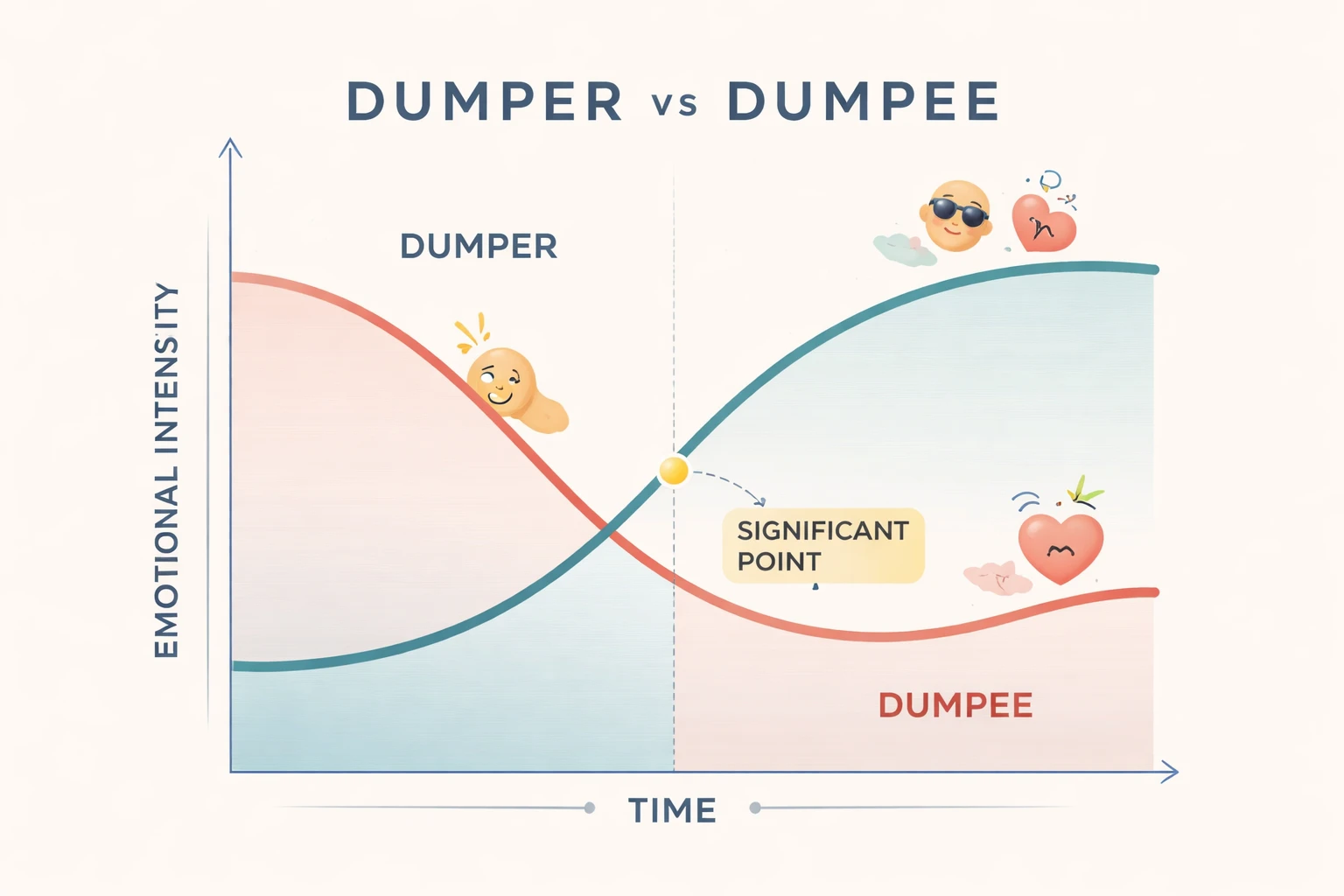
Understanding dumper vs dumpee psychology reveals a surprising truth: both roles carry their own form of suffering, and the person who seems "fine" right now may not be fine later. The breakup experience is not a competition, but understanding how each position affects the emotional journey can provide perspective—whether you did the leaving or got left.
This analysis draws on male breakup psychology research while applying to all genders.
Ready to Start Your No Contact Journey?
Track your progress, get AI coaching when the urge to text hits, and become the strongest version of yourself.
Free to start • No credit card required
The Dumper's Emotional Journey
The person who initiates the breakup follows a specific psychological path.
Phase 1: Pre-Breakup Processing
Before the actual breakup, dumpers often:
- Have been unhappy or conflicted for weeks or months
- Already begun emotionally distancing
- Mentally rehearsed the breakup conversation
- Started grieving the relationship before ending it
This "head start" on processing is crucial. By the time they say the words, dumpers have often already done significant emotional work.
Phase 2: Relief and Validation
Immediately post-breakup, dumpers typically feel:
- Relief that the difficult conversation is over
- Validation that they made the right choice
- Freedom from relationship tension or conflict
- Sometimes even excitement about new possibilities
This relief is often genuine—but it is also temporary. The dumper's brain is registering the absence of pain, not the presence of healing.
Phase 3: Confidence and Distance
For weeks or even months, dumpers may:
- Feel certain about their decision
- Experience the benefits they expected from being single
- Maintain emotional walls to justify the choice
- Avoid deep reflection about what was lost
Understanding what the dumper during no contact experiences shows that this confidence often masks unprocessed grief.
Phase 4: The Delayed Crash
Eventually, most dumpers experience:
- Doubt about whether they made the right choice
- Nostalgia for what was good about the relationship
- Realization that the grass is not greener
- Loneliness that independence does not cure
This crash can happen anywhere from one month to several years post-breakup—often catching the dumper completely off guard.
Phase 5: Regret or Acceptance
The final phase splits two ways:
- Regret: They realize they made a mistake and may want to reconcile
- Acceptance: They process the grief and genuinely move forward
Which path they take depends on the quality of the relationship, their self-awareness, and whether they do genuine emotional work.
The Dumpee's Emotional Journey
The person who gets left follows a different but equally challenging path.
Phase 1: Shock and Denial
Immediately after being broken up with:
- Shock, regardless of warning signs
- Denial that this is really happening
- Desperate attempts to understand or reverse the decision
- Physical symptoms: appetite loss, sleep disruption, pain
The dumpee has no preparation time. The loss hits immediately and fully.
Phase 2: Pain and Confusion
In the days and weeks following:
- Intense emotional pain—often the worst of their life
- Obsessive questioning: What went wrong? What could I have done?
- Rumination and inability to focus on other things
- Feeling rejected, unwanted, and abandoned
This phase is brutal. The dumpee is experiencing full-force grief while the dumper appears to be thriving.
Phase 3: Anger and Bargaining
As shock fades:
- Anger emerges—at the dumper, at themselves, at the situation
- Bargaining: If I change, will they come back?
- Oscillation between wanting them back and wanting to move on
- Growing awareness that they cannot control the outcome
Phase 4: Processing and Growth
With time and effort:
- Beginning to accept the reality of the loss
- Starting to rebuild identity separate from the relationship
- Recognizing patterns and lessons
- Genuine healing and forward movement
Phase 5: Recovery
The dumpee eventually reaches:
- Acceptance of the breakup
- Clarity about what they want going forward
- Emotional availability for new connections
- Peace with the past
Who Hurts More? It Depends
The question "dumper vs dumpee who hurts more" does not have a simple answer.
The Dumpee Hurts More—At First
Immediately post-breakup, the dumpee almost always suffers more:
- They had no time to prepare
- The rejection compounds the loss
- They have no sense of control
- They are experiencing raw, unfiltered grief
During the first weeks, the pain differential is clear. The dumpee is devastated while the dumper may seem fine.
The Dumper Often Hurts More—Later
Research suggests dumpers frequently experience a delayed but significant emotional impact:
- Their early "relief" was postponed grief, not absence of it
- They carry guilt about causing pain
- Their confidence erodes as time reveals the relationship's value
- They may realize too late what they lost
The male breakup stages illustrate how this delayed crash manifests.
It Depends on These Factors
Relationship quality: Who suffers more depends on what was actually lost. The person more invested experiences more pain—regardless of role.
Who was checked out: Sometimes the person who got dumped had already emotionally left. Sometimes the dumper is more attached than their actions suggest.
Circumstances: Breakups over fundamental incompatibility differ from breakups over temporary issues.
Processing approach: How each person handles their emotions matters more than their role in the breakup.
The Dumper's Regret Timeline
If regret is coming, when does it typically arrive?
Week 1-4: Usually None
In the first month, dumpers rarely feel regret:
- Relief and validation dominate
- Too close to the decision to question it
- Distractions and new excitement mask loss
Month 1-3: Seeds of Doubt
Around months one to three:
- The initial relief fades
- Comparisons begin (single life vs. relationship)
- Missing specific things about the relationship
- First "what if" thoughts appear
Month 3-6: Potential Regret Peak
This window is when dumper regret often crystallizes:
- Enough time has passed for perspective
- New dating reveals how rare good connections are
- Seeing the ex move on triggers jealousy
- Guilt about causing pain catches up
Month 6+: Regret or Closure
After six months:
- Either genuine acceptance and moving on
- Or crystallized regret that may last years
- Some dumpers carry "the one that got away" feelings indefinitely
What Triggers Regret
Common catalysts for dumper regret:
- Seeing the ex happy and thriving
- Failing to find someone comparable
- Major life events (holidays, achievements) alone
- Realizing the problems were solvable
- Time revealing the relationship's true value
The Dumpee's Recovery Advantage
Here is the surprising silver lining: being the dumpee often leads to better long-term outcomes.
Forced Processing
Dumpees cannot avoid their feelings:
- The pain is too intense to suppress
- They have to process to function
- They seek support more readily
- They do the grief work—not by choice, but by necessity
This forced processing often leads to more complete healing.
No Guilt Burden
Dumpees do not carry:
- Guilt about causing someone pain
- Doubt about whether they made the right choice
- The weight of being the one who broke something
Their pain is "clean"—just loss, not loss plus responsibility.
Motivation for Growth
Being left often triggers:
- Self-examination and improvement
- Determination to become better
- Learning from relationship patterns
- Stronger boundaries and self-awareness
Many people report becoming their best selves after being dumped—growth that might not have happened otherwise.
Clearer Closure
Dumpees eventually know where they stand:
- The relationship is over because the other person ended it
- There is no lingering question of whether they should have tried harder
- Acceptance, when it comes, is complete
Dumpers sometimes carry unresolved "what if I had stayed" questions indefinitely.
Ready to Start Your No Contact Journey?
Track your progress, get AI coaching when the urge to text hits, and become the strongest version of yourself.
When Roles Do Not Matter
In some situations, the dumper/dumpee distinction becomes irrelevant.
Mutual Breakups
When both people agree the relationship should end:
- Neither is fully the "dumper" or "dumpee"
- Grief is shared more equally
- Processing happens in parallel
- Role-based dynamics do not apply
Circumstantial Breakups
When external factors force the ending:
- Distance, timing, life circumstances
- Both people may want to stay together
- Neither fully chose the outcome
- Both experience similar grief
Toxic Relationships
When the relationship was unhealthy:
- Being "dumped" can feel like relief
- Being the "dumper" can feel like escape
- Grief mixes with relief for both parties
- Healing involves processing trauma, not just loss
Already Emotionally Ended
When the emotional connection died long ago:
- Formal roles do not reflect actual investment
- The person who "stayed" may have checked out first
- Who officially ends it matters less than who was already gone
How to Use This Knowledge
Understanding dumper vs dumpee psychology offers practical applications.
If You Are the Dumpee
Know that:
- Your intense early pain does not mean you will suffer longer
- Their apparent "fineness" is often temporary
- Your forced processing may lead to better recovery
- Time typically works in your favor
Focus on:
- Allowing yourself to feel the pain fully
- Seeking support and processing actively
- Trusting that this intensity will fade
- Using this as catalyst for growth
If You Are the Dumper
Know that:
- Relief does not mean you made the right choice
- Delayed grief is normal and should be processed
- Checking in with yourself honestly prevents later regret
- Being "fine" now does not mean you will stay fine
Consider:
- Whether you have actually processed or just suppressed
- If your reasons still feel valid with time
- Whether guilt about causing pain needs addressing
- If genuine closure requires emotional work
For Both Roles
Whatever your position:
- Comparison to the other person's experience is not useful
- Your healing timeline is your own
- Role does not determine outcome—processing does
- Focus on your journey, not theirs
You can process your experience with support tailored to your specific situation and role.
Dumper vs dumpee psychology shows that breakup positions create different journeys but not necessarily different destinations. The person who seems to be suffering more today may be the one thriving sooner. The person who seems fine today may crash tomorrow.
What matters more than your role is what you do with it: whether you process honestly, seek support when needed, and allow yourself to fully experience—and eventually move beyond—the loss.
Ready to Start Your No Contact Journey?
Track your progress, get AI coaching when the urge to text hits, and become the strongest version of yourself.
Free to start • No credit card required
Related topics