
He seemed fine after the breakup. Maybe even relieved. Now you are wondering—is he really over it that fast, or is something else going on behind that composed exterior?
Understanding the stages of breakup for a man reveals a truth that might surprise you: he is not skipping the pain. He is just experiencing it on a completely different timeline. While women typically process grief immediately and intensely, men often go through a delayed emotional journey that can stretch across months.
This guide walks you through the 5 stages men experience after a breakup, when each one typically hits, and what it means for understanding where he is in his emotional process. For a broader picture, check out our complete guide to male breakup behavior.
Ready to Start Your No Contact Journey?
Track your progress, get AI coaching when the urge to text hits, and become the strongest version of yourself.
Free to start • No credit card required
How Male Breakup Stages Differ From Female
Before diving into the stages themselves, it is essential to understand why men process breakups differently. This is not about who hurts more—research shows both genders experience similar levels of pain. The difference lies in timing and expression.
Women typically:
- Feel the full impact immediately
- Seek social support and verbal processing
- Show visible grief early
- Recover more completely over time
Men typically:
- Experience delayed emotional impact
- Suppress feelings to maintain composure
- Use distraction as a primary coping mechanism
- Carry unresolved emotions longer
A 2024 study analyzing breakup recovery patterns found that while women report higher immediate distress, men struggle more with long-term recovery. The reason? Women process emotions in real-time; men often postpone that processing—sometimes indefinitely.
You can also compare to general breakup stages to see how the universal grief process applies to romantic loss.
Stage 1: Relief and Numbness
When it hits: Immediately to 2 weeks post-breakup
The first stage catches many women off guard. He seems... fine. Maybe even happy. He is going out with friends, posting on social media, acting like nothing significant happened.
What It Looks Like
- Apparent calm or even cheerfulness
- Increased social activity
- "Living his best life" social media presence
- Relief that relationship tension is over
- Minimal discussion about the breakup
What Is Actually Happening
This is not genuine happiness—it is emotional shock combined with relief from relationship stress. When a relationship ends, the immediate cessation of conflict, tension, or dissatisfaction creates a temporary "high."
His nervous system has been running on relationship stress. The sudden absence of that stressor feels like freedom. But this relief is not the same as healing. It is more like the calm before a storm.
The psychology: Research on emotional suppression shows that men who appear unbothered immediately after a breakup are typically engaging in what psychologists call "avoidant coping." They are not processing—they are postponing.
What You Might Notice
- He acts surprisingly friendly or indifferent when you interact
- He does not seem to want to discuss what happened
- His mood seems artificially elevated
- He may even act like the breakup was mutual (even if it was not)
Stage 2: Distraction Mode
When it hits: Week 2 to Month 2
Once the initial numbness fades, active avoidance kicks in. This is when you might see behavior that seems designed to prove he has "moved on"—even though he has not actually processed anything.
What It Looks Like
- Throwing himself into work, gym, or hobbies
- Rebound dating or casual hookups
- Partying more than usual
- Taking on new projects or making major life changes
- Avoiding places and people that remind him of you
What Is Actually Happening
Distraction mode serves a specific psychological purpose: it keeps emotions at bay. Every activity, every date, every late night out is a barrier between him and feelings he does not want to face.
The gym becomes therapy. Work becomes an obsession. A rebound becomes a validation source. None of these are inherently bad, but when they are used to avoid emotional processing, they create a delayed reckoning.
Why rebounds happen so fast: When a man jumps into dating immediately, he is seeking external validation to fill the void. The attention from someone new temporarily masks the loss. But rebounds rarely address the underlying pain—they just postpone it.
What You Might Notice
- He seems unusually busy or unavailable
- He is dating someone new (often someone very different from you)
- His social media shows an active, "thriving" lifestyle
- He avoids genuine conversation about the relationship
- He seems to be "winning the breakup"
Stage 3: The Crash
When it hits: Month 2 to Month 4
This is the stage that answers the question everyone asks: do breakups hit guys later? Yes—and this is when it happens.
The distractions stop working. The rebound fizzles or reveals itself as empty. The late nights lose their appeal. And suddenly, the emotions he has been avoiding come flooding in.

What It Looks Like
- Withdrawal from social activities
- Mood changes—irritability, sadness, or anger
- Sleep disruption or changes in appetite
- Reaching out to you (often unexpectedly)
- Increased alcohol consumption or other unhealthy coping
- Nostalgia and romanticizing the relationship
What Is Actually Happening
The crash happens because suppressed emotions demand expression eventually. Research from the Journal of Youth and Adolescence found that men who delay emotional processing experience more intense and prolonged distress when feelings finally surface.
This is often when he starts missing you—not the idealized version, but the real daily presence. The morning routines. The inside jokes. The comfort of having someone who knew him.
Why it hits so hard: Because he is experiencing in month three what you experienced in week one. All of it at once. Without the fresh support system that surrounds people immediately after a breakup.
To understand more about this delayed impact, read our article on why men experience delayed impact.
What You Might Notice
- He becomes quieter or more withdrawn
- He reaches out with "random" messages or questions
- Mutual friends mention he has been struggling
- He shows interest in your life (who you are dating, what you are doing)
- He might express regret or open up about his feelings
Ready to Start Your No Contact Journey?
Track your progress, get AI coaching when the urge to text hits, and become the strongest version of yourself.
Stage 4: Reflection
When it hits: Month 4 to Month 6
If he makes it past the crash without fully retreating into denial, the reflection stage begins. This is where genuine processing happens—analyzing what went wrong, his role in the breakup, and what the relationship actually meant.
What It Looks Like
- Taking responsibility for his part in the relationship ending
- Reflecting on patterns across his relationships
- Seeking understanding rather than blame
- Talking to trusted friends or possibly a therapist
- Making genuine personal changes
What Is Actually Happening
Reflection requires emotional vulnerability—something many men struggle with due to social conditioning. Getting to this stage means he has stopped running from his feelings and started examining them.
This is where men diverge. Some enter reflection and emerge with genuine growth. Others skip it entirely, carrying unresolved issues into their next relationship.
The growth indicator: A man who reaches genuine reflection often becomes more emotionally mature. He might not win you back, but he becomes a better partner for someone—possibly even you, if circumstances align.
What You Might Notice
- He apologizes sincerely (not to win you back, but because he understands)
- He stops blaming you or external circumstances
- He seems calmer, more grounded
- He shows interest in understanding what happened, not just moving past it
- He might share insights about himself he has discovered
Stage 5: Acceptance or Regret
When it hits: Month 6 and beyond
The final stage is actually two possible paths: acceptance of the breakup and moving forward, or lingering regret that he might carry for years.
Path A: Acceptance
What it looks like:
- Genuine peace with the relationship ending
- Ability to remember positives without being destabilized
- Openness to new relationships without comparison
- Gratitude for growth the relationship provided
- No need to "win" or prove anything
What is actually happening: He has processed the loss, extracted lessons, and integrated the experience. The relationship becomes part of his story, not an open wound.
Path B: Regret
What it looks like:
- Persistent "what ifs" and dwelling on mistakes
- Idealizing the relationship in hindsight
- Difficulty committing to new partners
- Reaching out during vulnerable moments (holidays, late nights)
- Carrying the relationship as unfinished business
What is actually happening: He never fully processed the loss, and it remains emotionally active. Some men carry this for years, wondering about the path not taken.
What Determines the Path?
Several factors influence whether he reaches acceptance or stays stuck in regret:
- Did he do the emotional work? Men who process through the stages recover. Those who skip stages often get stuck.
- How did the relationship end? Abrupt or unexplained endings create more lingering questions.
- What was his attachment style? Avoidant men often suppress regret; anxious men often amplify it.
- Has he started another relationship? A new healthy relationship can help close the chapter—or highlight what he lost.
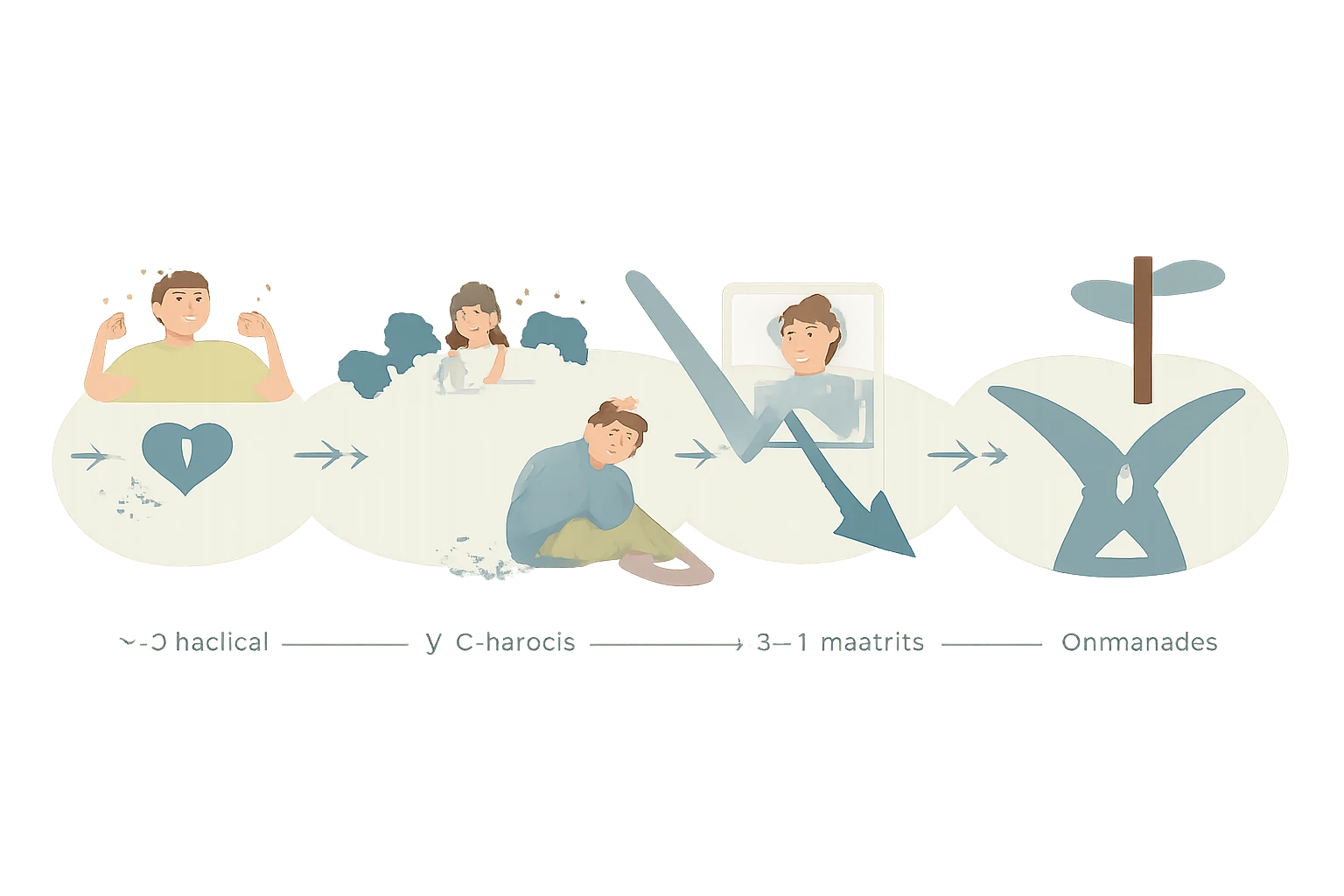
Timeline: When Men Hit Each Stage
While every person is different, research and relationship experts suggest this general timeline for men:
| Stage | Typical Timing | Duration |
|---|---|---|
| Relief/Numbness | Day 1 - Week 2 | 1-2 weeks |
| Distraction Mode | Week 2 - Month 2 | 4-6 weeks |
| The Crash | Month 2 - Month 4 | 4-8 weeks |
| Reflection | Month 4 - Month 6 | Varies |
| Acceptance/Regret | Month 6+ | Ongoing |
Important caveats:
- Longer relationships typically mean longer timelines
- The dumper often has a head start on processing
- Some men cycle back through stages multiple times
- External factors (new relationships, major life changes) can accelerate or delay stages
What This Means for You
Understanding his stages is not about waiting around or trying to time a reconciliation perfectly. It is about gaining clarity on what is actually happening when his behavior seems confusing.
If you are hoping for reconciliation:
- The crash (month 2-4) is often when he is most likely to reach out
- Reflection (month 4-6) is when he might genuinely understand what went wrong
- Waiting for him to process is not the same as waiting for him to come back
If you are trying to move on:
- His stages are his to walk through—you do not need to guide him
- His apparent "moving on" in early stages is rarely genuine
- Your healing does not need to sync with his timeline
If you just want to understand:
- His cold behavior early on is usually self-protection, not indifference
- The "sudden" reaching out at month 3 is not random—it is stage-appropriate
- His journey confirms that the relationship mattered, even if he cannot show it
You can track his stage progression using AI analysis to understand where he might be in this journey and what behaviors to expect.
The stages of breakup for a man follow a predictable pattern, but knowing the pattern does not mean you should wait around for him to catch up. His journey is his own. Your job is to focus on your healing, understand that his behavior reflects his process (not your worth), and make decisions based on what is best for you—not where he is in his stages.
Ready to Start Your No Contact Journey?
Track your progress, get AI coaching when the urge to text hits, and become the strongest version of yourself.
Free to start • No credit card required
Related topics