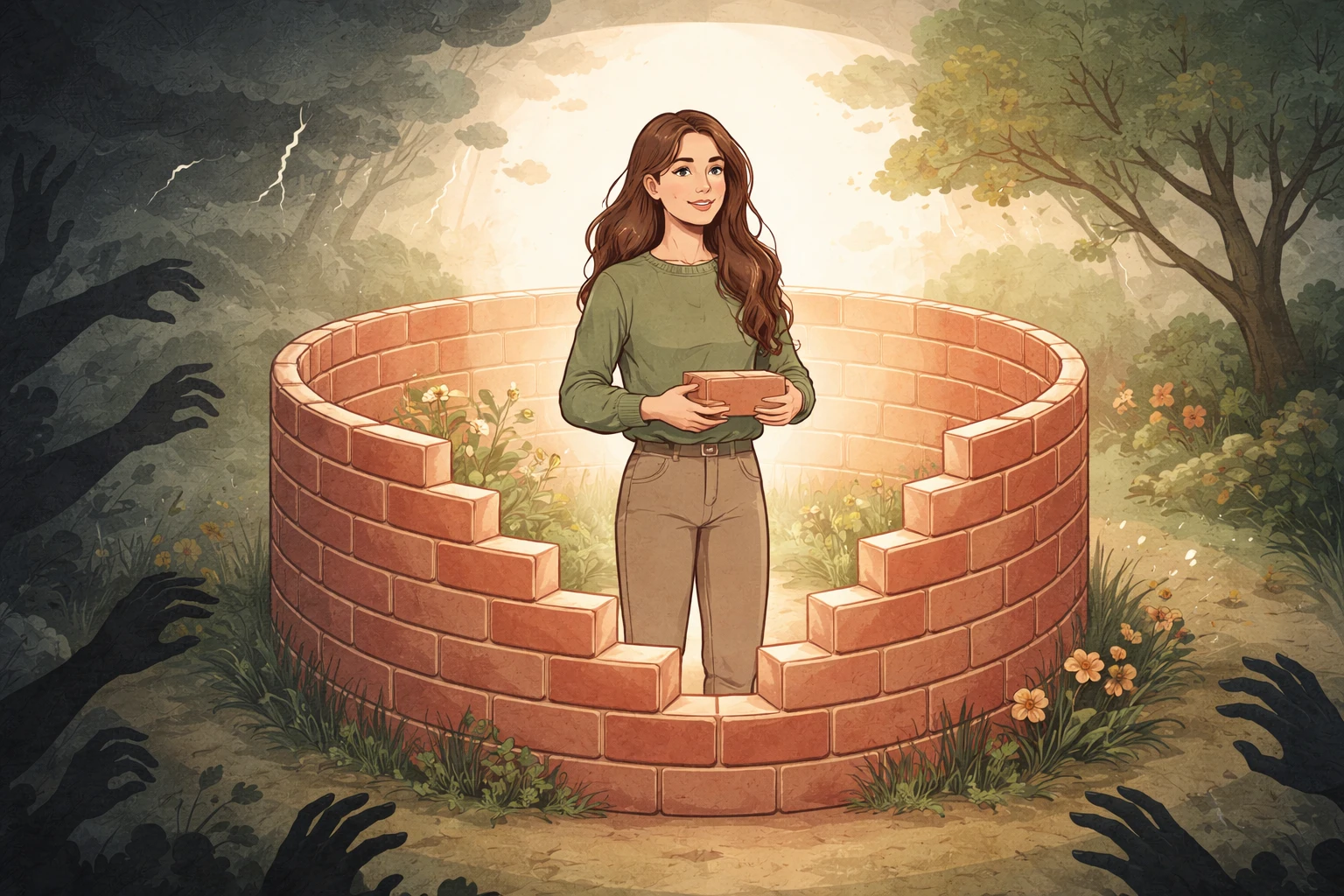
You feel like someone died. The heaviness, the tears that come without warning, the ache in your chest that will not go away. People keep telling you "it was just a breakup"—but this feels like genuine grief.
That is because it IS genuine grief. The grieving process of a breakup is real, necessary, and deserves to be honored.
This article will help you understand why breakup grief is valid, what you are actually mourning (it is more than you think), and how to move through the process in a healthy way. For the full recovery journey, see our guide on complete breakup recovery.
Ready to Start Your No Contact Journey?
Track your progress, get AI coaching when the urge to text hits, and become the strongest version of yourself.
Free to start • No credit card required
Why Breakups Cause Real Grief
Let us start with validation: your grief is not an overreaction.
Psychologists and neuroscientists have confirmed what your heart already knows—losing a romantic relationship activates the same brain regions as mourning a death. The pain you feel is not metaphorical; it is neurologically real.
Here is why breakups trigger genuine grief:
Attachment Bond Severing
Throughout your relationship, your brain formed an attachment bond with your partner. This bond involves neurochemical systems (oxytocin, dopamine, serotonin) that create genuine physiological connection. When the relationship ends, your brain experiences this as a fundamental loss—like a limb being removed.
Loss of Future Self
You had plans. Dreams. A vision of who you would become with this person. When the relationship ends, that future self dies. You are not just grieving who they were—you are grieving who you thought you would be.
Identity Disruption
In long relationships especially, your sense of self becomes intertwined with being part of a couple. Losing the relationship means losing part of your identity.
Social Validation
Society often treats breakup grief as lesser than other forms of loss. This lack of social validation can make the grief feel shameful, which only intensifies it.
What You Are Actually Grieving
The pain feels overwhelming because you are not just grieving one thing. You are mourning multiple losses simultaneously:
The Person
The most obvious loss. Their presence, their voice, their touch, their particular way of being in the world.
The Relationship Dynamic
The inside jokes. The rituals. The way you communicated. The us-ness of being together.
The Future You Imagined
Marriage, children, growing old together, all the plans you made—whether spoken or not.
Your Routine and Lifestyle
Morning coffee together. Sunday errands. Having someone to text throughout the day. The structure your life had.
Your Support System
They were likely your primary confidant. That go-to person is now gone.
Your Identity
"Partner," "girlfriend/boyfriend," "the couple that everyone envied." Part of who you were no longer exists.
Shared Connections
Friends who were "ours," family members you loved, communities you built together.
Your Home
Whether you moved out or stayed, the space feels different. Home no longer feels like home.
Understanding that you are grieving ALL of these helps explain why the pain is so intense.
The Grieving Process Explained
Grief does not follow a neat, predictable path. But understanding common patterns can help you recognize where you are.
The Kübler-Ross Framework (Adapted)
You may have heard of the 5 stages of breakup grief: denial, anger, bargaining, depression, and acceptance. While useful, this model is often misunderstood.
Key points:
- Stages do not happen in order
- You can experience multiple stages simultaneously
- You may cycle back to earlier stages
- Not everyone experiences every stage
What Grief Actually Looks Like
Waves, not linear progression
Grief comes in waves—intense pain followed by periods of relative calm. Early on, waves are frequent and overwhelming. Over time, they become less intense and less frequent.
Good days and bad days
You will have days where you feel almost normal, followed by days where you can barely function. This inconsistency is normal.
Triggers
Songs, places, smells, times of day—random things will bring sudden grief. These triggers decrease over time.
Physical symptoms
Fatigue, appetite changes, sleep disruption, chest tightness, nausea. Grief is physical, not just emotional.
Healthy Grieving vs. Getting Stuck
There is a crucial difference between moving through grief and getting stuck in it.
Healthy Grieving Looks Like:
- Feeling emotions fully when they arise
- Talking about the loss with trusted people
- Maintaining basic self-care (eating, sleeping, hygiene)
- Gradual return to functioning
- Moments of genuine laughter mixed with sadness
- Overall improvement over weeks/months
Getting Stuck Looks Like:
- Numbing emotions with substances or constant distraction
- Complete isolation from others
- Neglecting basic needs for extended periods
- No improvement after 3+ months
- Ruminating for hours daily
- Inability to function at work/school after weeks
- Hopelessness about the future
Getting stuck is not a moral failure—it is a sign you need additional support.
How to Grieve Properly
Grief is not something that happens TO you. It is something you actively move through. Here is how:
1. Make Space for It
Do not try to stay busy constantly. Schedule grief time—20-30 minutes daily where you allow yourself to fully feel. Outside that time, try to function.
2. Express It
Grief needs expression. Options include:
- Crying (do not fight it)
- Writing/journaling
- Talking to someone
- Creating art or music
- Physical release (exercise, punching a pillow)
3. Witness It
Grief shared is grief halved. Let at least one trusted person witness your pain. You do not need them to fix it—just to see it.
4. Ritualize It
Create meaningful rituals:
- Write a goodbye letter (do not send it)
- Have a symbolic ceremony (burning photos, releasing a balloon)
- Create a playlist that honors the relationship
- Plant something as a marker of this transition
5. Process Grief With Daily Support
Consistent daily processing helps more than occasional deep dives. Having structured support keeps you moving forward.
Ready to Start Your No Contact Journey?
Track your progress, get AI coaching when the urge to text hits, and become the strongest version of yourself.
6. Honor the Relationship
Grieving does not mean pretending the relationship was all bad. Honor what was good. Acknowledge that something meaningful ended. Both things can be true.
7. Practice Self-Compassion
You are doing something hard. Speak to yourself as you would to a grieving friend—with kindness, not criticism.
Grief vs. Depression: When to Worry
Grief and depression share many symptoms, but they are different. Knowing the distinction matters.
Normal Grief
- Waves of sadness triggered by reminders
- Ability to feel positive emotions sometimes
- Self-esteem remains intact
- Thoughts focused on the relationship/loss
- Gradual improvement over time
Clinical Depression
- Constant, pervasive sadness without relief
- Inability to feel pleasure in anything
- Feelings of worthlessness
- Thoughts of suicide or self-harm
- No improvement after months
Important: If you are experiencing symptoms of depression, especially thoughts of self-harm, please reach out for professional grief support. This is not weakness—it is appropriate response to severe symptoms.
When Grief Needs Professional Help
Consider therapy if:
- You cannot function after 6+ weeks
- You are having suicidal thoughts
- You are using substances to cope
- You feel completely hopeless
- You are showing no signs of improvement
Rituals That Help With Grieving
Humans have used rituals to process loss throughout history. Modern breakups often lack ritual, leaving grief uncontained. Creating your own can help.
Writing Rituals
The Unsent Letter Write everything you want to say to them—the anger, the love, the questions. Do not censor. Then burn it, bury it, or keep it sealed.
The Gratitude List Write what you are genuinely grateful for from the relationship. Honoring the good helps release it.
The Lessons Journal Document what you learned about yourself, relationships, and what you want going forward.
Physical Rituals
The Symbolic Release Release a balloon, throw flowers into water, or burn symbolic objects. Physical acts of letting go mirror internal processes.
The Rearrangement Physically change your space—rearrange furniture, change your decor, reclaim the space as yours.
The Box Ceremony Place all items associated with them in a box. Store it somewhere out of sight. You can decide what to do with it later.
Time-Based Rituals
Monthly Check-Ins On the monthly anniversary of the breakup, write about how far you have come. Track your progress.
Transition Days Mark significant milestones (30 days, 90 days, 6 months) with something meaningful—a nice meal, a small gift to yourself, a letter to your future self.
The grieving process of a breakup is real, necessary, and worthy of respect. You are not weak for feeling this deeply—you are human.
Allow yourself to grieve. Not because you should wallow, but because genuine grief, fully expressed, is the fastest path to genuine healing.
Your grief is proof that you loved. And your ability to grieve is proof that you will love again.
Ready to Start Your No Contact Journey?
Track your progress, get AI coaching when the urge to text hits, and become the strongest version of yourself.
Free to start • No credit card required
Related topics