You have been crying, journaling, talking to friends—doing the hard work of processing your breakup. Meanwhile, he seems completely unbothered. Going out, dating, living his life as if nothing happened.
The question burns: why do guys process breakups later? Is he just not feeling it, or is something else going on beneath that calm surface?
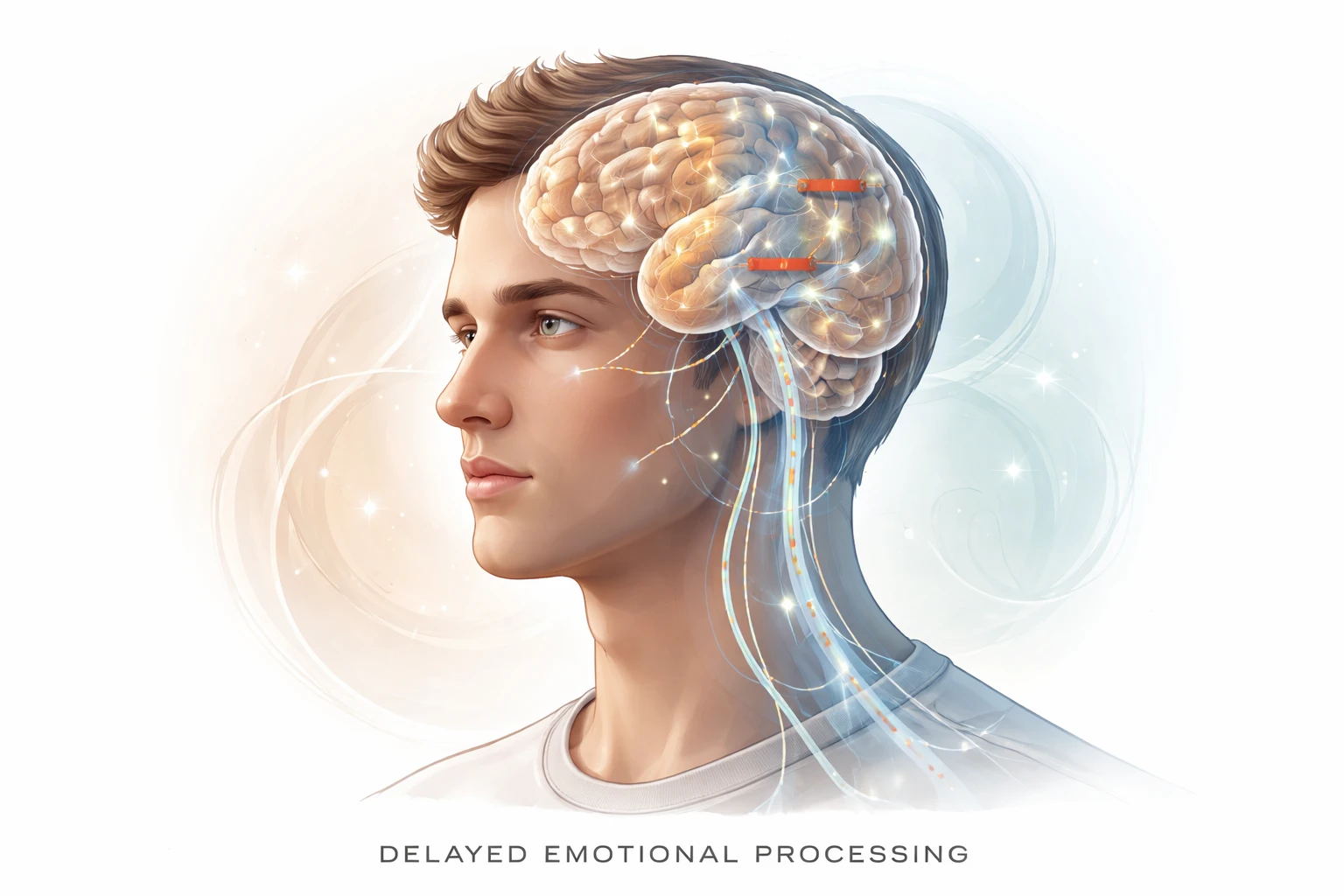
The answer lies at the intersection of biology, psychology, and social conditioning. Understanding male breakup psychology reveals that men are not skipping the pain—they are delaying it. And the science behind why this happens is more complex than most people realize.
Ready to Start Your No Contact Journey?
Track your progress, get AI coaching when the urge to text hits, and become the strongest version of yourself.
Free to start • No credit card required
The Biology of Male Emotional Processing
Let us start with the brain. While outdated stereotypes suggest men are "less emotional," neuroscience tells a different story.
Brain Structure Differences
Research using fMRI brain scans shows that men and women process emotions through different neural pathways:
The corpus callosum connection: Women typically have more neural connections between the left (logical) and right (emotional) brain hemispheres. This allows for faster integration of emotional experiences with verbal processing.
Amygdala differences: The amygdala, which processes emotional reactions, shows different activation patterns in men. Male brains often route emotional signals through the fight-or-flight response system first, leading to action-oriented responses rather than verbal processing.
Verbal processing centers: Women generally have larger verbal processing areas and more active connections between emotion centers and language centers. This makes "talking it out" a more natural coping mechanism for women.
What This Means for Breakups
When a relationship ends, these neurological differences create divergent responses:
- Women tend to immediately verbalize and process emotions
- Men tend to experience emotions as physical sensations or urges to act
- Women seek connection and conversation as primary coping
- Men seek activity and distraction as primary coping
Neither approach is inherently better—but the male pattern tends to delay conscious emotional processing.
Hormonal Factors
Hormones also play a role in why guys process breakups later:
Cortisol response: Men often show a more intense initial cortisol (stress hormone) spike after emotional events, followed by faster suppression. This creates the "numb" feeling many men report immediately post-breakup.
Oxytocin differences: Women release more oxytocin during emotional bonding and its withdrawal. This makes the loss feel more acutely painful initially but also facilitates healing through social connection.
Testosterone influence: Higher testosterone levels are associated with action-oriented responses to stress. Rather than processing feelings, the hormonal response pushes toward doing something—working, exercising, dating.
Societal Conditioning Around Male Emotions
Biology creates tendencies, but culture amplifies them dramatically.
The "Man Up" Effect
From early childhood, boys receive consistent messages about emotional expression:
- "Boys do not cry"
- "Man up"
- "Do not be so sensitive"
- "Be strong"
These messages become internalized beliefs. By adulthood, many men have developed deep-seated discomfort with emotional vulnerability. A breakup triggers these conditioned responses automatically.

Emotional Expression as Weakness
Research on social perceptions reveals a harsh reality: men who express emotional vulnerability often face social penalties.
Studies show that men who cry or express sadness in professional settings are rated as less competent. In dating contexts, excessive emotional expression can be seen as unattractive. These findings reinforce the suppression pattern.
After a breakup, the social pressure to appear "fine" is immense. Showing hurt feels risky—both to self-image and to how others perceive him.
Fewer Acceptable Outlets
Women have broader social permission to:
- Cry openly
- Discuss feelings with friends in detail
- Seek therapy without stigma
- Take time for emotional recovery
Men often lack these socially accepted outlets. The acceptable male outlets—sports, work, drinking—are activity-based rather than processing-based. They provide distraction, not resolution.
The Performance of Strength
After a breakup, many men feel pressure to perform strength. This performance serves multiple purposes:
- Protecting ego and self-image
- Avoiding appearing "weak" to the ex
- Meeting perceived social expectations
- "Winning" the breakup narrative
This performance can be so convincing that men believe it themselves—until the facade eventually cracks.
Common Male Coping Mechanisms
Understanding why guys process breakups later requires examining how they avoid processing in the first place.
The Distraction Arsenal
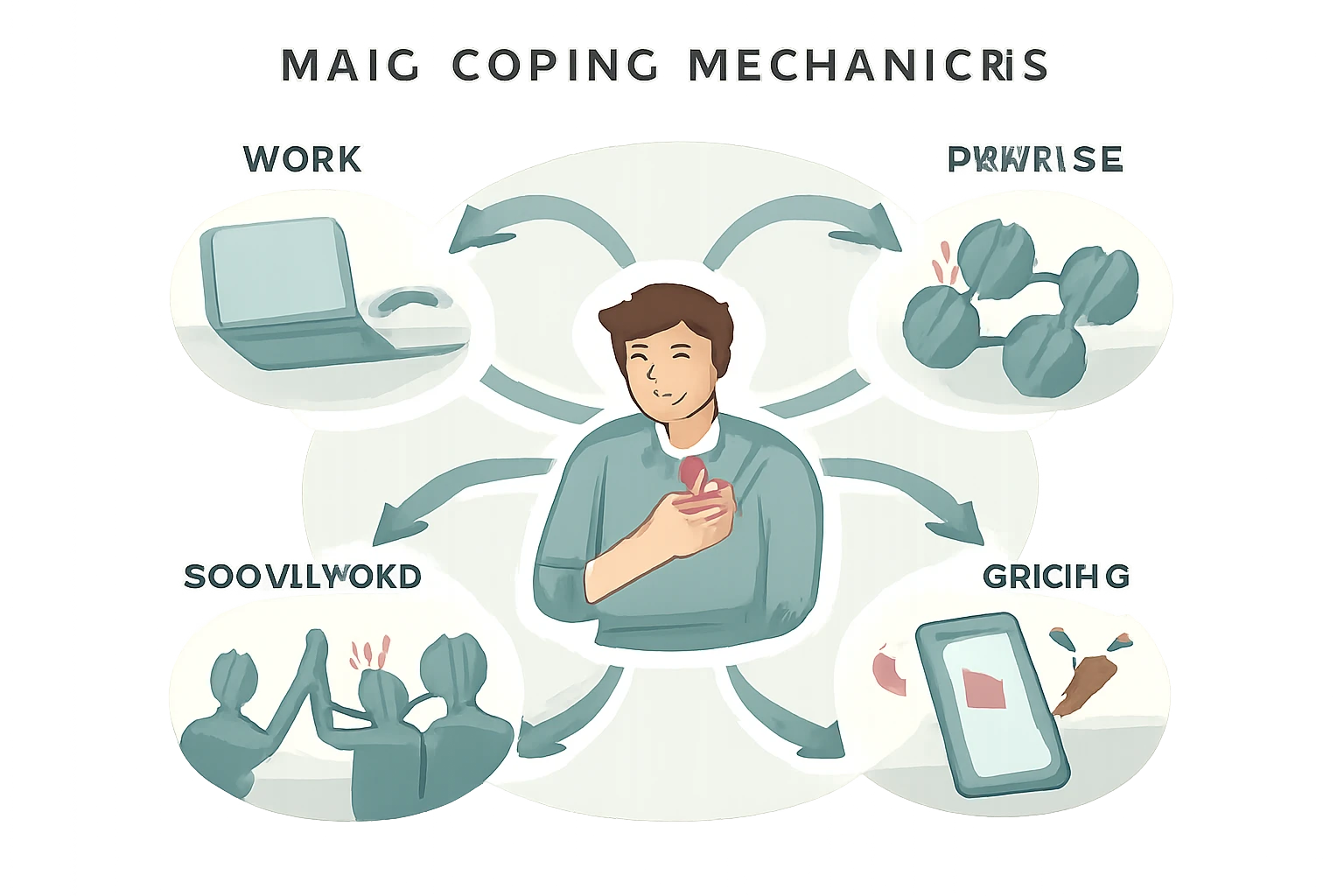
Men typically deploy a predictable set of coping mechanisms:
Work immersion: Throwing themselves into career with excessive hours and intensity. Work provides structure, achievement feelings, and identity separate from the relationship.
Physical activity: Gym, sports, outdoor activities. Physical exertion provides endorphin release and a sense of control. It also exhausts the body, reducing emotional bandwidth.
Social activity: Going out more, seeing friends, staying busy. Social schedules leave no space for sitting with difficult feelings.
Rebound dating: Seeking new romantic attention provides validation and distraction. The attention from someone new temporarily fills the void.
Substance use: Alcohol and other substances numb emotional pain temporarily. This is one of the more destructive avoidance mechanisms.
Why Distraction Works (Temporarily)
These coping mechanisms are not random—they serve specific psychological functions:
- They maintain the illusion of control
- They provide external validation
- They occupy mental bandwidth
- They create new identity narratives ("I am thriving")
- They avoid vulnerability
The problem: distraction postpones processing but does not eliminate the need for it. Emotions suppressed are not emotions resolved.
The Illusion of Moving On
When a man appears to have "moved on" quickly, he has usually just gotten very good at distraction. Signs that what looks like recovery is actually avoidance:
- The new relationship or activities started immediately
- There is no discussion or reflection on what happened
- He seems to have made no changes based on relationship lessons
- The "happiness" seems performative or forced
- He gets defensive when the breakup comes up
When Avoidance Stops Working
The delayed breakup effect is real—and it catches up eventually. Here is why avoidance has an expiration date.
Distraction Fatigue
Maintaining constant distraction requires enormous energy. Eventually:
- Work stops being fulfilling
- The gym loses its appeal
- Going out becomes exhausting
- The rebound reveals itself as empty
When the distractions fail to distract, the suppressed emotions demand attention.
Trigger Events
Certain events break through even the strongest avoidance:
- Holidays and anniversaries
- Seeing the ex move on
- Major life changes or stress
- The rebound ending
- Moments of unexpected solitude
These triggers create cracks in the emotional walls, and once the dam breaks, everything floods through.
The Crash
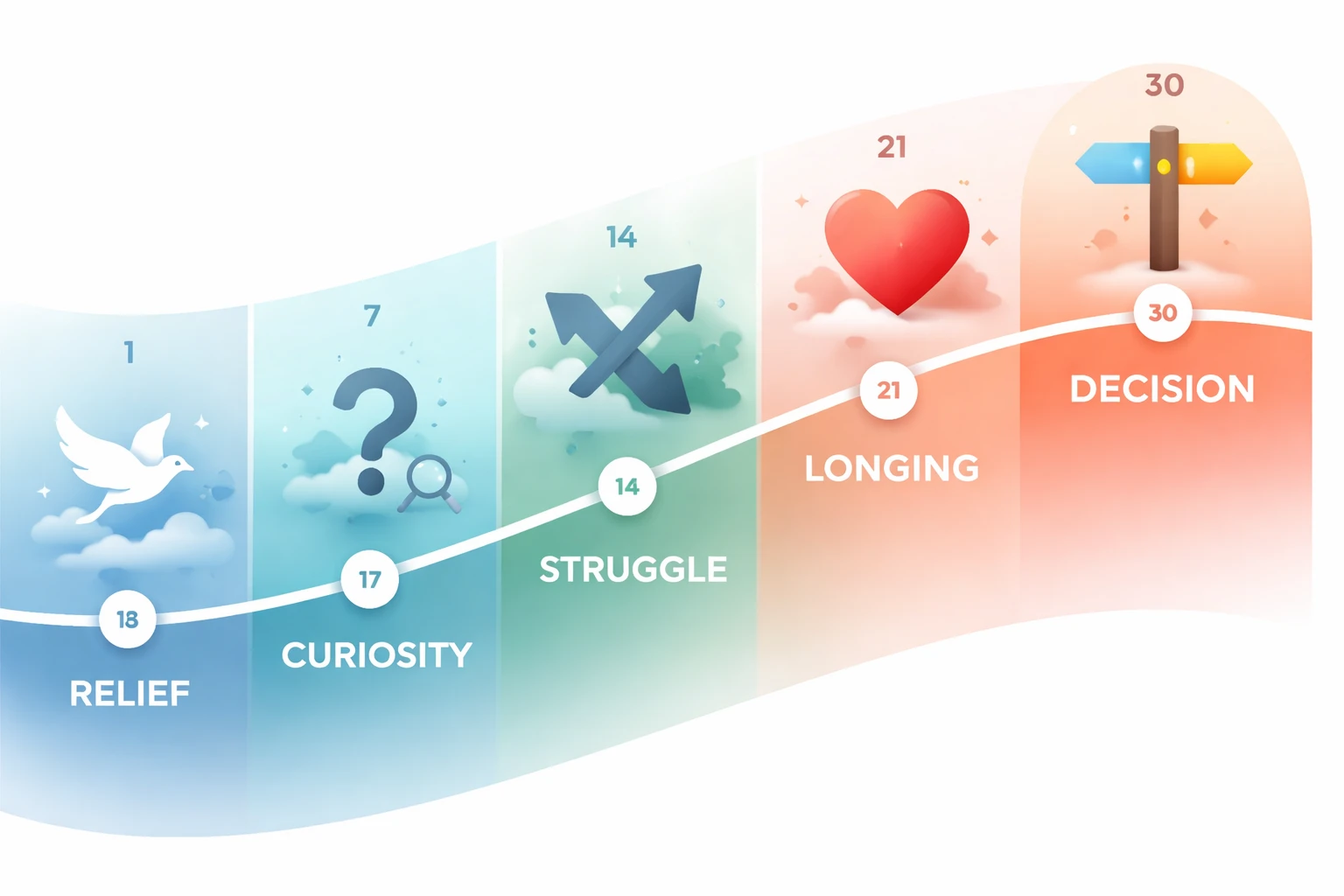
Research suggests men typically hit their emotional low point 2-4 months after a breakup—exactly when women are often beginning to feel better.
During this crash, men finally experience what they have been avoiding:
- The full weight of the loss
- Regret and "what ifs"
- Loneliness that activities cannot fill
- The realization that the relationship mattered
Understanding the stages he will go through helps predict when this crash might occur.
Ready to Start Your No Contact Journey?
Track your progress, get AI coaching when the urge to text hits, and become the strongest version of yourself.
Not All Men Are the Same
While these patterns are common, they are not universal. Several factors influence how quickly—or slowly—an individual man processes a breakup.
Attachment Style Matters
Secure attachment: Men with secure attachment styles generally process breakups more directly. They feel the pain but have healthier coping mechanisms and support systems.
Avoidant attachment: Men with avoidant attachment often show the most extreme delayed processing. Their attachment system minimizes connection importance, creating longer delays before feelings surface.
Anxious attachment: Anxiously attached men may actually process breakups more immediately, experiencing intense emotions from the start—more similar to the typical female pattern.
Emotional Intelligence
Men who have developed higher emotional intelligence—through therapy, personal work, or natural inclination—may process breakups more efficiently. They have language for their emotions and permission to feel them.
Relationship Investment
How much he invested in the relationship affects processing:
- Longer relationships typically mean longer processing delays
- Higher emotional investment means more to suppress
- Relationships central to his identity take longer to grieve
Who Initiated the Breakup
The dumper often has a processing head start. If he initiated:
- He may have pre-processed during the relationship
- The initial relief phase may be genuine
- The crash may come later or be less intense
If he was the dumpee:
- Shock may create immediate numbness
- Processing may begin sooner due to lack of control
- The emotional journey may be more intense overall
What This Means for Your Situation
Understanding why guys process breakups later has practical implications.
His Behavior is Not About You
When he seems fine while you are struggling, it feels personal. But his delayed processing reflects:
- His brain wiring
- His social conditioning
- His learned coping mechanisms
It does not mean:
- He cared less than you
- The relationship did not matter
- He has "won" the breakup
Timing Matters for Contact
If you are considering reconciliation, understanding his processing timeline matters:
Weeks 1-4: He is likely in avoidance mode. Reaching out now often meets emotional walls.
Months 2-4: The crash phase. He is most emotionally open but also most vulnerable. Proceed with care.
Months 4+: Either processing or continued avoidance. His response depends on which path he has taken.
You can understand his processing timeline with personalized AI analysis based on your specific situation.
Your Healing Does Not Depend on His
The most important insight: your recovery is not linked to his timeline. While understanding his process can provide closure or strategic insight, your healing journey is yours to walk.
Process your emotions on your timeline. Build your support systems. Do the work that leads to genuine recovery—regardless of where he is in his delayed journey.
Why do guys process breakups later? The answer weaves together biology, conditioning, and learned behavior patterns. His apparent calm is rarely the full story—it is usually a temporary state maintained by distraction and suppression.
The emotions he is avoiding will surface eventually. Whether you are around to witness that crash—or have long since moved on—is entirely up to you.
Ready to Start Your No Contact Journey?
Track your progress, get AI coaching when the urge to text hits, and become the strongest version of yourself.
Free to start • No credit card required
Related topics