


No contact after breakup means pausing all non-essential communication with your ex so your nervous system can calm down and you can think clearly again. Start by deciding your minimum duration, removing easy ways to reach them, and planning what you will do when the urge hits. This is for healing, not for punishing them or trying to win them back.
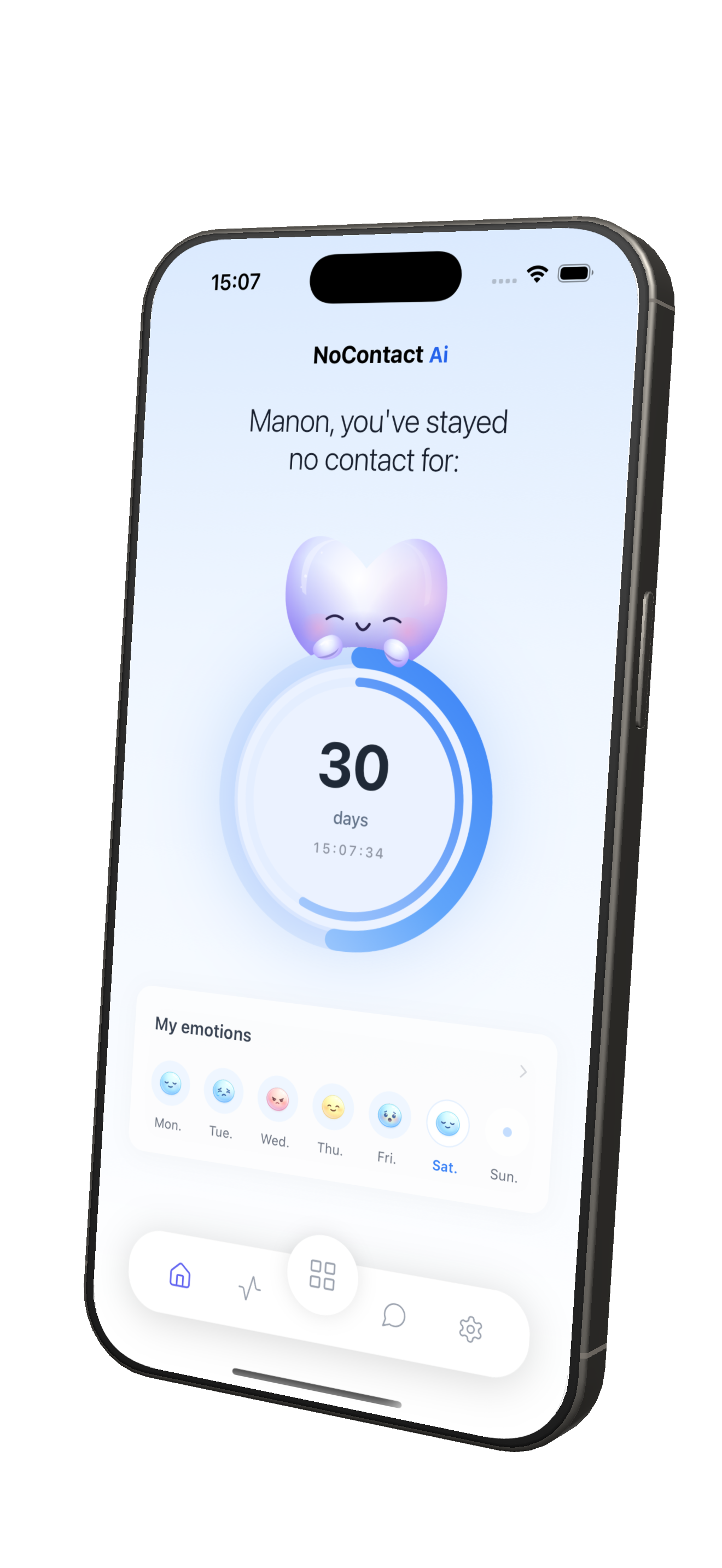
Download No Contact AI
No contact day counter, private journal, and chat support to get through a breakup.
Download the app
Scan with your phone
Automatic redirect to iOS or Android
This guide will walk you through exactly how to start, what to avoid, and what to do in the first 24 hours. For a deeper understanding of the psychology behind this approach, read our complete guide to the no contact rule.
What Is the No Contact Rule After a Breakup?
Let's be clear about what we're doing here.
The no contact rule means intentionally stopping all communication with your ex for a set period of time:
- No texts or calls
- No social media interactions (likes, comments, DMs)
- No "checking in" through mutual friends
- No showing up at places hoping to run into them
- No responding to their attempts to reach you (with some exceptions)
What no contact is NOT:
| It's NOT | It IS |
|---|---|
| Punishment for your ex | Self-protection and healing |
| A manipulation tactic | A boundary for your wellbeing |
| Playing hard to get | Creating space for clarity |
| Pretending they don't exist | Focusing on yourself |
The goal isn't to hurt them or win them back through games. It's to break the emotional addiction and give yourself room to breathe.
How to Start No Contact After a Breakup
You do not need a perfect plan. You need a clear first day.
The goal is to make contacting your ex harder, make support easier, and remove the tiny excuses that usually lead to "just one message."
First 24 Hours Checklist
Use this today, before your emotions start negotiating with you.
- Decide your minimum no contact period: 30 days is a good starting point for most breakups.
- Write one sentence that explains your reason: "I am doing this to heal, not to get a reaction."
- Mute or unfollow your ex on social media.
- Archive the chat so it is not the first thing you see.
- Remove their number from favorites, recent calls, and pinned conversations.
- Tell one trusted friend: "I am doing no contact. If I want to text them, I will text you first."
- Put away photos, gifts, and reminders that trigger spirals.
- Plan your danger hours: late night, mornings, weekends, after alcohol, or after seeing their name.
- Write the message you want to send in notes, not in the chat.
- Set a timer before acting on any urge. Wait 20 minutes. Then wait another 20.
If you need structure in the moment, NoContact can help you hold an urge without sending the message. Use the timer, SOS support, private writing space, and progress tracking when your brain is looking for a quick fix.
For a day-by-day structure, pair this guide with the 30 day no contact rule.
Step 1: Make the Decision
This is where most people fail. They start no contact but leave a mental back door open—"maybe just one text won't hurt" or "I'll see how I feel in a few days."
Commit fully. Half-measures don't work here.
Ask yourself:
- Am I doing this for my healing, not to manipulate my ex?
- Am I willing to feel uncomfortable for a few weeks to feel better for months?
- Do I understand that this will be hard—and that hard isn't the same as wrong?
Write down your "why." When the urge to reach out hits at 2am (and it will), you need something stronger than willpower. Your reasons might include:
- "I need space to figure out who I am outside this relationship"
- "Talking to them keeps reopening the wound"
- "I deserve someone who chooses me—not someone I have to convince"
Keep this somewhere visible. You'll need it.
Step 2: Set Your Duration
How long should no contact last? There's no magic number, but here are evidence-based guidelines:
| Duration | Best For |
|---|---|
| 21-30 days | Shorter relationships (under 1 year), mutual breakups |
| 45 days | Relationships of 1-3 years, moderate emotional intensity |
| 60-90 days | Long-term relationships (3+ years), traumatic breakups, infidelity |
Pro tip: Start with a minimum commitment. Saying "I won't contact them for 30 days" is easier to stick to than "I'm never talking to them again." You can always extend later.
For more guidance on timing, read about choosing the right no contact duration.
If you keep breaking the rule when emotions spike, set up a zero contact app before the next urge hits. A timer, SOS tools, written reasons, and private drafts make the boundary easier to keep when willpower drops.
Should you tell your ex?
This is debated. If you feel you need to, keep it brief and neutral:
"I need some space to process everything. I won't be in contact for a while. I hope you understand."
Don't:
- Over-explain
- Make it dramatic
- Leave room for negotiation
- Wait for their permission
Many people skip the announcement entirely. Silence speaks for itself.
Step 3: Remove Temptations
Here's the truth: willpower is a limited resource. The easier you make no contact, the more likely you'll stick to it.

Phone:
- Delete their number (you probably have it memorized anyway)
- Archive or delete text conversations
- Remove them from favorites and speed dial
Social media:
- Mute or unfollow—don't block immediately (blocking can seem reactive)
- Log out of accounts if you're tempted to stalk
- Consider a temporary social media break entirely
Physical reminders:
- Box up photos and gifts—you don't have to throw them away, just remove them from sight
- Change your phone wallpaper if it's a photo of them
- Avoid "your" spots for the first few weeks
Your environment:
- Tell close friends you're doing no contact so they don't accidentally bring up your ex
- Have a distraction plan ready for vulnerable times (late nights, weekends)
Step 4: Handle Practical Matters
Real life doesn't always allow for clean breaks. Here's how to handle the messy stuff:
Shared items:
- Exchange belongings ONCE, early in no contact
- Keep it brief, business-like, and preferably through a third party
- If items aren't important, let them go—your peace matters more than a hoodie
Shared bills or finances:
- Handle necessary communication via email only (not text—too casual)
- Keep messages strictly transactional
- Set up automatic payments where possible to reduce contact needs
Shared lease or living situation:
- This is the hardest scenario—consider modified no contact
- Minimize interaction: different schedules, separate spaces
- Work toward separating living situations as soon as feasible
Children together:
- Children are the one legitimate exception to strict no contact
- Communicate ONLY about the children—schedules, health, school
- Use a co-parenting app to keep communication structured
- Never use your children as messengers or spies
Workplace:
- Keep it professional and minimal
- Don't discuss the relationship with coworkers
- If possible, request different projects or shifts temporarily
What Counts as Breaking No Contact?
Let's get specific about the rules—and the grey areas.
| Action or situation | Does it break no contact? | What to do instead |
|---|---|---|
| Texting "just checking in" | Yes | Write it in notes and wait 24 hours |
| Calling them | Yes | Call a friend, therapist, or support line |
| Replying to a casual message | Usually yes | Do not respond unless it is practical or urgent |
| Liking, viewing, or commenting on their posts | Yes | Mute, unfollow, or take an app break |
| Asking mutual friends about them | Yes | Tell friends you do not want updates |
| Posting to make them jealous | Yes | Post only when it is truly for you |
| Showing up where they might be | Yes | Change your route or plan something else |
| Sending birthday or holiday wishes | Yes | Treat it as an excuse to reopen contact |
| Running into them by accident | No, if you keep it brief | Say hello, be polite, leave quickly |
| Shared bills, lease, or belongings | No, if strictly practical | Use short email-style messages only |
| Children, custody, or emergencies | No | Communicate only about the child or emergency |
| Work requires contact | No, if strictly professional | Keep it brief, neutral, and job-related |
If you slip up: Don't spiral. One broken moment doesn't erase your progress. Acknowledge it happened, understand why, and recommit. Don't use one slip as an excuse to abandon the whole effort.
The First Week: Surviving the Urge
The first 7 days are the hardest. Your brain is literally going through withdrawal.
What to expect:
- Day 1-2: Shock, disbelief, maybe some relief
- Day 3-4: The urge to reach out peaks—this is when most people break
- Day 5-7: Waves of sadness, anger, and loneliness

Survival strategies:
1. Fill the void Your ex took up mental and emotional space. Fill it with something else:
- Reconnect with friends you may have neglected
- Start a project you've been putting off
- Exercise—it genuinely helps regulate emotions
2. Feel the feelings Don't numb out with alcohol, rebounds, or constant distraction. Let yourself grieve. Cry if you need to. Journal. The only way out is through.
3. Create friction When the urge hits, force yourself to wait 24 hours. Most urges pass. Write what you want to say in a notes app or in NoContact instead of sending it.
4. Have an emergency contact Text a friend instead of your ex. If friends aren't available and you need someone to talk you through a weak moment, use Heartbroken Chat for support that does not pull you back into the conversation with your ex.
5. Track your progress Some people find it helpful to mark each day of no contact. Watching those numbers grow creates momentum.
What If They Contact You First?
This will test your resolve. Here's how to handle it:
If it's a breadcrumb (vague texts like "hey" or "thinking of you"):
- Don't respond. Breadcrumbs aren't meaningful—they're testing if you're still available.
If it's an apology or "I miss you":
- Still don't respond immediately. Wait at least 24 hours.
- Ask yourself: Is this genuine change, or just loneliness?
- If you're not ready, it's okay to continue no contact.
If it's an emergency:
- Respond briefly if genuinely urgent (medical, family crisis)
- Return to no contact immediately after
If it's practical (returning items, shared responsibilities):
- Keep response minimal and business-like
- Don't let it become a conversation
The test question: Before responding to anything, ask: "Will replying help my healing or set it back?"
Starting no contact after breakup is one of the hardest things you'll do. You're choosing short-term pain for long-term peace. You're betting on yourself instead of clinging to what was.
It won't feel good at first. You'll question if you're doing the right thing. You'll have moments where you almost break.
But the next step does not have to be dramatic. One more hour. One more evening. One more unsent message. That is how the boundary becomes real.
For guidance on what comes next, learn about deciding when to end no contact.
Download No Contact AI
No contact day counter, private journal, and chat support to get through a breakup.
Download the app
Scan with your phone
Automatic redirect to iOS or Android
Related topics