


You've started the no contact rule explained, and now you're lying awake at 2am wondering: What is he even thinking right now? Does he miss me? Does he care at all?
The short answer: during no contact, many men feel relief first, then a bruised ego and curiosity about your silence, then doubt and genuine missing (often around weeks 3 to 4), and finally the full weight of the loss. The calm he shows in the first two weeks is rarely the whole story. The exact timing depends on who ended things, whether he jumps into a rebound, and how much access he still has to your life.
Here's something that might surprise you: in a 2025 review published in Behavioral and Brain Sciences, psychologists Iris Wahring, Jeffry Simpson and Paul Van Lange argue that romantic relationships are, on average, more central to men's well-being than to women's. Men tend to report more loneliness and distress after a breakup. They just don't show it the same way. (The authors note that most of the evidence comes from Western, heterosexual samples.)
Key takeaways
- His early relief is usually a delay, not the final word on how he feels.
- Your silence removes something he relied on, often more than either of you realized.
- Weeks 3 to 4 are when doubt and missing you tend to surface.
- Whether he reaches out or not, no contact is for your clarity first.
At a Glance: What He Feels Each Week of No Contact
| Week | What he often feels | What he tends to do | What you might notice |
|---|---|---|---|
| Week 1-2 | Relief, freedom, "I made the right call" | Goes out, stays busy, avoids quiet moments | Active stories, an "I'm fine" front |
| Week 2-3 | Bruised ego, curiosity about your silence | Waits for you to break first, checks your profile | Story views, a like, questions to mutual friends |
| Week 3-4 | Doubt, first real missing, sometimes anger | Replays the relationship, hesitates to text | A pretext message, mixed signals, a change in mood |
| Week 4+ | The full impact of the loss | Reaches out, or digs in and stays silent | A more sincere message, or a lasting silence |
These are common patterns, not a schedule. Some men move faster, some skip a stage, and some never reach out at all. So yes, he's probably thinking about you. But what exactly is going through his mind depends heavily on where he is in this timeline.
How Men Process Breakups Differently
Before diving into the stages, it's crucial to understand why men react differently to breakups, and why that initial silence from them can be so misleading.
According to the same review, men rely more heavily on their romantic partners for emotional support and intimacy than women do. Women typically cultivate broader networks of close friendships and family connections. Your relationship may have been his primary (sometimes only) source of deep emotional connection.
This explains how men act after a breakup: they often appear fine initially because they haven't yet confronted the reality of life without that emotional anchor.
There's another twist worth knowing. When sociologist Michael Rosenfeld followed more than 2,000 American adults over six years, women initiated 69% of divorces, but in relationships outside marriage, men and women ended things about equally often. So if he's the one who left, don't conclude that he felt nothing. Leaving you and missing you later can both be true.
The takeaway? When you go no contact, you're removing something he depended on more than either of you realized.
The 5 Stages a Man Goes Through During No Contact
Every man is different, and no study has mapped an official set of stages. But in breakup coaching and in countless breakup stories, the same emotional sequence keeps showing up:
- Relief and Freedom (Week 1-2)
- Ego and Curiosity (Week 2-3)
- Doubt and Missing You (Week 3-4)
- Full Emotional Impact (Week 4+)
- Decision Point (Varies)
Let's explore each stage in depth.
Week 1-2: Relief and Freedom
The hardest truth to hear? In the first week or two, he probably feels relieved.
This isn't because he didn't love you. Those who initiate breakups, or even those who saw it coming, often don't feel immediate sadness. They've been mentally preparing for weeks, sometimes months, before the actual split.
During this phase, you might notice:
- He's posting on social media like nothing happened
- He's going out with friends more than usual
- He seems almost... happy?
What he's actually thinking:
- "I can finally do whatever I want"
- "This was the right decision"
- "I don't have to deal with those arguments anymore"
This phase is brutal to watch. But here's what he hasn't realized yet: he's riding a breakup high. The real processing hasn't even begun.
A 2021 Lancaster University study of more than 184,000 posts on a relationship-advice forum found that men talked about heartbreak significantly more than women did. The emotions are there. They just surface later, and often in private.
Week 2-3: The Ego Kicks In
Around week two, something shifts. He expected you to reach out by now. A text. A call. Something.
But you didn't.
This is where his ego enters the chat. Two things happen simultaneously:
1. Curiosity He starts wondering why you're not behaving like he expected. Most people reach out after a breakup. Your silence is... unexpected.
2. Annoyance He may have had you pegged as someone who would chase him. The fact that you're not doing that challenges his assumptions about you, and about his own importance in your life.
What he's actually thinking:
- "Why hasn't she texted me?"
- "Is she already over me?"
- "Maybe I was wrong about how much she cared"
This stage matters. Your silence is already doing something: it is quietly challenging what he assumed about you.

Week 3-4: Curiosity and Doubt
The breakup honeymoon phase is officially over.
By week three, the distractions aren't working as well. Going out with friends feels empty. The freedom he was so excited about? It's starting to feel more like loneliness.
This is often when the introspection starts. The no contact period gives him a lot of time to think, and that often means confronting uncomfortable truths.
What he's experiencing:
- Missing the little things (your laugh, your presence, your comfort)
- Replaying arguments and wondering if he overreacted
- Comparing potential dates to you (and finding them lacking)
- Checking your social media more than he'd ever admit
What he's actually thinking:
- "I wonder what she's doing right now"
- "Would it be weird if I texted her?"
- "Maybe I made a mistake"
Some men get angry at this stage. They're frustrated: at you for not reaching out, at themselves for caring more than they expected. You might notice some passive-aggressive social media activity or even an angry text asking why you're ignoring him.
Don't engage. Anger at this point usually means your absence has registered. That is not the same thing as him wanting you back, so don't treat it as a green light.
Week 4+: The Full Impact
This is when reality finally catches up.
The relief is gone. The freedom high has worn off. The comparisons to other women aren't working in his favor. And now, he's forced to actually process the loss.
The Wahring, Simpson and Van Lange review points the same way: because many men lean on a partner as their main confidant, losing that relationship tends to hit harder once the distractions stop, with more loneliness and lower life satisfaction.
What happens in this stage:
- He realizes how much emotional support you provided
- He understands that finding someone like you isn't easy
- He confronts his own role in why things ended
- He may experience genuine grief for the first time
What he's actually thinking:
- "I really messed this up"
- "I took her for granted"
- "Can this be fixed?"
It's during this stage that many exes finally reach out, not because they're manipulating you, but because they're finally experiencing the emotions they've been avoiding. For a closer look at the day-by-day version of this timeline, see what he's thinking every day of no contact.
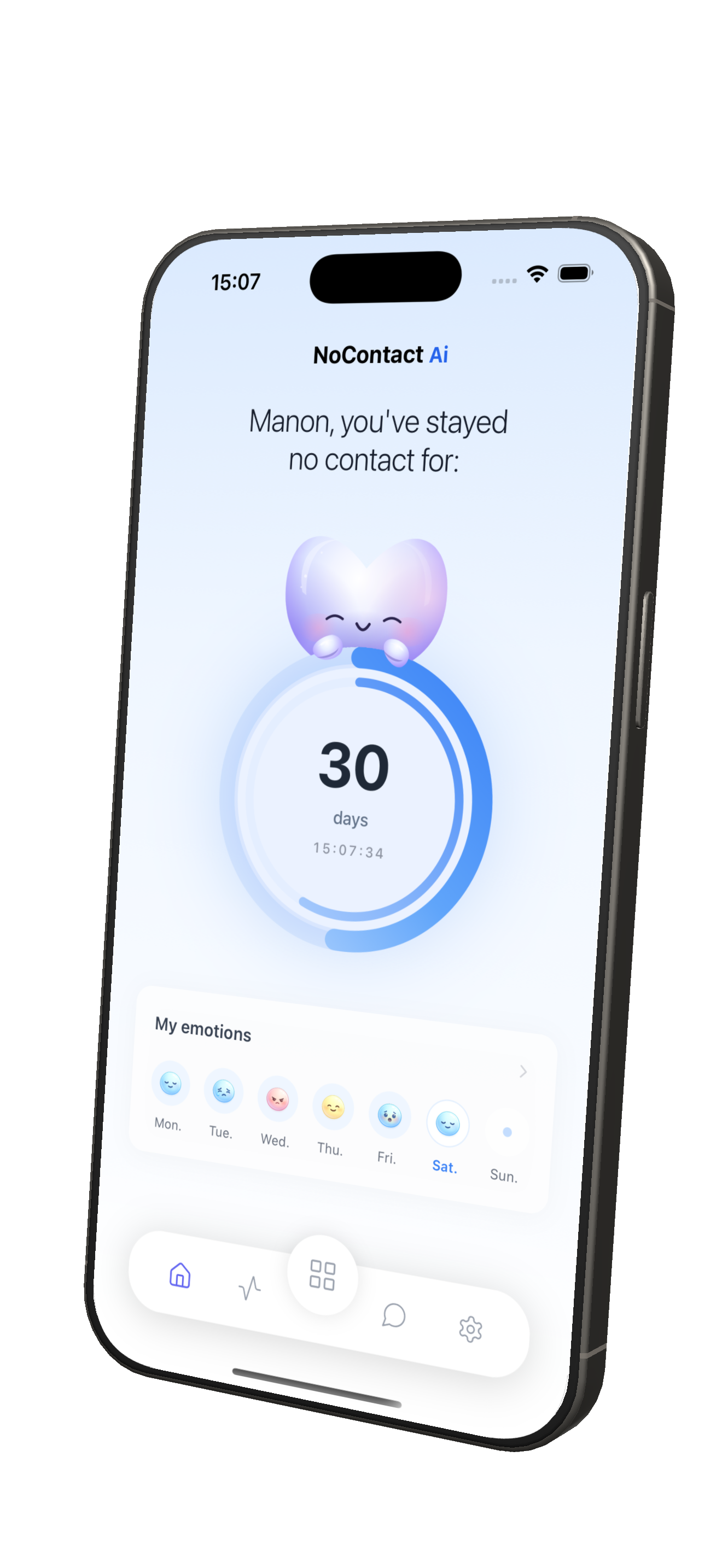
You can't see where he is in this journey, and checking his profile to guess will only keep you stuck. What you can track is your own progress: the NoContact app counts your no contact days, lets you check in with your emotions, and gives you a guided space to write the message you shouldn't send.
What Makes Men Reach Out During No Contact
Not every man reaches out, but many do. Here are the common triggers:
1. A Reminder of You A song, a place, a mutual friend mentioning your name. These triggers become more powerful the longer you're absent from his daily life.
2. A Bad Date Nothing makes an ex look better than a disappointing date with someone new. Suddenly, all your qualities shine brighter.
3. A Milestone or Holiday Birthdays, holidays, anniversaries: these moments highlight your absence in painful ways.
4. Genuine Reflection After enough time processing, some men genuinely realize what they lost and want to make amends.
5. Loneliness Men's emotional support networks are often limited. Without you, that void can become hard to bear.
Watch for signs he's feeling the no contact: small behaviors that reveal his internal struggle even when he's trying to appear unaffected.
Why Some Men Never Reach Out
Let's be honest: not all men come back. And understanding why can save you months of false hope.
Reasons he might not reach out:
- He's moved on: Some people genuinely process faster, especially if they checked out emotionally long before the breakup
- His ego won't allow it: Pride can be a powerful barrier, even when feelings remain
- He assumes you've moved on: Your strong no contact might make him think you're completely over him
- The relationship was toxic: If things were genuinely unhealthy, staying away might be his form of self-preservation
- He's found someone else: Painful but possible. A rebound relationship can delay (or prevent) his processing
Important: His silence doesn't necessarily mean he doesn't care. Many men are raised to avoid looking vulnerable, and reaching out can feel like admitting defeat.
The goal of no contact isn't just to get him back. It's to give you clarity, healing, and strength regardless of what he decides.
What This Means for You
Understanding the psychology of a man during no contact isn't about manipulation. It's about gaining clarity during one of the most confusing periods of your life.
Here's what to remember:
His initial reaction doesn't reflect his true feelings. That relief and freedom? It's temporary. Real emotions surface later.
Your silence carries weight. Every day you don't reach out, you're giving both of you the space to feel what this loss actually means.
Men process breakups differently, but not less deeply. Several studies suggest men suffer at least as much from breakups. They just show it later.
His timeline isn't your responsibility. Whether he reaches out in week 3 or never, your focus should be on your own healing.
Actions speak louder than absence. If he does reach out, pay attention to what he says and how he says it. A "hey" at 11pm is very different from a genuine acknowledgment of what went wrong.
If your no contact period is already over and you're trying to read his response, our guide to the male mind after no contact covers the five ways men usually respond, and what each one means.
And if you are a man reading this to understand the other side, our guide to no contact rule female psychology covers what she goes through, week by week.
FAQ
What happens to men during no contact?
Many men move through relief, then bruised ego and curiosity, then doubt and missing you, and finally the full weight of the loss. The first two weeks often look easy for him because distractions and relief hide the grief. The harder emotions usually surface from week 3 onward, especially if he loses access to your life.
Do men miss you when you don't contact them?
Often, yes, but rarely right away. Your absence becomes noticeable once his routine no longer includes you, usually after the first two or three weeks. Whether that missing turns into action depends on his pride, his attachment style, whether he has a rebound, and whether he believes you are still open to him.
What day of no contact is the hardest?
For the person doing no contact, the first three to seven days are usually the hardest, because the urge to text is strongest and every notification feels loaded. A second wave often hits around weeks 3 to 4, when the adrenaline fades. Anniversaries, weekends and late nights are common breaking points too.
How long does it take men to process no contact?
There is no fixed timeline. Many men start to feel the loss after three to four weeks, and the full impact often lands after a month or more. Men who ended the relationship, who jump into a rebound, or who keep watching your life online may take much longer to truly process it.
Does breaking no contact set you back?
A single message rarely ruins everything, but it often resets your own healing. You reopen the wait for a reply, and your mind goes back to analyzing his. If you broke it, don't spiral: note what triggered you, restart your count, and keep the next contact for when you are calm.
The Bottom Line
The no contact rule works best when you're using this time to genuinely grow, not just waiting for him to crack. Because here's the real secret: whether he comes back or not, you'll be okay. Better than okay.
You'll be someone who chose herself.
 No Contact AI
No Contact is hard to hold.Not with the right support.
No Contact AI counts your days, stops you when you want to break, and helps you refocus on yourself.
- A No Contact counter with milestones to unlock
- An SOS plan when the urge to reach out comes back
- 40 AI-guided exercises to move forward
Related topics